
China’s GPU IPO Rush in 2025: Betting Big on AI Amid Mounting Constraints
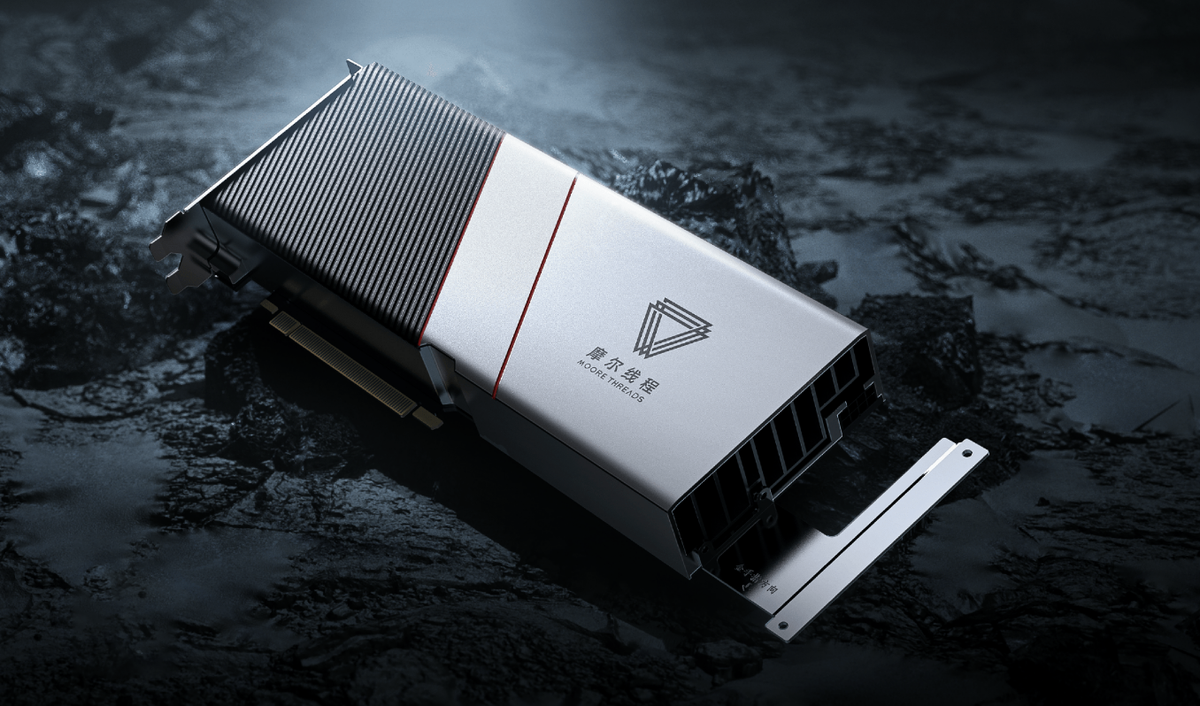
The year 2025 marks a watershed moment for China’s semiconductor industry, culminating in a collective surge of initial public offerings five years after United States sanctions first accelerated the nation’s push for technological self-reliance. Propelled by state policy, venture capital exits, and soaring demand for artificial intelligence computing, domestic GPU developers are aggressively testing capital markets to secure the funding necessary for survival and expansion.
This December witnessed a frenzy of activity, beginning with the debut of Moore Threads Technology on the STAR Market, where its valuation briefly surpassed RMB 440 billion (US$60.9 billion). The momentum continued on December 17 with the listing of MetaX Integrated Circuits, which saw its shares surge nearly 700% on the first trading day. These market debuts have minted significant paper wealth, signaling intense investor appetite for local alternatives to global chip giants.
The wave of listings extends beyond Shanghai, with major players such as Shanghai Biren Technology, Iluvatar CoreX, and Kunlunxin accelerating plans to list on the Hong Kong Stock Exchange. This synchronized rush reflects a strategic pivot: after years of secretive development, these "Chinese Nvidias" are moving into the public spotlight to capitalize on market sentiment that views AI infrastructure as one of the few certainties in a volatile economic climate.
However, the exuberance in the capital markets prices in a future that has yet to materialize. While valuations rival established global players, domestic chipmakers face significant hurdles, including deep financial losses, supply chain constraints for high-bandwidth memory (HBM), and the formidable challenge of breaking the software ecosystem monopoly held by Nvidia Corp. The successful IPOs represent merely a funding milestone, not a guarantee of victory in the impending endurance race for technological parity.
The Logic Behind the Rush: Policy and Survival
The timing of this IPO wave is structural rather than coincidental. Most of the aspiring chip giants were founded approximately five years ago, aligning with the typical 5-to-7-year exit cycle for venture capital and private equity investors. This period also coincides with the heavy investment phase of China’s "Big Fund" Phase II. Industry insiders note that listing has become a necessity for survival; companies need to open secondary market financing channels to sustain capital-intensive operations.
Regulatory tailwinds have also played a crucial role. Policy researchers suggest that the accelerated approval processes for these technology firms are intended to set benchmarks and demonstrate the state’s commitment to industrializing hard technology. For investors, the AI sector represents a rare "visible and tangible" opportunity, creating a consensus among the state, stock exchanges, and funds to support these listings despite broader market challenges.
Valuation Paradox: High Multiples meet Stark Losses
A stark contrast exists between the soaring market capitalizations of these newly listed firms and their fundamental financials. Investors are effectively paying a premium for growth potential, with price-to-sales ratios exceeding 170 times—far above the averages for the broader semiconductor or AI sectors.
- MetaX Integrated Circuits: Projects a 2025 revenue ceiling of RMB 1.98 billion (US$274 million), with anticipated net losses ranging between RMB 527 million and RMB 763 million.
- Moore Threads Technology: Forecasts 2025 revenue up to RMB 1.498 billion (US$207 million), with losses projected between RMB 730 million and RMB 1.16 billion.
- Kunlunxin: Backed by Baidu, it projects 2025 revenue of RMB 3.5 billion (US$484 million).
Investors justify these valuations by drawing parallels to Amazon.com Inc. or early-stage Nvidia, arguing that losses are acceptable if capital is directed toward infrastructure and R&D that builds a protective moat. However, the cash burn is immense; Moore Threads alone invested RMB 3.81 billion over three years. Without a self-sustaining revenue cycle yet in place, the capital raised from IPOs is critical "ammunition" for continued development.
The Ecosystem Moat and Supply Chain Bottle Necks
While domestic hardware specifications are narrowing the gap with global leaders—with some products reportedly approaching the performance of Nvidia’s markets-specific H20 chip—software remains the primary barrier. The industry consensus is that hardware is not the ultimate moat; rather, it is the CUDA ecosystem, which Nvidia has spent two decades and an estimated US$30 billion cultivating.
Domestic chips often face adoption resistance due to the high cost of migration for developers accustomed to CUDA’s extensive libraries. Companies like Cambricon Technologies have begun allocating significant proceeds from fundraising explicitly for ecosystem construction, aiming to improve software openness and ease of use. However, building such an ecosystem is a capital-heavy and time-consuming process involving deep collaboration with universities and developers.
Furthermore, hardware production faces supply chain headwinds, particularly regarding High Bandwidth Memory (HBM). Micron Technology Inc. has stated that its HBM capacity for 2026 is already sold out, and demand far outstrips supply. As prices rise and shortages persist, Chinese chipmakers may face cost pressures and production delays, complicating their path to profitability.
The looming Threat of Big Tech Self-Reliance
Beyond direct competition with global incumbents, independent Chinese GPU makers face a longer-term threat from their potential clients: domestic cloud giants developing in-house silicon. Major technology firms like Alibaba Group Holding Ltd. and ByteDance Ltd. are aggressively pursuing internal chip development to reduce costs and external reliance.
Market intelligence indicates that Alibaba’s customized chips are nearing the specifications of mainstream GPUs, while ByteDance is reportedly planning to tape out its own chips soon. This trend mirrors the dynamic between Google’s TPU and Nvidia, where internal chip adoption can significantly impact the total addressable market for independent vendors. If China’s cloud giants shift meaningful workloads to proprietary silicon, "China’s Nvidias" may find their growth ceiling fast approaching, forcing them to seek more diversified use cases beyond the data center.