
China’s Robot Rental Market in 2025: Demand Surge, Falling Prices, and the Rise of RaaS
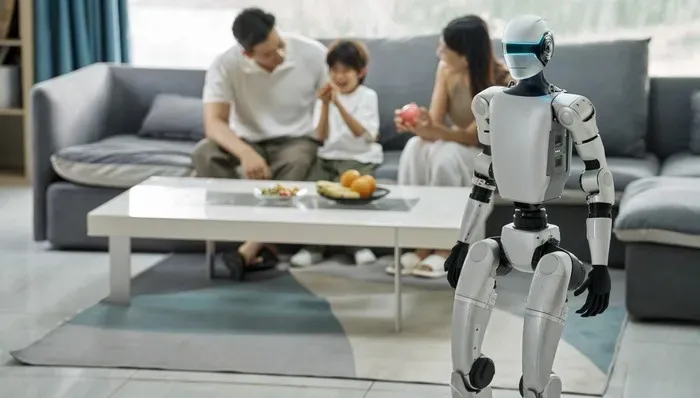
China’s nascent robot rental sector is experiencing a dichotomy of exploding year-end demand and plummeting daily rates as commercialization matures into a broad-based "Robots-as-a-Service" (RaaS) market at the close of 2025. While bookings for humanoid and quadrupedal robots have surged due to seasonal corporate events, the premium pricing power formerly enjoyed by suppliers has significantly eroded.
Market data indicates that daily rental prices, which previously exceeded tens of thousands of yuan, have undergone a sharp rationalization, with rates for basic models dropping to mere hundreds of yuan. Despite the price compression, order volumes have remained robust, with some platforms reporting bookings extending through February. The volatility in pricing remains high, fluctuating daily based on immediate availability.
The decline in leasing costs is driving a structural shift in utilization, expanding the deployment of robots from niche commercial performances to practical applications in workshops, warehouses, and scenic spots for labor and guidance tasks. This accessibility is fostering the creation of dedicated rental ecosystems, positioning 2026 for potential exponential growth in market scale.
However, industry leaders caution that while commercial interest is high, technological limitations persist. Current consumer-grade humanoid robots still face challenges in executing complex tasks and maintaining natural emotional interactions, necessitating further iterative upgrades to meet the widening scope of industrial demands.
Price Rationalization and Utilization Shift
The rental market has seen a dramatic recalibration of pricing tiers. According to industry reports, the daily rental price for basic embodied intelligence robots has fallen to approximately RMB 200 yuan (US$27), while models capable of intelligent interaction and complex performance now command between RMB 2,000 and RMB 5,000 per day. Mechanical dogs, a popular category for basic interaction, are generally priced between RMB 200 and RMB 500 per day.
Agencies in Shanghai representing brands such as Unitree Robotics and Agibot have adjusted their rate cards accordingly. A Unitree U2 dancing robot is currently referenced at RMB 5,000 per day. Agibot’s product line shows varied tiering: the Expedition A2, marketed for advanced intelligent interaction, leases for roughly RMB 10,000 per day, while the Lingxi X2 is priced at RMB 6,000. These rates typically include technical support and logistics.
The Emergence of RaaS Ecosystems
To structure this fragmented market, new platforms are emerging to consolidate supply and demand. On December 22, the "PowerOn Rentals" platform was officially launched, positioning itself as the country's first open robot rental platform. Jiang Qingsong, Chairman of PowerOn Rentals and a partner at Agibot, stated that the platform aims to define the new era of RaaS.
The platform has already covered 50 core cities with a network of over 600 service providers and more than 1,000 devices. By 2026, it targets connectivity with over 10 manufacturers and 200 gold-standard service providers. Current listings on the platform reflect the aggressive pricing environment; the Agibot Lingxi X2 Youth Edition is listed starting at RMB 1,499 per day, while the Robot Dog D1Edu is available for as low as RMB 200. Promotional "flash rent" campaigns have further driven prices down to RMB 699 for certain models, with delivery promised within 48 hours.
Market Forecasts and Structural Growth
Industry executives view 2025 as an inflection point rather than a peak. Wang Xingxing, Founder and CEO of Unitree Robotics, noted publicly that the robot rental market is extremely active and that this year serves merely as a starting point for future commercial activities.
Agibot estimates that the current robot rental market size has surpassed RMB 1 billion and projects it will exceed RMB 10 billion in 2026. This optimism is supported by broader e-commerce data, which shows a 757% year-on-year surge in transaction volume for embodied intelligence robots during October and November, with over 100 new models launching.
Despite the rapid expansion, the industry acknowledges that the capability of current hardware to handle complex, non-standardized tasks remains a bottleneck that upcoming technical iterations must address to sustain long-term industrial adoption.