
Horizon Robotics Challenges Huawei in Battle for China’s Smart Driving Ecosystem
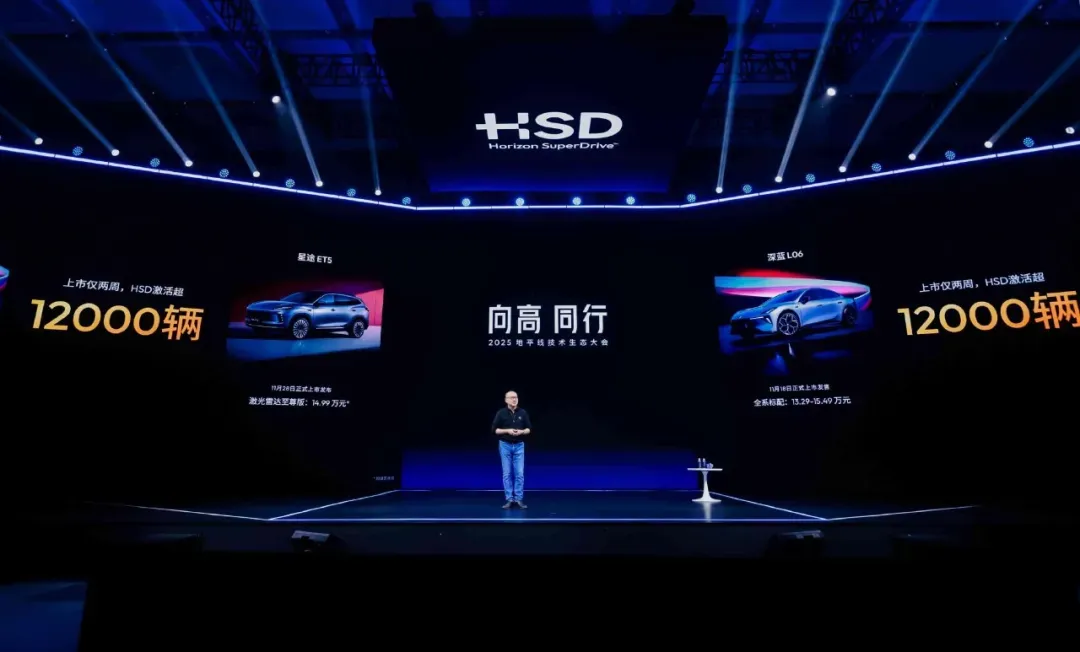
Horizon Robotics, a leading Chinese provider of autonomous driving computing solutions, is aggressively expanding its ecosystem to challenge Huawei Technologies in the automotive sector, marking a shift toward direct competition in the hardware-software integrated market. The company recently convened its first major technical ecosystem conference in Shenzhen—Huawei’s home turf—signaling its intent to secure dominance in China's rapidly evolving smart driving landscape to confront established tech giants.
The rivalry intensified in late 2025 as Horizon Robotics outlined a strategy to push high-end urban driver-assistance systems into affordable vehicles priced around RMB 100,000 yuan (US$13,800). This move targets the same massive market segment as Huawei’s automotive unit, "Qiankun," and comes just weeks after regulators at the Ministry of Industry and Information Technology approved Level 3 autonomous driving licenses for new models from Changan Automobile and BAIC BluePark, utilizing chips from Horizon and Huawei, respectively.
While the market remains fragmented, the battle lines are hardening around vertical integration. Major automakers, including Volkswagen AG and Chery Automobile Co., are hedging their bets by partnering with multiple suppliers, but Horizon is attempting to differentiate itself through a "neutral" ecosystem approach. By forming joint ventures with global giants like Continental AG and Bosch, Horizon aims to leverage its heavily adopted "Journey" series chips to counter Huawei's full-stack hardware and software dominance.
Competition is further heating up with the entry of autonomous driving unicorn Momenta, which is now developing its own chips to complement its software algorithms. As the industry pivots from simple driver assistance to complex urban navigation, Horizon’s founder Yu Kai is betting on a new open partnership model to accelerate mass production and reduce development costs for automakers facing fierce price wars.
The Ecosystem War and Market Positioning
The contest for China's smart driving infrastructure is evolving into a "Three Kingdoms" scenario involving Huawei, Horizon Robotics, and Momenta. While Huawei offers a closed-loop ecosystem linking its HarmonyOS software with its Qiankun driving platform, Horizon is positioning itself as the "Android" of the sector—providing the computing foundation while allowing partners to customize the application layer.
In mid-December 2025, Horizon revealed that its automotive partners, including Volkswagen, Chery, and Changan, are deepening integration with its latest hardware. The company’s shipments of its Journey series chips have surpassed 10 million units, a critical scale milestone. However, the company faces pressure as the market consolidates. Some early ecosystem partners have struggled, prompting Horizon to step forward with its own full-stack software solution, "Horizon SuperDrive" (HSD), to demonstrate capabilities and spur adoption.
This places Horizon in direct confrontation with Momenta, which has secured partnerships with seven of the world's top ten automakers. Momenta is also moving toward vertical integration, reportedly preparing to launch its proprietary BMC 7X chip in early 2026. This chip is designed to compete with global leaders like Nvidia, targeting a lower price point to capture volume in the mid-range market.
Driving Down Costs: The Race to the Mass Market
Horizon’s core strategy for 2025 involves democratizing advanced features previously reserved for luxury vehicles. Founder Yu Kai recently stated the goal is to bring urban "Navigate on Autopilot" (NOA) features to vehicles priced as low as RMB 70,000 yuan (US$9,650).
To achieve this, Horizon introduced the "HSD Together" partnership model, which provides partners with foundational model authorization and algorithm engineering support. Yu claims this approach can reduce development manpower, computing costs, and time-to-market by 90%.
The strategy is already yielding results in production vehicles. The newly launched Chery Exeed ET5, featuring Horizon’s chips, starts at RMB 149,900 yuan (US$20,680), while the Deepal L06 starts at RMB 132,900 yuan (US$18,340). Both models offer urban NOA capabilities, a feature set that typically commanded a premium in vehicles costing over RMB 200,000 yuan (US$27,600) just a year ago. By "mining the gold" (selling full solutions) while "selling the shovels" (supplying chips and tools), Horizon acknowledges inevitable internal competition with its partners but views it as necessary to set a high performance benchmark for the ecosystem.
Technological Convergence: L2 to L4
Technologically, the industry has reached a consensus on "end-to-end" AI models, a paradigm shift solidified after Tesla’s software updates in late 2023. Su Qing, Horizon’s Chief Architect, notes that the industry is no longer in a phase of theoretical restructuring but rather "extreme optimization" of existing systems.
Horizon is deploying "one-segment end-to-end" models that unify the development methodology for both Level 2 driver assistance and Level 4 autonomous driving. Su predicts that within two to three years, the Mean Distance Between Intervention (MPI) for these systems could reach 50,000 to 100,000 miles, making L4 capabilities viable for consumer vehicles and Robotaxis at a fraction of the historical cost.
This approach eliminates the need for expensive high-definition maps and rigid operational design domains (ODD). According to Su, the distinction between L2 and L4 will blur, with mass-market consumer cars increasingly possessing the underlying capabilities of fully autonomous systems, differing only in regulatory activation and liability models.
Future Architectures and Benchmarking Tesla
Looking beyond current capabilities, Horizon is preparing its next-generation hardware to compete globally. The company unveiled its "Riemann Architecture," a fourth-generation neural processing unit (BPU) design aimed at maximizing efficiency for the latest Transformer-based AI models.
Horizon plans to deploy this architecture in its upcoming Journey 7 chip family. The company explicitly benchmarks its roadmap against Tesla, stating that while its current Journey 6P series matches Tesla’s AI 4 hardware, the Journey 7 is designed to rival Tesla’s upcoming AI 5 platform in both performance and energy efficiency.
The company is also expanding beyond automotive applications into embodied AI. Leveraging its chip and algorithm improvements, Horizon is positioning its technology as the "industrial mother machine" for general-purpose robotics, viewing the automotive sector as the first step in a broader "Silicon-based" physical AI revolution. As international automakers seek reliable partners for their China operations and export models, Horizon’s expanding ecosystem offers a localized alternative to US-based tech providers, despite the intensifying domestic competition.