
Biren Advances Next-Gen AI Chip Rollout to Capture Surging Compute Demand
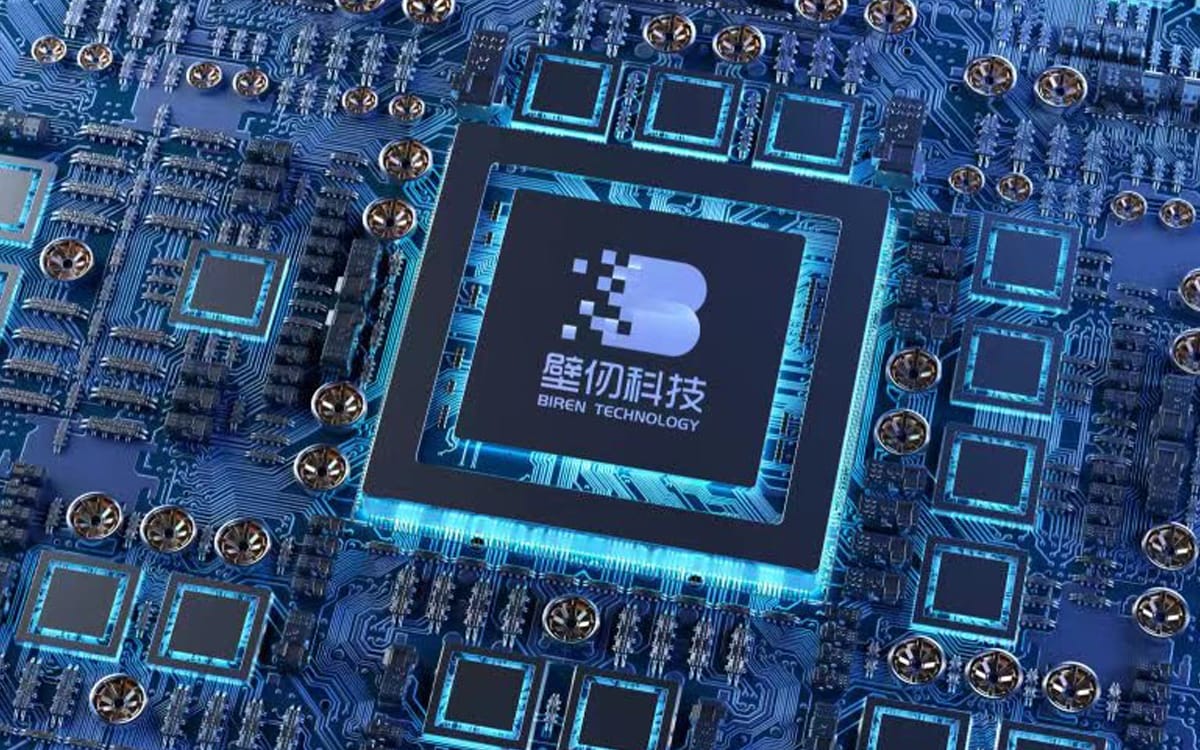
Biren Technology is accelerating the commercialization of its next-generation GPU, the BR20X, betting that a surge in demand for large-model training will fundamentally reshape the domestic semiconductor landscape. This strategic push extends beyond product iteration, serving as a catalyst for a localized industry chain that encompasses advanced packaging, software ecosystems, and high-performance interconnects.
The Shanghai-based chipmaker expects to commercially launch the BR20X in 2026, positioning it as a flagship solution for complex AI training and inference tasks. The rollout follows a period of intensive capital allocation, with research and development expenses consistently exceeding 70% of total operating costs between 2022 and the first half of 2025. This heavy investment underpins a technical leap designed to support emerging data formats like FP8 and FP4, directly addressing the evolving needs of hyperscale data centers.
This aggressive roadmap targets a critical window in the semiconductor market. Industry projections indicate that the market share of Chinese enterprises in the domestic intelligent computing sector could jump from approximately 20% in 2024 to 60% by 2029. Biren’s trajectory—extending to future BR30X and BR31X architectures by 2028—signals a maturation of the local supply chain, moving from disparate component manufacturing to integrated, full-stack system delivery.
Backed by a growing order book valued at approximately RMB 1.24 billion (US$172 million) as of mid-December 2025, Biren is validating its technology with high-profile clients, including Fortune 500 enterprises. The company’s capability to secure binding contracts in sectors such as telecommunications and finance demonstrates how specialized AI compute demands are fostering a broader industrial ecosystem, driving standards in both hardware performance and software compatibility.
Capital-Intensive Innovation Strategy
In an industry defined by high barriers to entry, Biren has adopted a capital-intensive strategy to close the gap with global incumbents. Financial disclosures reveal that from 2022 through the first half of 2025, the company’s R&D expenditures ranged from RMB 572 million (US$79 million) to RMB 1.018 billion (US$141 million) annually, accumulating over RMB 3.3 billion (US$458 million) in total investment. This spending pattern reflects a "technology-first" philosophy, essential for competing in the high-end GPGPU capabilities race.
This financial commitment supports a specialized workforce. As of June 30, 2025, Biren employed 657 R&D personnel, accounting for 83% of its total staff. The team structure emphasizes deep industry expertise, with over one-third of engineers possessing more than a decade of experience. Led by CTO Hong Zhou and COO Linglan Zhang, this talent pool has allowed the company to rapidly move from architectural definition to mass production, achieving a cycle time of approximately three years for its debut BR106 chip.
Scaling the Supply Chain via Platform Architecture
Biren’s product development utilizes a "1+1+N+X" platform strategy, which leverages a unified GPU architecture and the BIRENSUPA software platform to drive diverse product lines. This approach not only streamlines development but also pulls up the capabilities of the upstream and downstream supply chain.
The evolution from the BR106 to the more advanced BR166 demonstrates this industrial integration. By utilizing Chiplet technology to package two bare dies with high-bandwidth memory, the BR166 achieves a verified interconnect bandwidth of 896GB/s. This engineering feat validates domestic capabilities in advanced packaging—a critical choke point in global semiconductor supply chains. The upcoming BR20X is set to further test and elevate these supply chain standards by demanding larger memory capacity and optimized super-node system designs integral for training massive AI models.
Commercial Validation and Market Expansion
The technical roadmap is being validated by increasing commercial adoption. As of December 15, 2025, Biren had secured 5 framework agreements and 24 binding sales contracts. The company reported revenue of RMB 336.8 million (US$46.7 million) in 2024 from 14 specialized technology clients, indicating a transition from development to scalable deployment.
Biren has successfully penetrated critical verticals including AI data centers, financial technology, and energy. The company currently services nine companies listed in the Fortune China 500, five of which are also Global 500 firms. In 2023, Biren established a strategic partnership with a leading domestic IT firm to co-develop AI cloud infrastructure, further entrenching its products in commercial workflows.
Looking ahead, the company aims to solidify its ecosystem through continued collaboration with academic institutions like Tsinghua University and Fudan University to cultivate a developer community. By 2028, Biren plans to introduce the BR30X for cloud training and the BR31X for edge inference, ensuring a continuous pipeline of demand that will sustain and expand the supporting semiconductor supply chain in China.