
CZUR Leverages AI Scanner Dominance to Disrupt Global Meeting Hardware Market
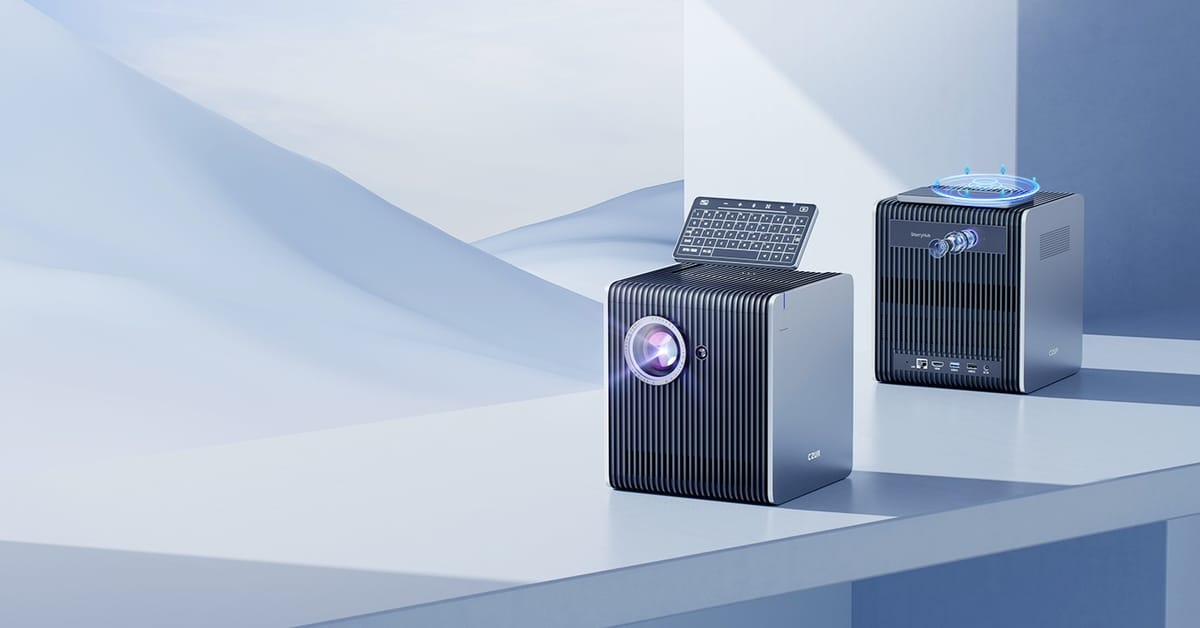
CZUR has successfully carved a lucrative niche in the global office digitization sector by utilizing proprietary artificial intelligence to redefine traditional scanning hardware. By avoiding direct confrontation with established technology giants through "category creation," the company has secured a dominant position in the document processing market and is now pivoting its accumulated technical capital toward the trillion-yuan intelligent conference sector.
The company reports that its annual revenue is approaching RMB 150 million yuan (US$20.6 million), with a year-over-year growth rate exceeding 30%. Driven by high-margin AI scanners that have topped Amazon’s category sales for eight consecutive years, CZUR has expanded its footprint to 107 countries. Its client base has transcended typical consumer markets to include major institutional entities such as the US Congress, Siemens, and the Dubai Ministry of Human Resources.
Founder Zhou Kang has signaled a strategic shift for 2025, moving beyond the mature scanner business to tackle the "homogenized" meeting hardware market. Following an investment of nearly RMB 200 million yuan (US$27.5 million) in research and development, the company is deploying a "misaligned competition" strategy. This involves targeting under-served segments—specifically high-end extensive projection and cost-effective retrofitting solutions—rather than competing directly with saturated flat-panel display markets.
This expansion highlights a broader trend among Chinese hardware exporters moving from simple manufacturing to "full-stack self-research." By controlling the entire technology stack from underlying hardware to AI algorithms, niche players are increasingly able to dictate product definitions and capture higher value in the global supply chain, despite a challenging macroeconomic environment.
Dominating Niche Markets Through Category Creation
CZUR’s initial success challenges the notion that office hardware is a stagnant industry. Before the company’s entry, the scanning market was plagued by inefficiencies, including slow processing speeds and difficult post-processing for bound books. By integrating proprietary "CZUR Enterprise™" OCR engines and AI image processing, the company effectively created a new product category: the AI Scanner.
This technology allows for the automatic flattening of curved book pages, removal of fingerprints from images, and high-precision text recognition. These innovations solved persistent pain points for government and enterprise clients (B2G and B2B), allowing CZUR to bypass traditional scanner giants. Founder Zhou Kang emphasized that the company prioritizes creating new categories during technological upgrades rather than following mature markets, a strategy that has turned the AI scanner line into a substantial "cash cow" for the firm.
Unexpected Growth in consumer Segments
While originally designed for institutional use, the shift in global work patterns has opened significant B2C revenue streams. Data reveals that approximately 30% of CZUR’s overseas users are now individual consumers, driven by the rise of the "home office" economy.
To capitalize on this, CZUR is diversifying its sales channels, combining online platforms like Amazon and independent sites with a robust network of offline agents for service delivery. Furthermore, the company is transitioning from a pure hardware vendor to an ecosystem provider. By unbundling its software update planned for release next month, CZUR aims to monetize its software capabilities independently, deepening user engagement and extending the lifecycle value of its installed hardware base.
Strategic Pivot to Intelligent Meeting Rooms
Having stabilized its cash flow, CZUR is targeting the global conference room market, which is projected to encompass over 100 million rooms by 2025. However, acknowledging the intense competition and price wars inherent in the traditional meeting tablet market, the company has adopted a differentiated approach for its "StarryHub" product line.
The company’s updated strategy avoids the crowded 80-inch-and-below display market.Instead, it is moving in two distinct directions: "upward" into the high-end market with laser projection systems for screens exceeding 100 inches, and "downward" with AI meeting robots priced between RMB 3,000 and 4,000 yuan (US$413 to US$550).The latter targets the massive "retrofitting" market, allowing businesses to upgrade existing TVs and monitors into smart meeting terminals. Zhou notes that the retrofitting market scale is roughly four times that of the new equipment market, particularly in Western markets where logistics costs are high and equipment turnover is slow.
R&D as a Competitive Moat
The viability of CZUR’s varied product lines rests on its "full-stack self-research" philosophy. The company claims its ability to innovate relies on controlling the technology chain, from the "CZUR Purify™" AI audio pickup systems capable of 10-meter clarity to AI video tracking and gesture recognition.
This vertical integration allows for system-level innovations, such as "air writing" interactions on projected screens, which cannot be achieved through component assembly alone. As AI capabilities become standardized across the tech industry, CZUR’s focus on deep scenario reconstruction and proprietary hardware-software integration serves as its primary defense against commoditization by larger tech ecosystems.