
Chinese Auto Exports Surge 21% in September, Led by New Energy Vehicles and Chery's Acceleration
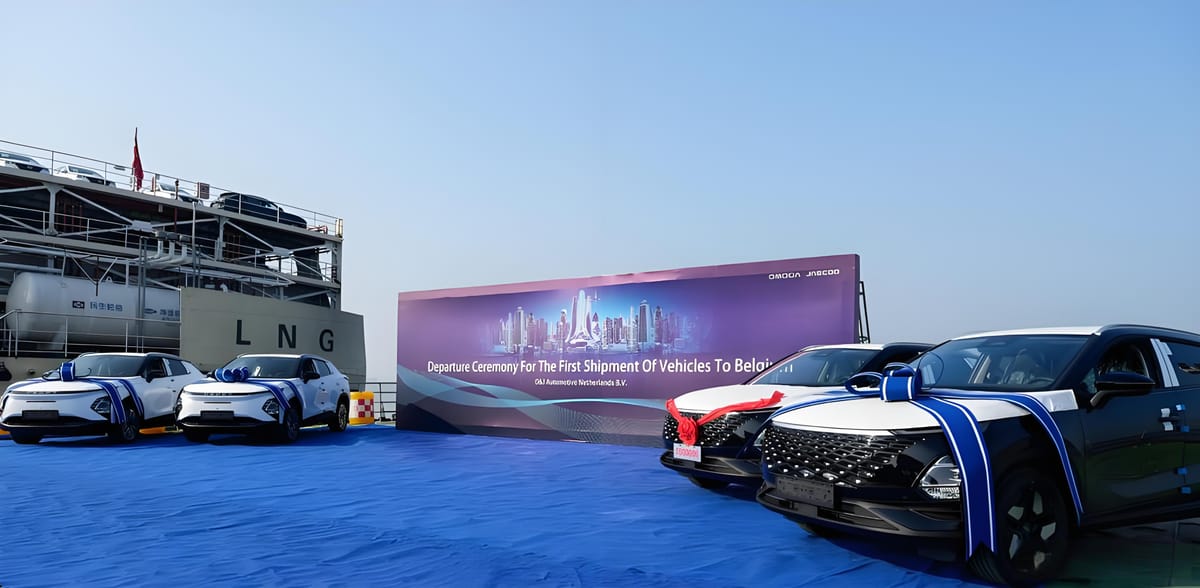
China's automotive exports reached 652,000 units in September, marking a 6.7% month-on-month increase and 21% year-on-year growth, according to the latest trade data. The cumulative total for the first nine months of 2025 hit 4.95 million vehicles, up 14.8% year-on-year, underscoring the growing global competitiveness of Chinese auto manufacturers despite mounting trade barriers in key markets.
New energy vehicle exports drove the expansion, surging 100% year-on-year to 222,000 units in September, while traditional fuel vehicle exports stagnated with just 0.5% growth. The divergence highlights China's strategic pivot toward electrified vehicles as its primary export engine.
Among manufacturers, Chery has pulled ahead with 141,000 units exported in September, establishing a clear lead over rivals SAIC Motor and BYD. The shift in competitive dynamics reflects differing international expansion strategies and product portfolios.
Industry observers note that despite regional tariff challenges and export destination constraints, China's performance positions it to potentially reach 6 million passenger vehicle exports by year-end, a milestone that would cement its status as a dominant global auto exporter.
Passenger Vehicles Sustain Strong Growth Momentum
Passenger vehicle exports totaled 560,000 units in September, rising 5% month-on-month and 22.4% year-on-year, maintaining over 20% annual growth for the fourth consecutive month. The cumulative nine-month figure reached 4.2 million units, up 15.6% year-on-year, putting the sector on track to approach 6 million units for the full year.
Commercial vehicle exports showed robust performance with 93,000 units in September, climbing 18% month-on-month and 13.3% year-on-year. Truck exports accounted for 78,000 units, while bus exports surged 42.5% year-on-year to 15,000 units. The integration of new energy technology into commercial vehicles has contributed to sustained growth in this segment, with cumulative nine-month exports reaching 748,000 units, up 10.2% year-on-year.
New Energy Vehicles Outpace Traditional Powertrains
The export composition reveals a stark divergence between vehicle types. Traditional fuel vehicles exported 430,000 units in September, growing just 0.5% year-on-year despite an 11.1% monthly gain, while new energy vehicles doubled their year-earlier volume to 222,000 units.
For the nine-month period, traditional fuel vehicle exports declined 5.6% to 3.19 million units, while new energy vehicles surged 89.4% to 1.76 million units. Battery electric vehicles led with 1.13 million cumulative exports, up 54.6%, while plug-in hybrid exports tripled to 628,000 units.
Within the September new energy category, battery electric vehicles totaled 153,000 units, rising 6.6% month-on-month and 72.3% year-on-year. Plug-in hybrids reached 69,000 units despite a 14.3% monthly decline, but surged 220% annually. Industry projections suggest new energy vehicle exports could reach approximately 2.5 million units for 2025, representing a significant acceleration in China's electrified vehicle overseas penetration.
Chery Establishes Export Leadership Position
Chery has emerged as China's dominant auto exporter with 141,000 units shipped in September, opening a substantial gap over competitors. The company's cumulative nine-month exports reached 936,000 units, demonstrating consistent execution in overseas markets.
SAIC and BYD ranked second and third in September with 91,000 and 71,000 units respectively, though BYD experienced some monthly deceleration. For the nine-month period, BYD's cumulative exports totaled 705,000 units, while SAIC reached 680,000 units, forming a competitive trio with Chery.
Mid-tier exporters Changan Automobile, Geely Automobile, and Great Wall Motor shipped between 50,000 and 60,000 units each in September. Their cumulative nine-month volumes ranged from 300,000 to 500,000 units. BAIC Group, Dongfeng Motor, Anhui Jianghuai Automobile, and Tesla rounded out the top ten with monthly exports of 20,000 to 30,000 units each.
The differentiated performance among manufacturers reflects varying degrees of success in navigating regional tariffs, establishing distribution networks, and tailoring products to local market preferences across diverse international markets.