
Chinese Automakers Abroad: A Regional Guide to Market Opportunity and Structural Limits
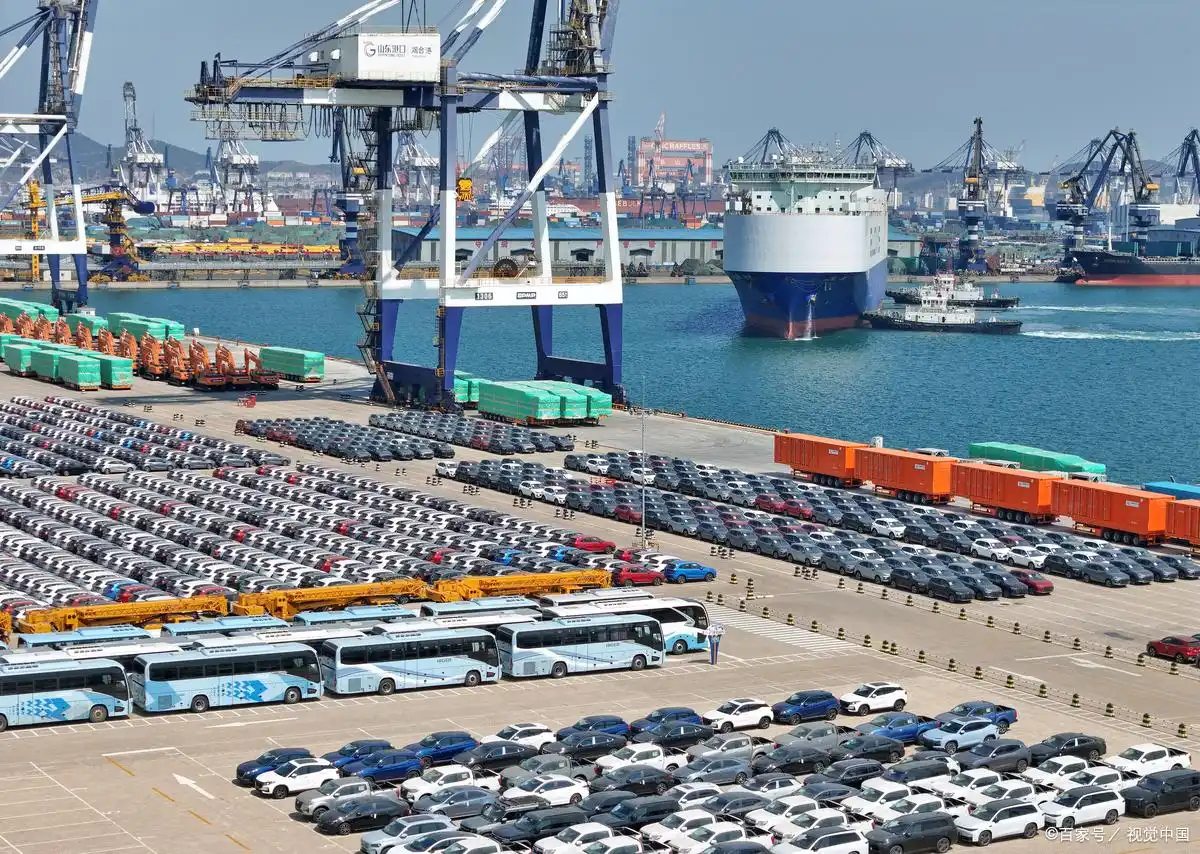
The global automotive map is being redrawn — and China's carmakers are doing much of the drawing. But the opportunity is far from uniform.
What Is This About?
Chinese passenger car brands have moved beyond simply exporting vehicles. They are now competing systematically for durable market share across multiple continents — leveraging a combination of competitive pricing, new-energy vehicle (NEV) technology, and increasingly localized supply chains.
The core question for anyone tracking this shift is not whether Chinese automakers are going global, but where they can realistically win, how much share they can capture, and what structural forces determine the ceiling in each market.
This explainer maps the opportunity across three key regions — Europe (excluding Russia), Russia, and Asia (excluding mainland China) — which together represent roughly 33 million units in annual market capacity, or close to 60% of the global market outside mainland China.
Why This Matters Now
Global passenger car sales outside mainland China stood at approximately 55–58 million units in 2025, according to Marklines data. Once high-barrier markets — the United States, Japan, South Korea, and India — are excluded due to regulatory, political, or brand-loyalty constraints, the addressable market for Chinese brands narrows to roughly 31–33 million units.
That is still a substantial prize. And Chinese brands are no longer peripheral players competing only on price. Their share in electrified segments — plug-in hybrids (PHEVs), battery electric vehicles (BEVs), and hybrid electric vehicles (HEVs) — consistently exceeds their overall market share, signaling that technology positioning, not just cost, is driving penetration.
The structural shift underway is from product export (shipping finished cars) to industrial-chain globalization (localizing production, supply, and branding). That transition changes how overseas growth should be valued — and how durable it is likely to be.
Region 1 — Europe (Excluding Russia): The Highest-Value Battleground
Market Profile
Europe outside Russia represents the largest and highest-value addressable market for Chinese brands, with annual sales of approximately 15–16 million units. It is also a mature, saturated market — overall volume growth is limited, which means gains for Chinese brands come directly at the expense of incumbents such as Volkswagen Group, Stellantis, and Renault.
The competitive intensity is real. European legacy automakers have deep dealer networks, strong brand loyalty, and decades of regulatory familiarity. However, Europe's binding policy commitments to electrification create a structural opening that did not exist a decade ago.
How Chinese Brands Are Entering
Chinese brands are using electrified powertrains as the entry wedge rather than competing head-on in internal combustion engine (ICE) segments where incumbents are strongest.
As of Q1 2026, Chinese brands held:
- 7.2% overall market share in Europe (ex-Russia)
- 24.5% share in the PHEV segment
- 12.2% share in the BEV segment
- 10.0% share in the HEV segment
The gap between overall share and electrified-segment share is significant. It indicates that Chinese brands are overperforming where the market is growing and underperforming where it is stagnant — a structurally favorable position as Europe's powertrain mix continues shifting.
Which Countries Are Opening Up — and Which Are Not
Europe is not a single market. The internal variation in Chinese brand penetration is wide:
|
Market |
Characteristics |
Chinese
Brand Share |
Status |
|
UK |
Right-hand-drive
market; relatively open to new brands |
6–9% |
Established
foothold |
|
Italy |
Preference
for smaller cars; highly price-sensitive |
6–9% |
Established
foothold |
|
Spain |
Gateway
to Southern Europe; rapid growth |
6–9% |
Established
foothold |
|
Poland |
Largest
automotive market in Central and Eastern Europe |
6–9% |
Established
foothold |
|
Germany |
Strong
domestic brands and high customer loyalty |
2–3% |
Early-stage
entry |
|
France |
Strong
policy protection and preference for domestic brands |
2–3% |
Early-stage
entry |
The pattern is clear: markets with lower institutional barriers and higher price sensitivity have allowed Chinese brands to reach meaningful scale. Germany and France remain structurally harder — but the trajectory in consumer awareness and product competitiveness suggests these are timing questions rather than permanent ceilings.
Long-Term Outlook
The structural assessment points to a steady-state share of 25–35% in Europe (ex-Russia), translating to annual sales of approximately 3.5–5.5 million units. Achieving this requires continued localization, navigation of EU tariff policy, and sustained product iteration — but the underlying demand for competitively priced EVs and PHEVs provides the demand-side foundation.
Region 2 — Russia: High Share, Structural Ceiling
Market Profile
Russia's passenger car market has a stable annual capacity of approximately 1.5–1.8 million units — modest in global terms, but strategically significant for Chinese brands.
The defining event was 2022. Following the geopolitical rupture and the exit of European, American, Japanese, and Korean automakers, Chinese brands stepped into a near-complete supply vacuum. No comparable market-entry opportunity existed elsewhere.
Current Position
By Q1 2026, Chinese brands held 52.9% market share in Russia — a dominant position achieved not primarily through competitive superiority but through the absence of alternatives.
This is both the strength and the structural limitation of the Russian market for Chinese automakers.
Why the Ceiling Is Already Visible
The Russian government is not a passive beneficiary of Chinese automotive dominance. Three policy levers are actively constraining further Chinese share gains:
- Domestic brand subsidies — Direct financial support for Russian-assembled vehicles reduces the price advantage Chinese imports hold
- Recycling fee escalation — Import recycling (disposal) fees have been raised repeatedly, functioning as a de facto tariff that raises the final price of Chinese vehicles
- Localization pressure — Incentives for foreign brands to establish domestic production, making a pure-export model increasingly costly
The result is a market that has moved from rapid share capture to a share-maintenance phase, with value creation increasingly coming from per-unit pricing and product mix rather than volume growth.
Long-Term Outlook
Steady-state Chinese brand share in Russia is projected at 50–55%, corresponding to annual sales of approximately 800,000–900,000 units. Russia functions as a reliable volume base and margin contributor — but it is not a growth engine. The more important variable going forward is average selling price, not unit volume.
Region 3 — Asia (Excluding Mainland China): The Next Growth Engine
Market Profile
Asia outside mainland China represents approximately 16 million units in annual market capacity — comparable to Europe in scale. But the internal structure is fundamentally different.
Three markets — India (~4 million units), Japan (~4 million units), and South Korea (~1.7 million units) — account for roughly 9.7 million units combined. All three are effectively inaccessible to Chinese brands in the near term due to political barriers, deeply entrenched domestic manufacturers, and consumer preferences shaped by decades of local brand dominance.
Excluding these three, the addressable market for Chinese brands is approximately 5.2 million units, concentrated in Southeast Asia, Central Asia, and the Middle East.
How Chinese Brands Are Entering
Within the addressable market, Chinese brands reached 14.8% share in Q1 2026 (ex-India, Japan, South Korea). The primary driver is battery electric vehicles, in contrast to Europe where PHEVs and HEVs play a larger role.
The structural fit is strong: these markets tend to be price-sensitive, infrastructure-adaptable, and increasingly receptive to EVs as charging networks expand and government incentives proliferate.
A Three-Tier Market Map
Tier 1 — Established Positions: - Thailand: The most advanced Chinese brand penetration in Southeast Asia; EV-friendly policy environment; functions as a regional manufacturing and export hub - Indonesia: Large population, low vehicle ownership rates, significant latent demand - Philippines: Japanese brand dominance is loosening; Chinese value proposition resonating
Tier 2 — Significant Upside Remaining: - Turkey: A strategically important connector between Europe and Asia; local production investment is becoming a key variable - Malaysia: Proton's deep partnership with Chinese automakers (Geely) is dissolving traditional barriers from within
Tier 3 — Strategic Reserves: - Central Asia (five countries): Belt and Road political alignment; limited near-term market scale - Middle East (Saudi Arabia, UAE): High purchasing power, strong government-driven EV transition mandates, meaningful premiumization opportunity
Long-Term Outlook
Across all of Asia (including the inaccessible India/Japan/South Korea markets in the denominator), Chinese brands are projected to reach a steady-state share of 20–25%, corresponding to 3–4 million units annually. Within the addressable market alone, actual penetration rates will be considerably higher. Asia is expected to be the most important incremental growth source for Chinese automakers over the next three to five years.
The Full Picture: Three Regions, One Strategic Thesis
|
Region |
Market
Capacity |
Addressable
for Chinese Brands |
Current
Share |
Projected
Steady-State Share |
Projected
Annual Volume |
|
Europe
(ex-Russia) |
15–16M |
15–16M |
7.2% |
25–35% |
3.5–5.5M |
|
Russia |
1.5–1.8M |
1.5–1.8M |
52.9% |
50–55% |
0.8–0.9M |
|
Asia
(ex-mainland China) |
~16M |
~5.2M¹ |
14.8%¹ |
20–25%¹ |
3–4M |
|
Combined |
~33M |
~22M |
— |
— |
7.3–10.4M² |
¹ Share within the addressable market, excluding India, Japan, and South Korea.
² Share of the total Asian market, including currently inaccessible markets.
What Explains the Variation Across Regions?
Each region follows a distinct logic — and understanding that distinction matters for assessing durability:
- Europe: Penetration is driven by NEV technology and policy alignment. The EU's electrification mandate creates a structural tailwind that Chinese brands are better positioned to exploit than many legacy incumbents. The risk is tariff escalation and localization requirements.
- Russia: Penetration was driven by supply vacuum following geopolitical disruption. The position is defensible but not easily expandable. The risk is domestic policy erosion of the price advantage.
- Asia: Penetration is driven by price-band alignment and EV adoption curves. The opportunity is large and still early-stage. The risk is competition from Japanese and Korean brands defending their home region, and the political complexity of Southeast Asian markets.
What Comes Next?
Several variables will determine whether the steady-state projections above are achieved — or exceeded:
1. Localization depth Pure export models face increasing friction in every major market. Chinese brands that establish local assembly, supply chains, and after-sales infrastructure will be more defensible than those that remain import-dependent.
2. Tariff and trade policy evolution EU anti-subsidy tariffs, import fee structures in Russia, and bilateral trade agreements across Southeast Asia will all shape the economics of Chinese brand expansion. These are moving variables, not fixed constraints.
3. Product mix and average selling price The transition from competing on price alone to competing on technology, design, and brand equity is underway but incomplete. Per-unit profitability, not just volume, will determine whether overseas expansion creates durable value.
4. Japanese and Korean competitive response Toyota, Honda, Hyundai, and Kia are not passive observers. Their response in Southeast Asia — where they currently hold dominant positions — will be a key variable for Chinese brand share trajectories in the region.
The Bottom Line
Chinese passenger car brands are no longer a low-cost alternative at the margins of global automotive markets. Across the three regions examined here, the structural case for 7–10 million units in annual overseas sales is grounded in product competitiveness, policy tailwinds, and addressable market size.
The underlying logic differs by region — technology-led in Europe, geopolitics-led in Russia, value-led in Asia — but the common thread is consistent: Chinese automakers have become an independent pole in the global automotive industry, no longer defined by what they replace, but by what they offer.
Related Coverage:
China's Auto Market Enters Its Second Half: From Volume to Value