
China's Auto Market Enters Its Second Half: From Volume to Value
What Is Happening in China's Auto Market Right Now?
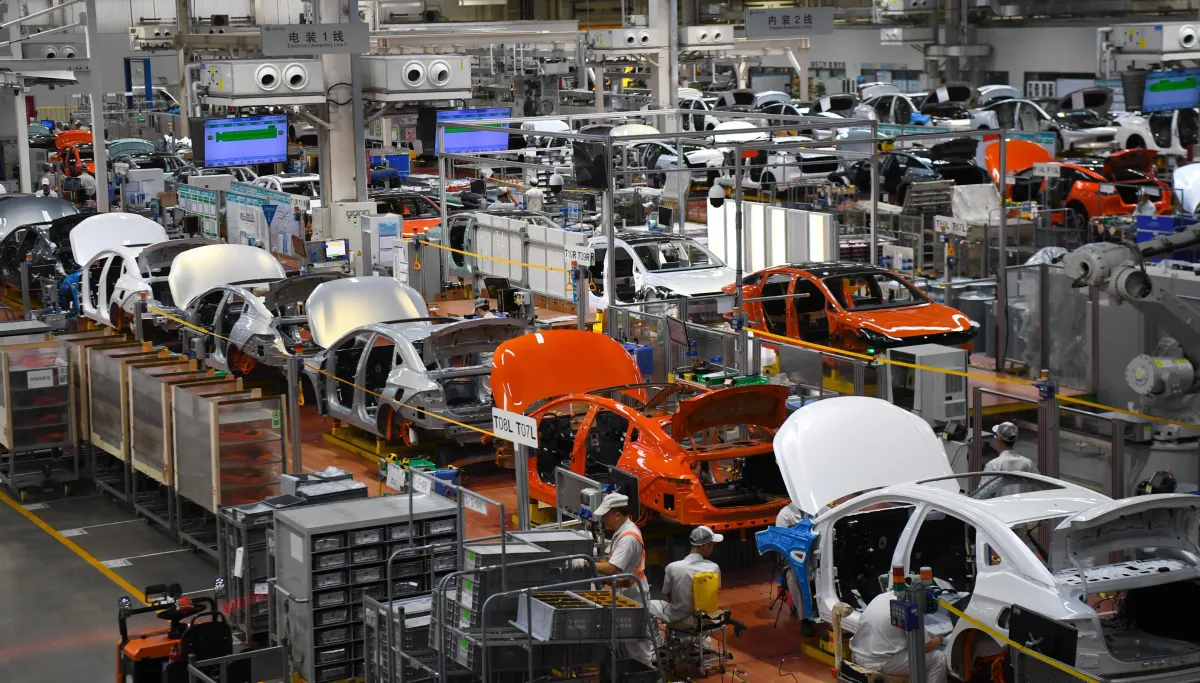
China's automotive industry is experiencing a structural inflection point. After more than a decade of rapid expansion—during which the country became the world's largest car market for 17 consecutive years—the industry has entered what analysts are calling its "second half": a phase defined not by growth, but by consolidation, margin compression, and a race for technological differentiation.
The surface-level symptoms are striking in their contradictions. On a single day in July 2026, eight automakers simultaneously held product launch events, unveiling everything from entry-level family SUVs priced at 90,000 yuan to 400,000-yuan flagship models. In the first five months of the year alone, 550 new vehicle models entered the domestic market—more than three per day. Yet retail sales for June 2026 fell 23.2% year-on-year to 1.602 million units, and cumulative retail sales for the first half of the year were down 20.2%.
The disconnect between frenetic product activity and declining sales is not a temporary anomaly. It reflects a deeper shift in the market's underlying structure.
Why Is the Market Contracting After Years of Growth?
Several structural forces have converged simultaneously.
Saturation of the primary market. China's total vehicle fleet has reached 370 million units. The pool of first-time buyers is shrinking, and replacement cycles are lengthening. NIO founder Li Bin stated publicly at the 2026 Chongqing Auto Forum that the market has "officially exited the high-growth era" and entered full-scale stock competition, with full-year retail sales projected to decline 15–20%.
The end of policy-driven demand. Previous rounds of government subsidies and purchase incentives pulled forward demand that would otherwise have been spread across multiple years. As those programs wound down, the market faces a hangover effect.
Overcapacity built for a market that no longer exists. Dozens of automakers scaled up manufacturing capacity during the boom years. That capacity does not disappear when demand softens—it creates structural pressure to keep prices low and factories running, regardless of profitability.
The result is what one analyst described as a transition "from incremental expansion to stock-market competition"—a zero-sum game where every unit sold by one automaker comes at the expense of another.
Why Are Automakers Losing Money Even as They Sell Cars?
The profitability crisis in China's auto sector has two sides: a cost floor that is rising, and a price ceiling that is collapsing.
On the cost side, raw material prices have surged across the board:
- Battery-grade lithium carbonate, a core input for EV batteries, averaged 75,500 yuan per ton in 2025. By mid-2026, spot prices had exceeded 170,000 yuan per ton—a 125% increase.
- Global copper prices rose more than 40% cumulatively since 2025, with domestic spot prices remaining above 100,000 yuan per ton into 2026.
- More than 70 domestic tire manufacturers issued price increase notices by April 2026, covering both passenger and commercial vehicle categories.
- Automotive-grade memory chips saw a phased price increase exceeding 180%.
The combined effect has added an estimated 15,000–20,000 yuan to per-vehicle manufacturing costs across the industry.
On the revenue side, competitive pressure has driven prices to historic lows. BYD's entry-level Qin Plus DM-i dropped to 79,800 yuan. Changan's Yidong was available for 64,900 yuan after promotions. Tesla cut the Model 3's starting price to 235,500 yuan while adding advanced driver-assistance hardware as standard equipment.
The math is brutal. China's automotive manufacturing sector profit margin fell to 4.1% in 2025—the lowest level since 2015. Industry observers note that some segments are effectively operating at a loss on each unit sold, sustained only by the hope of outlasting weaker competitors.
What Is the Competitive Logic Driving This Behavior?
The behavior of automakers in this environment follows a recognizable pattern from other industries undergoing consolidation.
Companies that have not yet achieved economies of scale face a choice: reduce output and preserve margins, or maintain volume and accept losses in the hope of surviving long enough to reach a scale where unit economics improve. Most are choosing the latter—because exiting the market or ceding volume share is effectively a death sentence in an industry where fixed costs are enormous and brand equity is hard to rebuild.
As one academic observer put it: "The primary cause is overcapacity. They all hope to hold on until the end—to outlast their competitors."
This dynamic is self-reinforcing. Each automaker's decision to maintain or cut prices forces others to respond in kind. The result is an industry-wide race to the bottom on pricing, even as input costs rise. Analysts describe this as a "double squeeze"—endless price wars on one side, rising raw material costs on the other.
The structural implication is that this phase cannot persist indefinitely. Either weaker players exit the market, or external shocks (policy intervention, demand recovery, input cost normalization) change the calculus. What remains unclear is the timeline.
How Are Leading Players Trying to Break Out of the Value Trap?
With pure price competition destroying margins across the board, the companies most likely to survive are those that can shift competition onto dimensions other than price. Three strategies are emerging.
Ecosystem integration over standalone manufacturing. The model gaining the most attention involves deep partnerships between technology platforms and traditional manufacturers—where the technology partner provides software, intelligent systems, brand positioning, and consumer insight, while the manufacturer contributes engineering capability and production scale.
The most cited example is the partnership between Huawei's HarmonyOS Intelligent Mobility ecosystem and Seres. Seres, whose origins trace to commercial vehicle manufacturing, partnered with Huawei in 2021. Within 46 months, the AITO brand reached cumulative sales of one million units. The AITO M9—priced above 500,000 yuan—held the top monthly sales position in its segment for multiple consecutive months and surpassed 300,000 cumulative deliveries.
A second partnership, between JAC Motors and Huawei on the Luxeed brand, produced the S800 sedan, which has held the top monthly sales position in the million-yuan-plus luxury segment for nine consecutive months, with over 19,000 units delivered by June 2026.
Supply chain elevation as competitive advantage. The Luxeed S800 project is notable not only for its sales performance but for its downstream effects. The project is credited with driving technology upgrades among more than 200 suppliers in the Yangtze River Delta region, raising AI-based visual inspection coverage in the domestic power battery industry to above 90%, and leading to the adoption of more than 200 process optimization standards across the sector.
This "lead enterprise drives cluster upgrade" model represents a different theory of competitive advantage—one based on the ability to pull an entire supply ecosystem to a higher level of capability, creating barriers that are difficult for competitors to replicate quickly.
Technology differentiation through autonomous driving advancement. The longer-term strategic bet across the industry is that consumers will eventually pay a premium for genuinely differentiated intelligent driving capability—and that the companies that establish that capability first will be able to escape the commodity pricing trap.
In mid-2026, the Luxeed G9 became the first vehicle to receive a Beijing municipal license for Level 3 autonomous driving road testing at speeds up to 120 km/h. Beijing's approval process requires completion of simulation testing, closed-course validation, more than 5,000 kilometers of autonomous driving testing, and verification across four safety dimensions: functional safety, expected functional safety, cybersecurity, and data security.
What Does L3 Autonomous Driving Actually Mean for the Industry?
The distinction between Level 2 and Level 3 autonomy is more significant than it might appear from a technical specification sheet.
Under Level 2 systems (which are now widely deployed), the human driver remains legally responsible for the vehicle at all times, even when automation is active. Under Level 3, the automated driving system assumes primary responsibility for the driving task under defined conditions—the driver can disengage but must be able to resume control when requested.
According to IDC, this transition represents not just a technical milestone but "a systemic restructuring of the regulatory framework and business model." The legal and insurance implications alone require new frameworks that most jurisdictions are still developing.
For the automotive supply chain, L3 commercialization would drive demand upgrades across multiple technology categories simultaneously: more capable chips, higher-resolution sensor arrays, drive-by-wire chassis systems, closed-loop data infrastructure, and new approaches to functional safety validation. This creates a potential demand catalyst that could partially offset the current market downturn—but only for companies that have already built the underlying capability.
Who Is Most Likely to Survive the Consolidation Phase?
The structural logic of the current moment points toward significant industry consolidation. The combination of high fixed costs, rapid technology iteration, and margin compression creates conditions where scale and ecosystem depth become decisive advantages.
Several characteristics appear to differentiate companies with stronger survival prospects:
- Ecosystem integration: Access to a technology platform that provides intelligent systems, brand support, and distribution infrastructure at shared cost
- Supply chain leverage: Ability to drive cost and quality improvements through supplier relationships, rather than simply passing cost pressure downstream
- Technology differentiation: Demonstrated capability in areas—particularly intelligent driving—where consumers show willingness to pay a premium
- Balance sheet resilience: Sufficient capital reserves to sustain losses through the consolidation period without being forced into distressed asset sales
The companies least likely to survive are those competing primarily on price in undifferentiated segments, without a path to either scale economies or technology differentiation.
As one industry analyst summarized: "In the past, almost every company that entered the new energy vehicle sector could share in the market expansion dividend. In the future, opportunity will belong only to the few that can build systemic capability, create generational technology gaps, and achieve global operations."
What Should You Watch Going Forward?
Several indicators will signal how this transition is progressing:
L3 regulatory expansion: Whether other major Chinese cities follow Beijing in establishing L3 testing and eventual commercial licensing frameworks will determine how quickly intelligent driving becomes a commercial differentiator rather than a regulatory category.
Capacity exit rate: The pace at which weaker automakers reduce output, merge, or exit the market will determine how long the price war phase persists. Policy decisions around supporting or allowing the failure of state-affiliated manufacturers will be particularly consequential.
Raw material price trajectory: Lithium carbonate, copper, and chip prices are key variables. A normalization of input costs would significantly change the profitability calculus across the industry.
Premium segment performance: Whether Chinese consumers continue to pay 500,000 yuan or more for domestically branded vehicles—a relatively recent phenomenon—will test the durability of the high-end positioning that companies like AITO and Luxeed have established.
Global expansion: As the domestic market matures, the ability to generate revenue from overseas markets becomes increasingly important to the economics of Chinese automakers. Trade policy developments in key export markets will shape this trajectory.
Related Coverage:
AITO Maker Seres Swings to Loss as Input Costs Gut Huawei Partnership's Profitability
NIO, Xpeng, Li Auto Abandon Auto Identity to Claim Next Computing Platform
BYD Launches 4nm Self-Developed Smart Driving Chip, Commits to L3/L4 Safety Liability