
Chinese EdTech AI Tools Capture US K-12 Market as ByteDance, Zuoyebang Leverage Domestic Expertise
Chinese education technology companies are rapidly gaining traction among American middle and high school students, with AI-powered homework assistance apps from ByteDance, Zuoyebang, and other Chinese firms repeatedly cracking the top five downloads on Apple's App Store education category. The expansion marks a significant shift in the US educational tools market, previously dominated by domestic players like Google's Photomath and Quizlet.
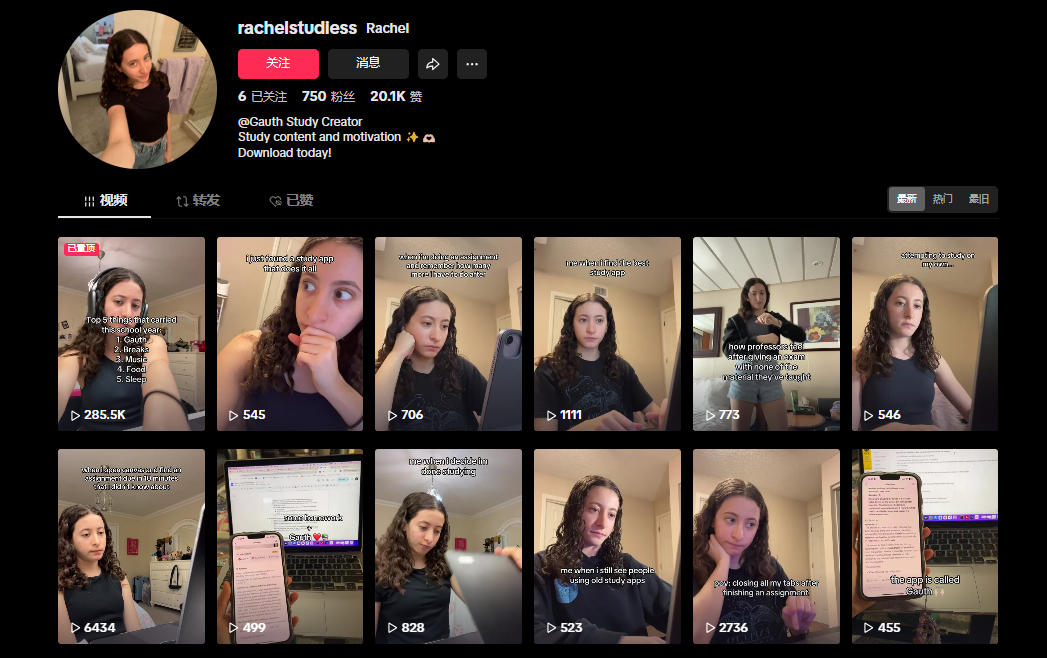
Rachel, a 17-year-old high school student in Austin, Texas, now relies on ByteDance's Gauth to solve calculus problems while preparing for the SAT. She discovered the app through social media recommendations in February 2025, attracted by its ability to provide step-by-step solutions within three seconds and highlight common mistakes. Meanwhile, Evan, a Houston sophomore, has largely replaced his $60-per-hour tutor with Answer AI, a product from Beijing-based Wenjun Technology, noting the app's annual subscription costs roughly the same as a single tutoring session.
The apps have effectively transplanted China's intensive test-preparation methods into American classrooms, offering comprehensive coverage from elementary math to advanced physics and chemistry. The products leverage technologies and pedagogical approaches refined in China's highly competitive education market, adapting them for US curriculum standards including SAT preparation.
The success represents a reversal of fortunes for Chinese education companies that faced severe regulatory restrictions domestically following China's 2021 "double reduction" policy, which essentially shut down the after-school tutoring industry for primary and secondary students in China.
Market Penetration Through AI and Social Media
Chinese edtech apps have disrupted the US educational tools market through a combination of advanced AI capabilities and aggressive social media marketing. Zuoyebang's Question AI, launched in May 2023, pioneered the multi-subject approach in the US market, covering the full K-12 curriculum rather than focusing on basic subjects like domestic competitors.
Within less than a year, Question AI climbed into the top three education downloads in the US, accumulating nearly 6 million downloads. The app features an adaptive learning system that identifies students' weak points and automatically generates targeted exercises, a methodology developed through years of serving Chinese students.
ByteDance's Gauth achieved explosive growth by leveraging TikTok's traffic advantages. The company launched challenge campaigns encouraging American students to share usage experiences on the platform, helping Gauth reach 2.76 million monthly downloads by late 2024 and consistently rank among the top two education apps in the US.
Caribbean Panda Group's Solvely took a different technical approach, integrating multiple large language models including GPT-4 and Gemini to handle complex problems in statistics and geometry. In January 2025, it briefly topped the US education app free download chart with peak daily downloads reaching 45,000.
Business Model and User Engagement
The Chinese apps employ freemium models with annual subscriptions priced around $99, significantly undercutting traditional tutoring costs. Gauth, for instance, allows users to earn free problem-solving credits through daily logins, watching advertisements, and inviting friends—tactics that drive viral growth while building user habits.
Thomas, an 18-year-old SAT candidate, switched to Question AI's test prep materials after finding domestic tools offered outdated question banks and overly general explanations. The app's database and targeted practice resonated with students accustomed to standardized test preparation.
Question AI has garnered over 6,000 reviews on Google Play with a 4.6-star rating, indicating widespread adoption among US K-12 students. User testimonials highlight features like the automatic error correction notebook, which catalogs mistakes and generates similar practice problems.
Origins in Overseas Chinese Communities
Chinese education companies began exploring overseas markets over two decades ago, with New Oriental opening a Toronto branch in 2002. The expansion accelerated after 2019, when TAL Education Group (formerly Xueersi) and Yuanfudao began overseas operations, with TAL choosing Silicon Valley as its first US location.
The San Francisco Bay Area, home to concentrated populations of high-achieving Asian-American families, became fertile ground for Chinese education products. Data indicates raising an elite child in the Bay Area requires at least 3millionintotalexpenses,withmonthlyafter−schoolclassandprivatetutoringcostsexceeding3millionintotalexpenses,withmonthlyafter−schoolclassandprivatetutoringcostsexceeding1,000 as baseline spending.
The 2021 regulatory crackdown in China, which banned for-profit tutoring in core school subjects, forced education companies to seek overseas markets for survival. American markets, particularly communities with intensive academic competition, offered a natural fit for business models and technologies developed in China's pressure-cooker education environment.
Educational Impact and Adoption Patterns
The apps have fundamentally altered how American students approach homework and test preparation, introducing study methods common in China's competitive education system. Rachel's daily routine now mirrors that of students in Beijing's Haidian district: completing math assignments through Gauth, photographing difficult problems for AI analysis, organizing mistakes in digital error notebooks, and working through automatically generated practice sets.
On her social media profile, Rachel lists Gauth alongside rest time, music, food, and sleep as her "five essential survival tools for this school year." The integration of Chinese edtech into American students' daily academic lives represents a significant cross-cultural transfer of educational methodology.
The apps provide comprehensive subject coverage spanning elementary mathematics through advanced placement courses in physics and chemistry, addressing the full spectrum of US K-12 education. Some products also offer access to professional tutors, replicating the "three-piece tutoring set" model familiar to Chinese students in an online format adapted for American users.