
China's Robotic Mowers Go Global With 'Boundary-less' Tech, Nearshoring Strategy
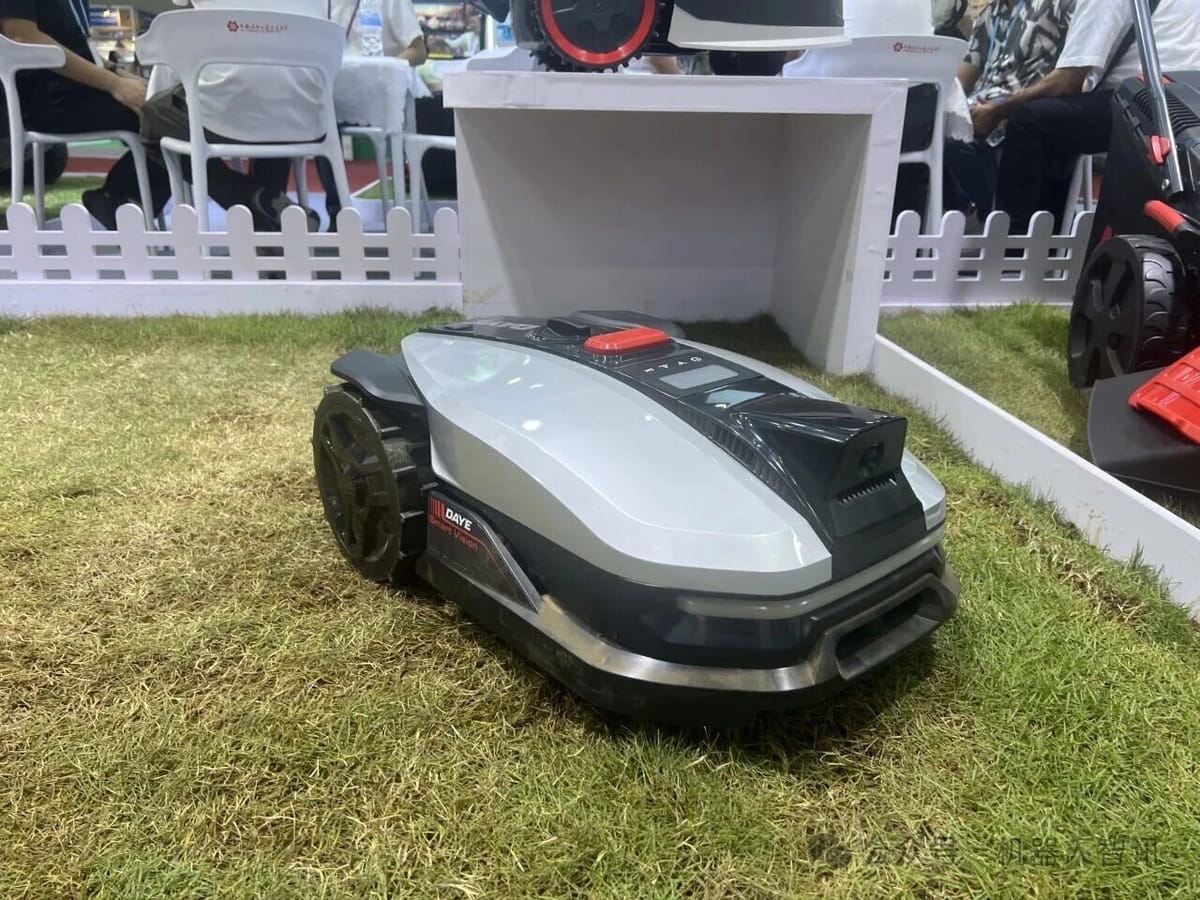
Chinese manufacturers are leveraging advanced navigation technology and globalized production chains to aggressively expand their footprint in the robotic lawn mower market, challenging established international players with increasingly sophisticated and cost-competitive products.
This industry-wide push was the central story at the 138th Canton Fair, which opened on October 15, 2025. Exhibitors in the tool sector reported welcoming over 1,000 prospective buyers daily to their booths. The intense interest follows a nearly 60% year-on-year surge in China's lawn mower exports during the first half of 2025, underscoring strong global demand for Chinese-made outdoor smart equipment.
A key technological shift on display is the widespread abandonment of physical boundary wires. The new standard is a fusion of RTK satellite positioning and AI-powered visual algorithms, enabling mowers to navigate complex yards with greater precision and far simpler installation for consumers.
Strategically, leading firms are also mitigating geopolitical risks and reducing logistics costs by establishing production facilities in Mexico and Southeast Asia. This "nearshoring" trend allows them to bypass trade tariffs for key markets like the U.S. and narrows the competitive gap with Western brands on both features and final price.
Established Players Expand Global Footprint
Industry leaders are using their scale and recent acquisitions to solidify their market position. Daye, a national champion in manufacturing, showcased a new generation of boundary-less mowers. Its upcoming model, set for a 2026 release, uses a texture recognition algorithm to solve common boundary misjudgments. The fair also marked the debut of AL-KO, a century-old German brand acquired by Daye, whose Austrian production base helped drive a 120% year-on-year increase in order inquiries from the European market. Daye's Mexico factory has reduced its U.S. logistics costs by 75%.
Meanwhile, Ecovacs Robotics presented a dominant dual-brand strategy with its Ecovacs and Tineco lines. Its flagship GOAT A3000 LIDAR model integrates satellite, lidar, and visual navigation. The company’s A1600 RTK model sold over 40,000 units in Europe in 2024. “It offers at least three more smart features than local European brands at only 70% of the price,” said a Nordic distributor who signed a deal at the event.
Industrial and Appliance Giants Enter the Fray
The lucrative market is also attracting new entrants from adjacent industries. Puhua Lingdong Technology, a company with 15 years of experience in industrial robotics, made its debut with a rugged robotic mower targeting professional applications. The machine’s four-wheel-drive chassis and GPS-RTK system enable it to climb 30-degree slopes, making it suitable for solar farms and golf courses. A German buyer placed a 50-unit pilot order on-site, with its head of purchasing noting, “Industrial-grade reliability is their core advantage over consumer brands.”
In another cross-sector move, small home appliance maker Xinbao Electrical Appliances Holdings launched its first smart mower aimed at high-end users in Europe, the U.S., and Southeast Asia. The product features a proprietary IoT module that allows for remote scheduling and integration with other smart home devices, leading to an exclusive distribution agreement with a major UK-based garden supply company.
From Wires to AI: The New Industry Standard
The technological evolution is clear across the exhibition floor, with an estimated 80% of participating brands now offering boundary-less solutions. The combination of visual AI and RTK positioning has become the de facto standard for new products, a trend supported by component suppliers like Fibocom Wireless, whose solutions are trained on millions of real-world scenarios. This shift not only improves user experience but also significantly lowers the barrier to adoption.
The move toward globalized production is equally significant. Companies like Daye and Ecovacs are reporting tariff cost reductions of over 30% by producing in or near their target markets, a strategy now being widely emulated across the industry.
Niche Strategies Emerge in Crowded Market
With the field growing more competitive, other brands are carving out niches to attract buyers. Tengya Group paired its robotic mowers with robotic pool cleaners, securing over 20 million yuan (US$2.8 million) in orders on the first day, primarily from Australian buyers. YAT Electric Appliance attracted significant interest from Middle Eastern clients with new models incorporating China's BeiDou navigation system. At the same time, brands like Sanfeng competed aggressively on price, offering models 15% below the industry average while maintaining profitability.