
Chinese EV Maker XPeng Plans to More Than Double Overseas Sales in 2027 After a Wider Loss
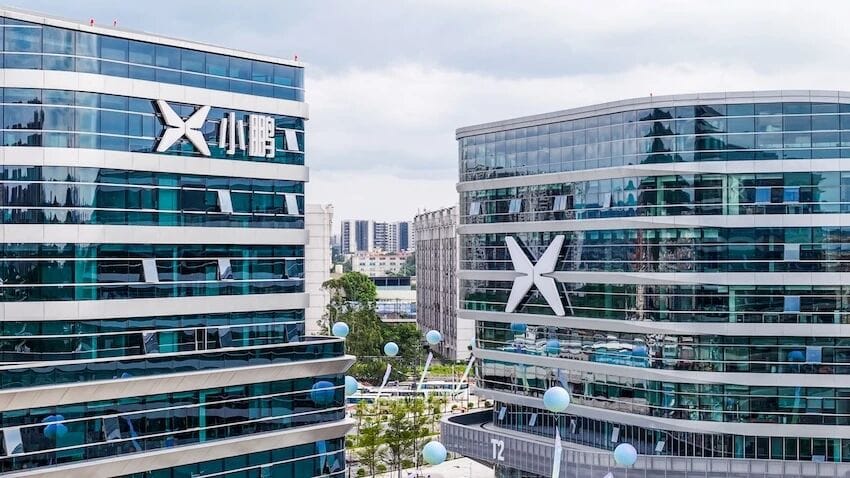
Chinese electric-vehicle maker XPeng Inc. said it plans to more than double overseas vehicle sales in 2027, after a third quarter in which revenue beat the company's own forecast even as deliveries barely rose from a year earlier and the net loss widened.
In a Nov. 16 filing with the U.S. Securities and Exchange Commission, XPeng reported 24.28 billion yuan ($3.62 billion) of revenue for the three months ended Sept. 30, up 19.1% from a year earlier and 23.0% from the second quarter. That came in above the 21.7 billion to 23.4 billion yuan range the company set in its August results.
Deliveries were 118,390 vehicles, up only 2.1% from 116,007 a year earlier and within the 115,000-to-121,000 guidance issued at the same time.
The gap between almost-flat unit growth and a double-digit revenue increase is the point of the quarter. Vehicle sales revenue rose 19.8% to 21.63 billion yuan. XPeng attributed the gain to higher deliveries and a higher average selling price from a richer mix of models. Vehicle margin, the gross profit on those sales, was 13.1%, unchanged from a year earlier and up from 12.1% in the second quarter.
The group is still losing money. The net loss was 870 million yuan, compared with 380 million yuan a year earlier, though it narrowed from 1.34 billion yuan in the second quarter. The loss from operations was 750 million yuan, almost unchanged from a year earlier.
Gross margin slipped to 18.9% from 20.1% a year earlier and 20.7% in the prior quarter, because the margin on services and other revenue fell to 67.1% from 74.6% and 75.1%. XPeng said that drop reflected lower technical research-and-development service revenue after "significant milestone catch-ups" in the earlier periods.
Services revenue itself was 2.65 billion yuan, up 13.7% from a year earlier mainly on carbon-credit trading, but down 1.9% from the second quarter.
On the earnings call, management pointed overseas as the way those economics improve. Chairman and chief executive He Xiaopeng called the international business XPeng's strongest driver of growth and profitability, according to a transcript of the call and contemporaneous accounts of his remarks.
He said the company aims to sell more than 40,000 vehicles abroad in the fourth quarter and more than 100,000 in 2026, which would be the first time it has crossed that annual mark, and to more than double overseas volume in 2027.
Vice chairman and president Brian Gu said the 2027 target is to "more than double what we have achieved in terms of volume this year," with Europe still likely to account for "around 50% or more," Southeast Asia and the wider Asia-Pacific region about 30%, and the Middle East and Latin America about 20%. He also said XPeng wants more than 1,000 overseas sales and service points.
Those 2026 and 2027 overseas volume figures were given on the call. They are not in the written results. What is in the company's own delivery reports is the October run-rate: XPeng said it delivered a record 13,326 vehicles overseas that month, up 166% from a year earlier, out of a company-record 50,237 total deliveries.
The profit argument is that a car sold abroad is worth more to XPeng than one sold in China. James Wu, the vice president of finance and accounting, said on the call that export volume rose from below 20% of deliveries to more than 20% in the third quarter, and that the share of revenue was larger still.
He said the export business margin is "among the top tier in the industry" and that the brand is "very well positioned overseas with price premium." Accounts of the same remarks also have him saying gross margin abroad was more than twice the domestic vehicle margin, and that profit after selling costs was several times higher, helped in some markets by local distributors that keep XPeng's own selling costs down. That comparison is a management claim from the call, not a segment breakdown in the filing.
The pricing already on offer in one new market is consistent with a premium, if not with a finished retail network. Three days before the results, XPeng priced two SUVs for Britain, with the cheaper model, sold there as the L03, starting at £32,990.
The company's Chinese-language account of that event described the UK starting price as about 2.5 times the domestic sticker. Deliveries are not due until 2027, and the 100-store UK plan is still a target.
The overseas push is being made while the company is still funding it from a loss-making car business at home. He said China's auto market will still face headwinds in 2027, though he expects conditions to be slightly better than in 2026.
Selling, general and administrative expenses rose 11.4% from a year earlier, to 2.78 billion yuan, which XPeng tied to higher marketing and advertising spending, more sales staff, and, from the second quarter, higher commissions to franchised stores. Research-and-development expenses were 2.85 billion yuan, up 17.5% from a year earlier on new models and AI-related work.
For the fourth quarter, XPeng guided to 169,000 to 174,000 deliveries and 30.40 billion to 31.80 billion yuan of revenue. Hitting the delivery range would require a sharp step-up from October.
On the call, He said he expects November deliveries to exceed 60,000, which would be another monthly record. Wu said the fourth-quarter average selling price is likely to be slightly lower as deliveries of the MONA L05, launched in late October, take a larger share.
Inventories were 16.86 billion yuan at the end of September, up from 10.38 billion yuan at the end of 2025, according to the results filing. The company did not say how much of that increase is finished vehicles already built for the year-end ramp.
China's planned cut to export-tax rebates in 2027 is a cost XPeng will have to absorb if more of its growth is coming from abroad. Wu called the change "just normal cost of business."
He said the company is accelerating overseas localization, including local sourcing of parts, and that prices on new models already take the 2027 rebate change into account, with product timing also being adjusted for a possible further phase-out in 2028.
Gu said XPeng already builds cars with Magna in Austria and has manufacturing in Malaysia and Indonesia, and will add local production next year in markets it has not yet named.
The technology-licensing business that padded earlier service margins is not, on the company's own telling, the earnings story for this quarter. Gu, who said he is personally leading a new unit for platform partnerships, told the call that XPeng is discussing more work with Volkswagen and with other partners, and that he sees "significant opportunity" starting next year. That is a prospect, not reported revenue.
The same applies to the IRON humanoid robot: He said mass production is due to start on Jan. 1, 2027, with deliveries to business customers in the second quarter. Those are not products in this quarter's delivery count.
XPeng ended September with 45.41 billion yuan ($6.77 billion) in cash, as the company defines it, up from 40.48 billion yuan at the end of June. He said operating cash flow in the third quarter was more than 2 billion yuan; that figure is from the call, not from a cash-flow statement in the results release.
In New York on Monday, where the shares trade as XPEV, they were at $9.87, up 5.3%, as of 1:19 p.m. Eastern Time, according to Yahoo Finance, with the regular session still open.
The quarterly report shows a company that can raise revenue without selling many more cars than a year earlier, and that is asking investors to treat overseas volume as the path to better profits. The written accounts still show a wider year-on-year loss. Whether 2027's promised doubling abroad closes that gap will depend on how many of those vehicles are actually delivered, and at the margins management described on the call.
Related Coverage:
XPeng Prices the L03 From £32,990 in the UK, and Plans 100 Stores by 2027
XPeng's MONA Gambit: 5,000 EVs Sold in Three Minutes, but Margin Erosion Clouds the Youth Play