
Chinese EV Makers Diverge on AI Strategy: Mass-Producing Humanoids vs. Smarter Cars
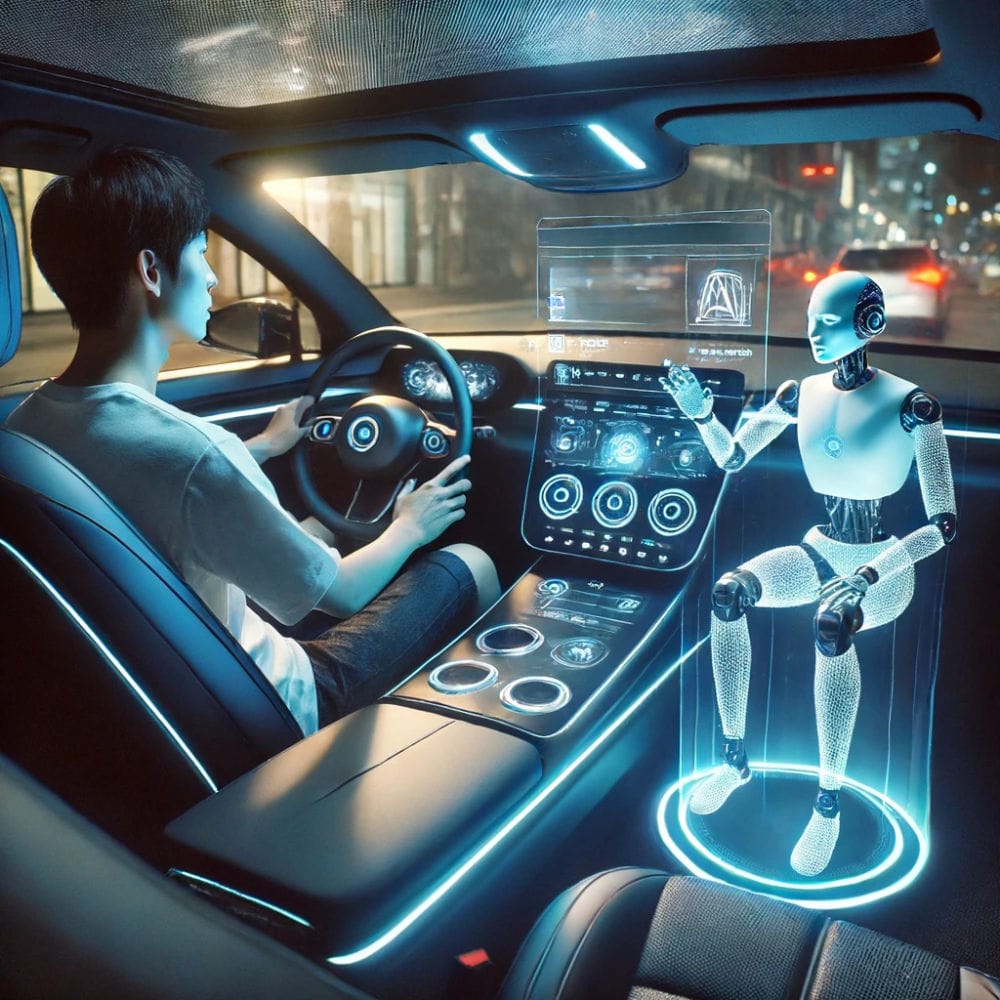
As 2025 draws to a close, China’s electric vehicle manufacturers are facing a strategic bifurcation in their quest for a "second growth curve" beyond the hyper-competitive automotive market. Leading industry executives are divided on how to deploy embodied artificial intelligence (AI) in the coming year, creating a split between companies aggressively pursuing humanoid robotics and those doubling down on the automobile as the ultimate intelligent agent.
The divergence is starkest between two major new-energy vehicle contenders. He Xiaopeng, CEO of XPeng, has positioned 2026 as the year his company transitions into a global embodied AI firm, targeting mass production of high-end humanoid robots. In contrast, Li Xiang, CEO of Li Auto, argues that for the next decade, the most valuable application of embodied AI remains the automobile itself, viewing 2026 as a landmark year for vehicles possessing autonomous and active capabilities.
This strategic divergence highlights a broader industry consensus that the technological foundations of smart cars—perception, decision-making, and execution—are nearly identical to those required for robotics. Industry analysts suggest that as Chinese automakers seek to escape market saturation, the convergence of the two sectors is inevitable. The modern electric vehicle is increasingly viewed as a "robot on wheels," while the humanoid robot is seen as a vehicle that has traded a steering wheel for legs.
For investors, the immediate impact lies in capital allocation and supply chain integration. Automakers are leveraging established manufacturing prowess and supply chains—spanning batteries, motors, and chips—to lower the barriers to entry for robotics. While some companies are rushing hardware to market, others are exercising caution, utilizing factory floors as closed-loop testing grounds before committing to commercial sales.
A Tale of Two Strategies
The roadmap for 2026 reveals distinct priorities among China's top EV executives. Li Auto’s Li Xiang maintains that the immediate commercial value of AI lies in transforming the automobile. While Li Auto has confirmed it will eventually enter the humanoid robotics space, the CEO stated in late 2024 that the timing is not yet right. The company currently focuses on "space robotics" and wearable devices alongside its vehicle lineup.
Conversely, XPeng is accelerating its transformation. At its AI Day on November 5, 2025, the company unveiled the latest generation of its "Iron" robot. Standing 178cm tall and weighing 70kg, the robot features a bio-mimetic spine, 22-degree-of-freedom dexterous hands, and utilizes solid-state battery technology. Powered by three proprietary Turing AI chips yielding 2,250 TOPS of computing power, the robot is designed to integrate deeply with XPeng’s automotive manufacturing lines, signaling a shift from research prototypes to industrial application.
The Aggressive Adopters
Beyond XPeng, other major players are actively deploying hardware. Xiaomi has integrated its robotics division into its broader ecosystem. Following the 2022 debut of its CyberOne prototype, CEO Lei Jun stated in November 2025 that humanoid robots would be deployed at scale within Xiaomi factories over the next five years to replace repetitive labor.
Changan Automobile has committed significant capital to this transition. As part of a broader intelligence strategy investing over RMB 50 billion (US$6.9 billion), the state-owned automaker established Changan Tianshu Robot Co. in November 2025. The company displayed its "Xiao An" prototype at the Guangzhou Auto Show and has outlined an ambitious schedule: onboard robotic components by Q1 2026, a humanoid launch by 2027, and mass production by 2028.
Chery Automobile has taken a pragmatic approach, focusing on immediate commercial applications. Having established a robotics subsidiary in January 2025, Chery began deploying robots for customer service in its 4S dealerships by June. By December, it had delivered its 1,000th robotic dog, "Argos," targeting retail and public service sectors.
The Prudent Fast-Followers
Not all automakers are rushing to manufacture proprietary hardware. NIO has adopted a cautious, research-heavy stance. While the company has formed a "humanoid robot squad" and invested in startups like LimX Dynamics, it primarily utilizes third-party robots—such as those from UBTECH—for training and validation within its factories. NIO currently views robotics as a tool for improving manufacturing efficiency rather than a direct consumer product.
Similarly, BYD, the world’s largest EV maker, has partnered with UBTECH to introduce Walker-series robots into its factories for training but has yet to announce significant proprietary hardware manufacturing. Leapmotor remains in the early research phase, with founder Zhu Jiangming noting in March 2025 that their robotics team serves as a technology reserve rather than a near-term commercial unit.
Industrial Synergies and Supply Chains
The entry of automakers into robotics is driven by industrial logic rather than mere novelty. Manufacturing capabilities allow car companies to deconstruct complex robotic systems into engineering modules suitable for mass production. The "brain" (algorithms) and "cerebellum" (motion control) of robots are being derived directly from autonomous driving data stacks, while the "muscles and bones" (motors and joints) benefit from the economies of scale inherent in the EV supply chain.
By using their own vehicle assembly lines as the "first battlefield," automakers can create a data-training-iteration loop. This internal demand for handling, sorting, and assembly tasks provides a controlled environment to mature the technology. If successful, this integration could accelerate the commercialization of humanoid robots, driving down costs for critical components like precision reducers and control chips through automotive-grade standardization.