
Li Auto Veterans Raise US$6.2 Million for KEPLO to Build ‘Model 3’ of Electric RVs
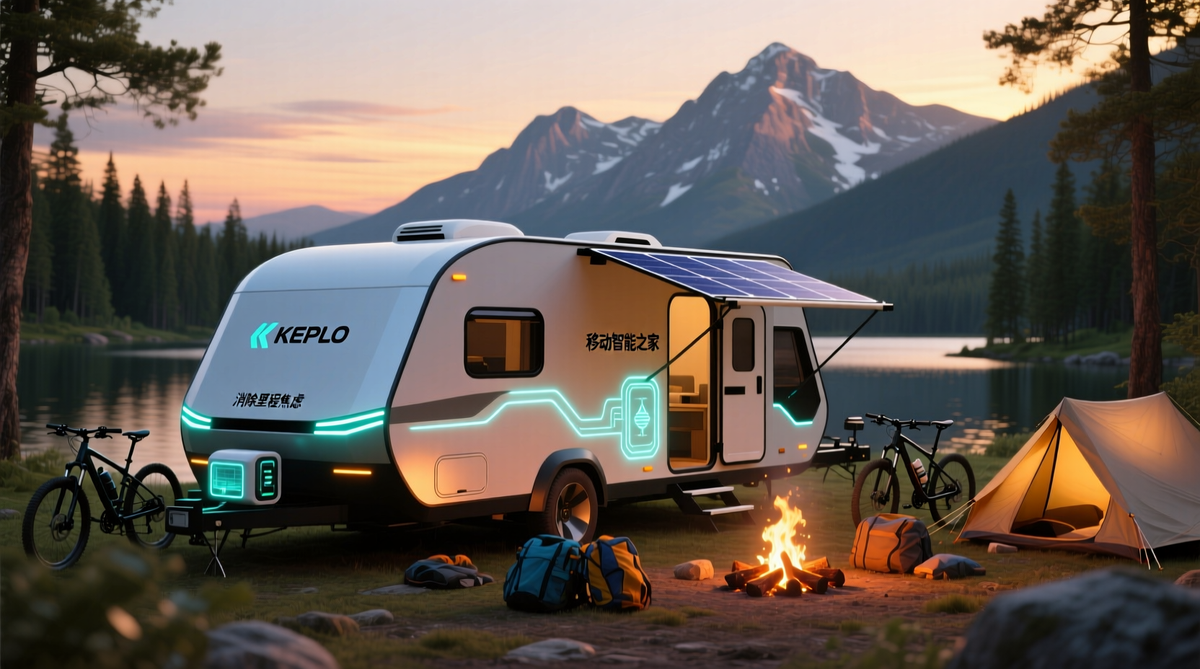
KEPLO, a smart recreational vehicle startup led by former executives from Li Auto, has secured RMB 45 million yuan (US$6.2 million) in angel funding to bring extended-range electric RVs to the North American market. The company aims to disrupt the traditional camping sector by leveraging China’s mature electric vehicle supply chain to lower costs and improve technology.
This latest round, backed by institutional investors and family offices, brings the company's total funding to nearly US$10 million. KEPLO has completed product development and supplier selection, with plans to unveil its first model and begin pre-sales shortly. Formal deliveries in the United States are scheduled to commence in the third quarter of 2026.
Unlike competitors producing pure-electric trailers that face charging infrastructure hurdles, KEPLO is adopting an extended-range technology route designed for long-term off-grid use. The company is positioning itself aggressively against established US players by targeting a price point of approximately US80,000, significantly under cutting current smart RV options that often exceed US100,000.
The move underscores a growing trend of Chinese EV expertise spilling over into adjacent hardware sectors. By utilizing proprietary chassis technology and design input from industry veterans like Richard Kim, KEPLO seeks to modernize an aging American RV industry that has historically been slow to adopt electrification and smart living technologies.
Li Auto Lineage
The startup is deeply rooted in the philosophy of Li Auto, a major player in China's new energy vehicle market known for its family-oriented product definition. KEPLO founder Lv Jiangtao previously managed overseas small electric vehicle products for Li Auto and held positions at Volkswagen, Daimler, and BMW. The core team consists largely of veterans who participated in Li Auto’s early development stages, covering R&D, supply chain, and manufacturing.
To adapt to the US market, the team has integrated executives and engineers from American RV manufacturer Airstream and electric vehicle startups such as Faraday Future Intelligent Electric Inc. (Faraday Future). This composite structure aims to blend Chinese manufacturing efficiency with local market insights. The team claims to apply the "mobile home" concept—transforming vehicles from transport tools into living spaces—to the outdoor camping sector.
Solving Range Anxiety
KEPLO selected an extended-range electric vehicle (EREV) architecture rather than a pure battery-electric approach. The management argues that RVs typically operate in natural environments far from charging infrastructure. Relying solely on batteries increases weight and "range anxiety," whereas an onboard generator system allows for efficient energy storage and replenishment in diverse conditions.
Developing the product required engineering complexities comparable to building a full-sized electric car. The team found traditional RV supply chains insufficient for their requirements and opted to develop a proprietary extended-range electric towable chassis from scratch. This process involved integrating over a thousand automotive-grade components and redefining body structure manufacturing to meet higher precision standards.
Design and Production
The brand’s design language is shaped by Richard Kim, a renowned designer known for his work on the BMW i3 and i8, as well as the FF 91. Kim’s involvement is intended to ensure the product’s spatial logic and aesthetic appeal resonate with North American consumers. The design focuses on maximizing interior living space, applying a "first principles" approach to balance mobility with residential comfort.
On the production front, KEPLO has established its own manufacturing capacity in China with a target annual output of 10,000 units. By utilizing China’s extensive new energy vehicle supply chain, the company aims to achieve economies of scale that are difficult for US-based startups to replicate. Investors believe this supply chain advantage will allow KEPLO to overcome the high logistics costs and regulatory barriers that typically protect the US RV market from foreign entrants.
Undercutting US Rivals
Commercially, KEPLO is avoiding the ultra-luxury niche to target the mass market. While North American competitors like Lightship price their units up to US250,000, and Pebble starts US100,000, KEPLO plans to price its initial model around US80,000. The long−term strategy involves a product matrix ranging from US40,000 to US$100,000.
Founder Lv Jiangtao stated the goal is not to create a niche toy for the wealthy, but to bring smart electric RVs to a broader audience. By combining product innovation with aggressive pricing, the company explicitly aims to become the "Model 3" of the RV industry, replicating Tesla’s strategy of making electric technology accessible to mainstream consumers.