
Chinese EV Makers Race to Subsidize Buyers Ahead of 2026 Tax Hike
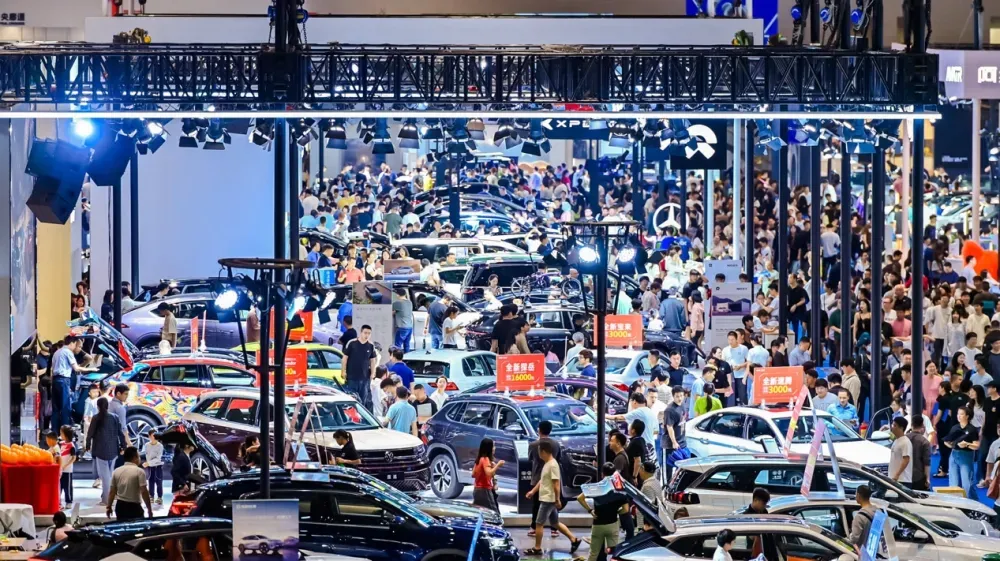
Chinese automakers, from startups to established giants, are preemptively subsidizing buyers to offset a looming reduction in government incentives, a strategic move to lock in orders and navigate fierce competition in the world's largest electric vehicle market.
At least 10 car companies have rolled out plans to absorb the extra cost for customers whose vehicle deliveries will extend into 2026, when a partial purchase tax on new energy vehicles (NEVs) will be reinstated. Chery Automobile announced a plan to cover the full tax difference, up to RMB 15,000 yuan (US$2,080) per vehicle, for customers who may be affected by the policy change.
The subsidies are a direct response to long delivery wait times for popular models, which risk pushing buyers to cancel orders and switch to rivals to avoid the tax hike. With the traditional "Golden September, Silver October" peak sales season in full swing, automakers are using these financial incentives to secure their order books before the end of 2025.
The move underscores the cutthroat nature of China's auto market. By turning a national policy shift into a competitive tool, manufacturers are signaling a willingness to sacrifice margins to maintain sales momentum ahead of what is expected to be an even more challenging market environment in early 2026.
A Race Against the Clock
For many automakers, the promotions are a necessary tactic to prevent customer churn amid lengthy production timelines. Currently, the wait time for a locked-in order of the Xiaomi YU7 Pro from Xiaomi is 42-45 weeks, while the SU7 Pro model requires 30-33 weeks, according to the company’s website. This effectively guarantees that customers ordering now will take delivery in 2026 and face the higher tax.
Similarly, Li Auto is quoting a 16-19 week delivery window for its new i6 pure electric SUV, placing its buyers in the same position. To mitigate the risk of cancellations, these companies are offering to cover the tax differential, reassuring potential buyers and encouraging them to place orders before promotional deadlines.
Many of these subsidy offers are time-sensitive. For example, brands under the HIMA (Harmony Intelligent Mobility Alliance) ecosystem—including AITO, Luxeed, and Stelato—required customers to lock in orders by November 3 to qualify for their tax coverage plan.
The Cost of Waiting: Tax Hike Explained
The industry-wide maneuver is driven by a 2023 government directive that outlines the gradual phase-out of the NEV purchase tax exemption. According to the policy, NEVs purchased between January 1, 2024, and December 31, 2025, are exempt from the tax, with the tax exemption capped at RMB 30,000 per vehicle.
However, for vehicles purchased between January 1, 2026, and December 31, 2027, the purchase tax will only be halved, with the maximum tax reduction lowered to RMB 15,000. China's vehicle purchase tax is calculated as 10% of the pre-tax vehicle price.
This change means a vehicle with an invoice price of RMB 339,000, which is fully tax-exempt if invoiced in 2025, will incur a tax of RMB 15,000 if invoiced in 2026. For a less expensive model like the Xiaomi YU7 Pro, priced at RMB 279,900, the tax bill will rise from zero to approximately RMB 12,400. For any vehicle priced above RMB 339,000, the tax increase in 2026 will be a flat RMB 15,000.
Battery Swapping Adds a Wrinkle
The tax calculation becomes more nuanced for models offered with battery-as-a-service (BaaS) plans, a model championed by Nio. For these vehicles, the purchase tax is calculated on the price of the car body alone, excluding the battery.
For instance, the Nio ES8 with a full battery purchase costs RMB 406,800. If invoiced in 2025, it incurs a tax of RMB 6,000; in 2026, that tax will rise to RMB 21,000, an increase of RMB 15,000. If purchased under a BaaS plan, the vehicle body price is RMB 298,800. This makes it fully tax-exempt in 2025 but subject to a tax of approximately RMB 13,000 in 2026. While both purchase methods face a tax hike, the BaaS option results in a slightly lower increase.