
Chinese EV Makers Seize 10% Spanish Market Share Meta
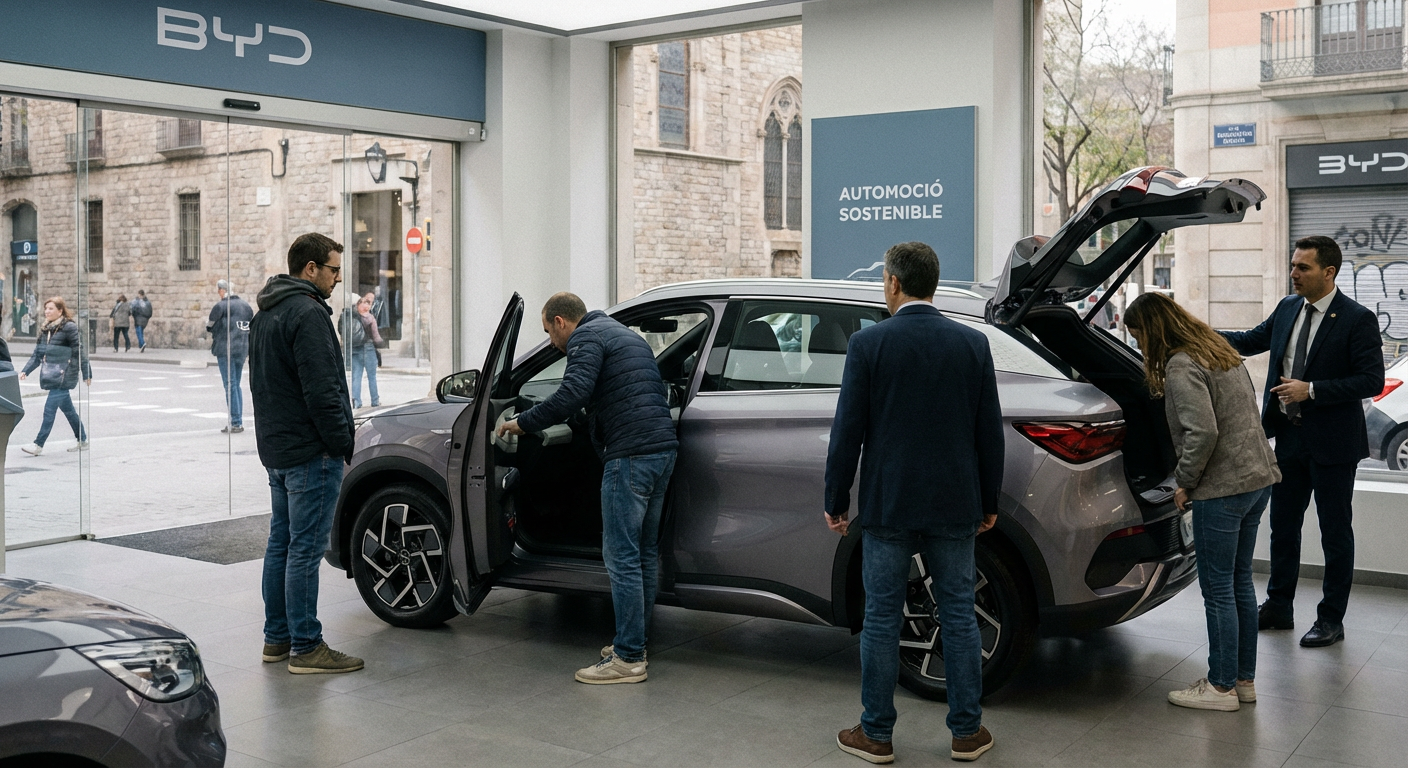
Chinese automakers captured a milestone 10% share of Spain's passenger vehicle market in March 2026, as triple-digit growth from electric vehicle challengers reshaped the competitive landscape of Southern Europe's key auto sector.
Total passenger car registrations in Spain reached 130,340 units in March, representing an 11.7% year-over-year increase. The market dynamics signal a decisive tipping point in consumer behavior: electrified vehicles now account for 71.3% of total sales, accelerating the marginalization of internal combustion engine models and pressuring legacy European manufacturers.
Chinese Brands Capture Incremental Growth
A cohort of Chinese manufacturers, led by MG, BYD, and Chery's Omoda brand, delivered approximately 13,000 vehicles during the month. The expansion is driven by a portfolio heavily weighted toward new energy vehicles (NEVs) and sport utility vehicles (SUVs), aligning directly with shifting European consumer preferences.
Growth rates among individual Chinese entrants reflect rapid market penetration. Lynk & Co posted a 467.5% year-over-year surge, followed closely by Leapmotor at 446.5%. Omoda registrations jumped 258.6%, Xpeng advanced 247.6%, and BYD recorded a 174.6% increase. Market data indicates these brands are effectively absorbing the market's incremental demand through aggressive pricing and high-configuration product strategies.
Hybrids Dominate While Legacy Automakers Stumble
The powertrain transition in Spain is firmly anchored by hybrid electric vehicles (HEVs), which captured nearly 50% of the market to become the dominant propulsion type. Combined battery electric (BEV) and plug-in hybrid (PHEV) sales reached 26,725 units, growing 62% year-over-year to secure a 20.6% share. Conversely, traditional gasoline vehicles shrank to a 25.1% share, while diesel engines fell to a marginal 3.6%.
Toyota emerged as the primary beneficiary of the hybrid transition. The Japanese automaker registered 11,930 units in March, up 67.5%, effectively capitalizing on consumer hesitation surrounding pure electric infrastructure. Three Toyota HEV models—the C-HR, Corolla, and Yaris Cross—secured spots in the top ten best-selling vehicles.
In contrast, several legacy European brands face mounting pressure from product cycle gaps and the rapid pace of electrification. Registrations for Renault contracted 13.8%, Peugeot fell 16.1%, and SEAT declined 13.7%. Volkswagen maintained stability with a 6.6% increase, effectively defending its baseline market share, while Mercedes-Benz proved resilient in the premium segment with an 18.2% gain.
SUV Configurations Drive Consumer Demand
Despite powertrain shifts, overall vehicle form factors remain consistent. The Dacia Sandero maintained its position as the top-selling model, underscoring enduring demand for cost-effective subcompacts amid broader economic pressures. However, SUVs continue to dominate broader volume metrics, with models like the Hyundai Tucson, Nissan Qashqai, and SEAT Arona anchoring the sales charts.
First-quarter data reflects sustained momentum, with total Spanish passenger car sales reaching 300,000 units, a 7.6% increase compared to the first three months of 2025. Private purchases drove the March expansion, rising 17.9%, while corporate fleet sales advanced 13.5%.