
China Automakers Pivot to Large-Battery HEVs Amid Tax Cuts
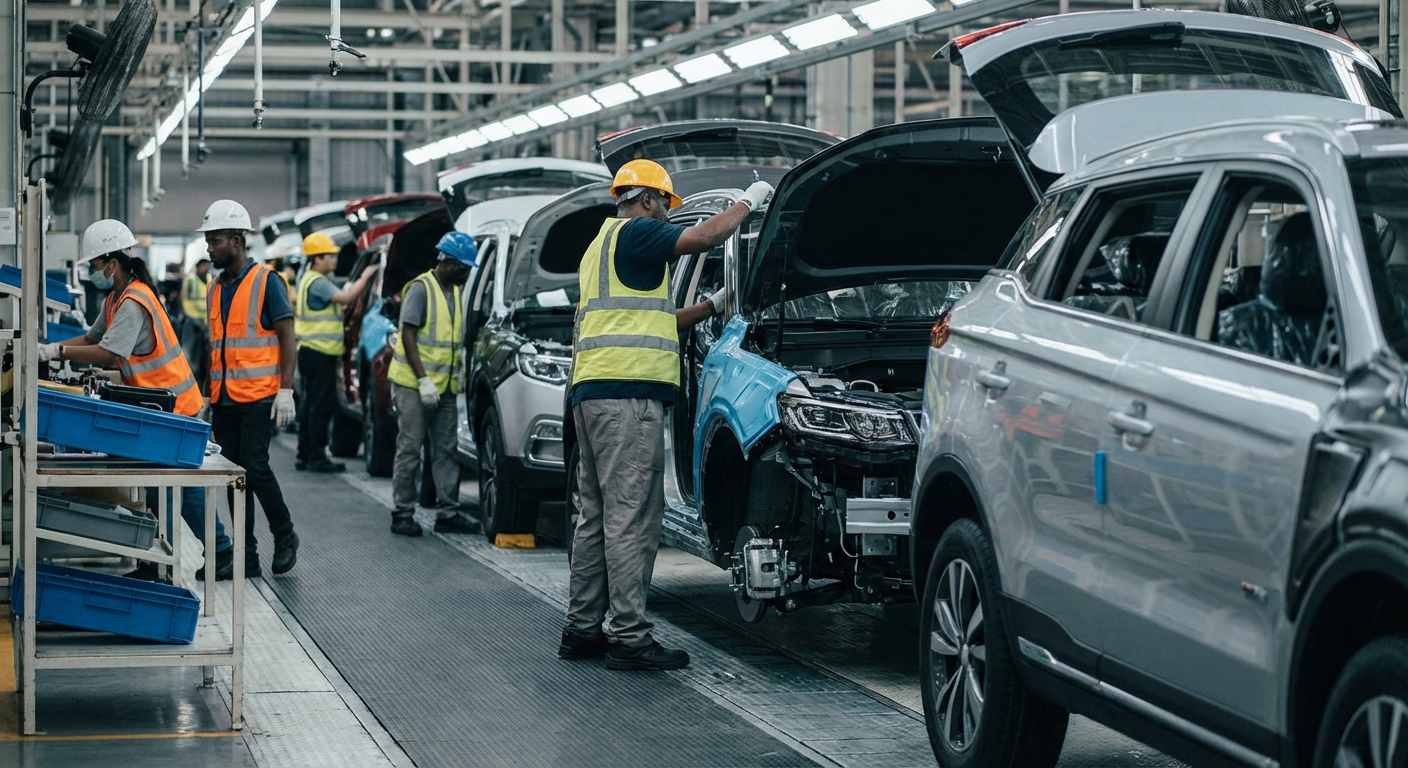
A convergence of soaring global oil prices and shrinking domestic subsidies in 2026 is driving China’s top automakers to heavily pivot toward a highly lucrative, historically overlooked segment: large-battery Hybrid Electric Vehicles (HEVs).
The strategic shift emerged as Beijing adjusted its new energy vehicle (NEV) purchase tax policy at the start of 2026. Tax exemptions for pure electric and plug-in hybrid vehicles (PHEVs) were abruptly halved, effectively raising the technical threshold for market entry. PHEVs now require a minimum pure electric range of 100 kilometers and a 70% lower fuel consumption rate than equivalent internal combustion engine (ICE) vehicles, pushing baseline ranges toward 150 to 250 kilometers to remain competitive.
Coupled with EV insurance premiums running 20% higher than traditional ICE counterparts, the cost advantage of plug-in models is rapidly compressing. In response, major Chinese entities including Geely, Changan, Great Wall Motor, and Chery are deploying large-battery HEV platforms to bypass charging infrastructure limits while maintaining robust profit margins in a hyper-competitive landscape.
Upsizing Batteries Redefines Profit Margins
For decades, traditional HEV architecture—dominated by Toyota and Honda—relied on sub-2kWh batteries primarily designed to assist the combustion engine and lower unit costs. Chinese automakers are inverting this logic by integrating 5kWh to 7kWh battery packs into their HEV architectures.
This structural change fundamentally alters vehicle economics. Scaling down from an 80kWh pure EV battery or a 25kWh PHEV battery to a 5kWh HEV pack drastically slashes procurement costs at a time when automakers are fighting to retain margins stripped away by upstream battery suppliers. Suppliers like SVOLT are facilitating this transition, delivering 3.6kWh to 7.3kWh systems with 62C pulse discharge capabilities and 40,000-cycle lifespans, enabling platforms to switch architectures in just four weeks.
Geely’s i-HEV platform exemplifies the yield of this engineering pivot. By deploying larger batteries, the system achieves a depleted-battery fuel consumption of 3 liters per 100 kilometers—outperforming traditional Japanese HEV systems by 0.3 to 0.5 liters. More importantly, the expanded power capacity allows Chinese OEMs to support L3 and L4 advanced driver-assistance systems (ADAS) and high-drain smart cabins without engaging the combustion engine.
Targeting Global ICE Replacement
The domestic profit defense aligns directly with an aggressive overseas expansion strategy. Following a record 8.32 million vehicle exports in 2025, Chinese manufacturers face a global market that lacks the localized charging grids required to sustain pure EV dominance.
HEVs present a frictionless alternative. By demanding no behavioral changes from consumers and relying entirely on existing fuel infrastructure, HEVs seamlessly capture the replacement demand from ICE owners. Amid the 2026 global oil supply shock, demand for hybrids has doubled across the European Union, Latin America, and Southeast Asia.
Rather than competing purely on fuel efficiency against established Japanese incumbents, Chinese brands are weaponizing their accumulated EV software advantages. The integration of 12.3-inch dual screens, AR-HUDs, and sentry modes into non-plug-in architectures effectively creates a new product category: the software-defined HEV. This data-heavy approach positions China's automotive sector to not merely transition away from ICE, but to capture the remaining ICE market share globally through technologically superior hybrid alternatives.