
Xpeng Upgrades Best-Selling MONA M03, Igniting AI Arms Race in Sub-$20,000 EV Market
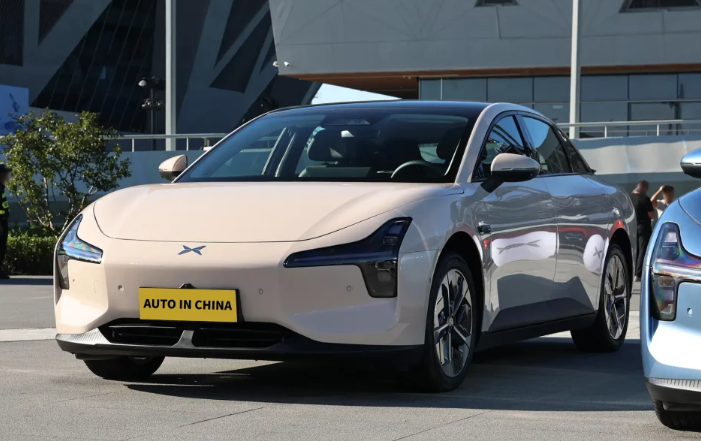
Guangzhou-based electric vehicle maker Xpeng has launched the 2026 iteration of its volume-driving MONA M03 sedan, maintaining its aggressive entry price while heavily subsidizing advanced autonomous driving hardware to secure market share. The revamped model secured over 10,000 non-refundable deposits within 37 minutes of its release on Tuesday, signaling robust market demand for high-tech features at lower price points.
Priced between RMB 119,800 (US$17,362) and RMB 151,800 (US$22,000), the 2026 MONA M03 arrives at a critical juncture for Xpeng. After the model accounted for nearly 46% of the company's 429,400 total deliveries in 2025, aging product cycles caused M03 sales to dip below 5,000 units in February 2026. The aggressive refresh indicates a strategic pivot from pure price wars to a "computing power war" in China's hyper-competitive A-segment EV market.
Driving High-End AI into the Mass Market
The core proposition of the 2026 M03 lies in its unprecedented computing per dollar. By integrating its latest Tianji AIOS 6.0 and dual Turing AI chips in the Ultra SE variant, Xpeng is delivering 1500 TOPS (Tera Operations Per Second) of computing power for a vehicle priced around the US$20,000 threshold. Chief Executive Officer He Xiaopeng emphasized this as an industry first, essentially commoditizing hardware previously reserved for luxury EVs.
The company also outlined plans to deploy a distilled version of its second-generation Vision-Language Action (VLA) model via an over-the-air update by the third quarter of 2026. This move transitions Xpeng's mass-market lineup closer to end-to-end autonomous driving architectures, creating a significant technical moat against domestic rivals.
Targeting Tesla with Efficiency Gains
Beyond silicon, Xpeng directly benchmarked the new M03 against Tesla's Model 3, focusing heavily on energy efficiency. The 2026 M03 utilizes a proprietary silicon carbide flat-wire electric drive system, lowering its CLTC energy consumption to 10.8 kWh per 100 kilometers—under-cutting the Model 3's 11.2 kWh rating.
Without altering the physical battery capacity, the vehicle's maximum CLTC range has been extended to 640 kilometers. The addition of a standard heat pump further recovers up to 30 kilometers of range in winter conditions. Hardware upgrades, including adaptive damping shock absorbers and dual-layer acoustic glass, address previous consumer feedback regarding ride comfort and cabin noise.
Defending the Volume Foundation
For Xpeng, the M03 is not merely a product line but the foundational pillar of its supply chain scale. While the model dominated the pure electric A-segment sedan category in 2025, the landscape in 2026 is vastly more hostile, with fresh entrants like Leapmotor escalating the pressure in the RMB 100,000 to 150,000 corridor.
By absorbing the costs of hardware upgrades—ranging from a 20-speaker audio system to upgraded MT8676 cabin chips—without raising the base price, Xpeng is executing a defensive margin strategy. The immediate influx of 10,000 orders provides short-term cash flow visibility, but the true test will be maintaining this order velocity to sustain the company's broader 2026 delivery targets.
Related Coverage: