
Chinese eVTOL Makers Secure Billion-Dollar Orders as Global 'Flying Taxi' Race Accelerates
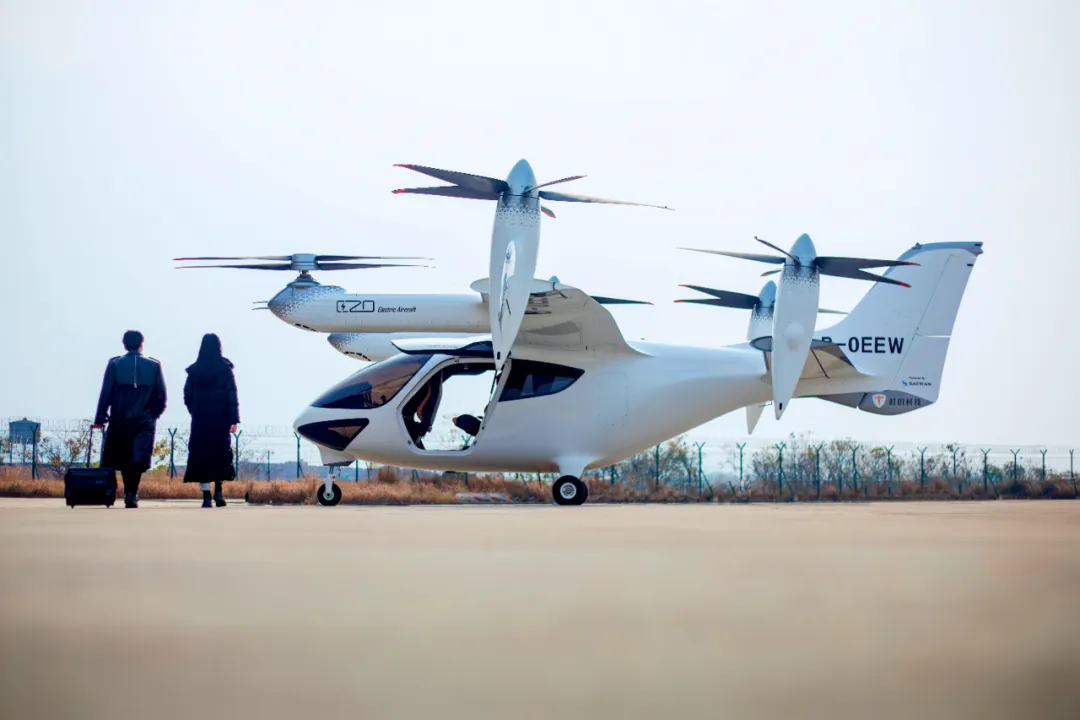
Chinese electric vertical takeoff and landing (eVTOL) aircraft manufacturers are capitalizing on international demand for "flying taxis," with Shanghai-based companies securing over $2.5 billion in overseas orders within weeks, highlighting the UAE and Southeast Asia as emerging hotspots for urban air mobility.
Shanghai TCab Technology Co., Ltd. landed a 1 billion order for 350 eVTOL aircraft from UAE-based Autocraft on July 16, marking a significant milestone for Chinese aviation manufacturers entering the nascent aerial taxi market. The deal was quickly eclipsed by another Shanghai company, Volant Aviation, which signed a 1.75 billion contract with Thailand for 500 aircraft just one week later.
The UAE has emerged as one of the world's most enthusiastic adopters of eVTOL technology, with government officials and potential partners consistently asking manufacturers about deployment timelines and offering support, according to industry executives. This enthusiasm stems from the country's geographic challenges—65% desert terrain creating long intercity distances—and alignment with the UAE's 2050 net-zero emissions goals.
The rapid succession of mega-deals underscores how the global eVTOL industry is creating new export opportunities for Chinese manufacturers, competing on relatively equal footing with established aerospace powers in a market where regulatory frameworks and commercial applications are still being developed.
Middle East and Southeast Asia Drive Demand
The UAE's embrace of urban air mobility reflects both practical needs and policy priorities. Traffic congestion in rapidly growing cities like Dubai has created demand for alternative transportation, with surveys showing widespread interest in 30-minute aerial commutes between Dubai and Abu Dhabi—a journey currently requiring one to two hours by road.
Dubai's Roads and Transport Authority signed agreements with U.S.-based Joby Aviation for exclusive six-year operating rights in 2024, while Abu Dhabi partnered with Archer Aviation for urban air traffic networks. The competitive landscape has created opportunities for Chinese manufacturers offering different technological approaches and pricing structures.
"Sometimes it's not that we choose the market, but the market chooses the enterprise," said He Tianxing, vice president of EHang Intelligent Equipment (Guangzhou) Co., Ltd. "The local application scenarios are very good, and the government is very willing to promote this."
Southeast Asia presents similarly attractive conditions, with Malaysia's dispersed islands, Thailand's tourism industry, and Indonesia's archipelago geography creating natural use cases for aerial transportation. EHang completed demonstration flights in Bangkok in November 2024 and conducted maiden passenger flights in Indonesia this year, exploring inter-island tourism applications.
Three Technical Approaches Shape Competition
The global eVTOL industry has consolidated around three main design philosophies: multirotor, compound wing, and tilt-rotor configurations, each targeting different market segments and operational ranges.
Multirotor designs, exemplified by EHang's EH216-S aircraft, function like large drones using multiple rotors for all flight phases. While offering simpler mechanics and easier certification paths, these aircraft typically have limited range under 30 kilometers, making them suitable for urban sightseeing and short-distance tourism applications.
Compound wing aircraft, such as Shanghai Autoflight Co., Ltd.'s V2000CG, use rotors for takeoff and landing but switch to fixed wings for cruise flight. This approach extends range and improves energy efficiency for intercity travel and cargo transport, though with reduced payload efficiency due to dual propulsion systems. SMG Consulting data shows over 40% of the world's 31 major eVTOL manufacturers have adopted compound wing designs.
Tilt-rotor configurations represent the most technically challenging approach, with rotors that can pivot from vertical lift to forward propulsion. Companies including Joby Aviation, Archer Aviation, and TCab Technology have pursued this path for its combination of speed, range, and payload capacity. TCab founder Huang Yongwei cited the technology's suitability for 30-150 kilometer routes and clearer certification pathways as key advantages.
Certification Challenges Define Market Access
Achieving airworthiness certification remains the critical bottleneck for commercial deployment, with manufacturers requiring type certification (TC), production certification (PC), and standard airworthiness certificates (AC) from aviation authorities. EHang became the first company globally to secure all three certifications for unmanned passenger eVTOL in 2023, followed by Shanghai Autoflight's cargo variant in July 2025.
International market access requires either bilateral airworthiness recognition agreements or independent certification in target markets. Chinese manufacturers face varying regulatory receptiveness, with Middle Eastern and Southeast Asian countries showing greater willingness to recognize Chinese standards compared to European authorities, where no foreign eVTOL manufacturer has yet achieved certification.
"If we really want to sell aircraft overseas, we must get recognition from local civil aviation authorities, preferably through bilateral airworthiness cooperation agreements," said Jiang Jun, co-founder of TCab Technology, whose aircraft is expected to complete certification by 2027.
The July 18 meeting between Chinese and UAE civil aviation authorities, resulting in new airworthiness cooperation agreements, signals potential streamlining of certification processes for Chinese manufacturers targeting Middle Eastern markets.
Research firm Touzhu Institute predicts eVTOL applications will focus on tourism and sightseeing through 2027, gradually expanding to intercity travel by 2030, before achieving widespread "aerial ride-hailing" services in the following decade.