
Chinese Humanoid Robot Sales Surge Despite Limited Capabilities as Companies Chase IPO Dreams
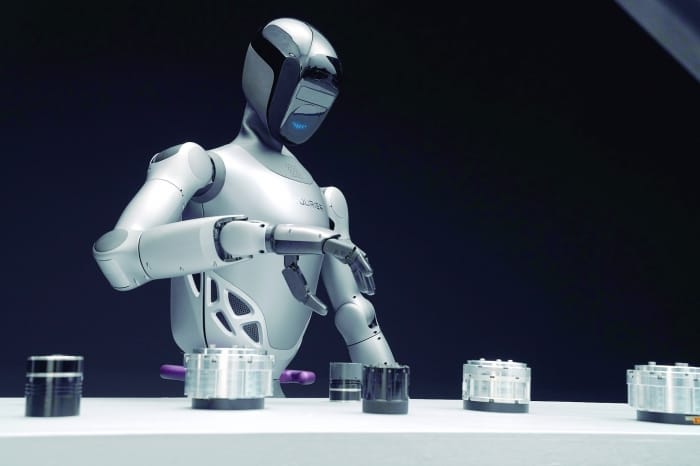
Chinese humanoid robot companies are generating substantial sales despite rudimentary technology, with industry veterans leaving lucrative tech jobs to capitalize on what many view as an artificial bubble before major tech giants enter the market.
Unitree Technology announced its IPO process in September 2025, potentially becoming the first A-share listed company in a sector where annual shipments remain in the thousands. The move highlights how capital markets are driving commercialization ahead of technological readiness.
Current buyers primarily include corporate branding departments, exhibition venues, and event organizers seeking novelty rather than functional automation. Sales professionals report securing seven-figure contracts by targeting C-suite executives directly, as purchasing decisions are driven by marketing value rather than operational efficiency.
Industry observers warn this window of opportunity may last only months before established technology companies and traditional industrial robot manufacturers enter the space with superior resources and supply chain capabilities.
Early-Stage Technology Commands Premium Pricing
Sales veteran Li Zhe, who left a million-yuan annual salary at a major tech company, describes the current market as resembling luxury goods rather than industrial equipment. Companies market headline prices below 100,000 yuan ($13,800) for basic models, while enterprise customers pay several hundred thousand yuan for versions including necessary software and customization services.
This dual-pricing strategy serves distinct audiences. Low advertised prices maintain investor interest by suggesting mass market potential, while actual transaction prices reflect limited supply and early-stage development costs. Most companies require months-long delivery times due to constrained production capacity.
The technology remains fundamentally limited. Current humanoid robots primarily handle interactive demonstrations and basic navigation, with complex manipulation tasks largely confined to promotional videos. Industry participants acknowledge that sophisticated capabilities showcased in marketing materials often require human remote control.
According to IDC, China's commercial humanoid robot shipments reached approximately 2,000 units in 2024, yet the sector attracted over 40 billion-yuan-level investments in the first half of 2025 alone, with nine deals exceeding 500 million yuan.
Supply Chain Constraints Drive Artificial Scarcity
Manufacturing limitations create advantageous market conditions for companies with actual production capabilities. Supply chains remain underdeveloped, and manufacturers hesitate to invest in automated production lines given uncertain demand forecasts and rapidly evolving hardware designs.
Most companies emphasize proprietary components like motors and joint modules as competitive advantages, requiring specialized assembly workers whose training periods extend far beyond current market hype cycles. This approach prioritizes differentiation over scalability.
A senior R&D executive at a leading robotics company explains that hardware designs continue rapid iteration, making large-scale manufacturing premature. The industry paradoxically relies on manual assembly despite projecting futuristic automation capabilities.
Li Zhe estimates profit margins will decline by at least 30% within months as competitors develop production capacity. China's manufacturing ecosystem typically scales rapidly, potentially eliminating current supply advantages by year-end.
IPO Race Intensifies Amid Bubble Concerns
Leading companies are accelerating public listing plans to secure capital before market sentiment shifts. Zhiyuan Robotics completed a reverse merger with A-share listed company Shangwei Advanced Materials in July, while Unitree Technology plans to submit IPO documents in Q4 2025.
Financial advisors suggest early movers will command significant valuation premiums, with later entrants potentially facing challenging market conditions. The strategy mirrors early electric vehicle companies that achieved success through capital markets rather than manufacturing scale.
Established player UBTech demonstrates the financial pressures facing the sector. Despite public listing, the company's humanoid robot division shipped only 800 units in H1 2025, requiring cross-subsidization from profitable product lines including consumer robots that generated nearly 50% revenue growth.
Industry executives acknowledge widespread practices of inflated orders and relationship-based transactions as companies compete for deals that justify continued investment. With research and development consuming over 35% of revenues at leading firms, external funding remains critical for survival until mass commercialization becomes viable.
Major technology companies including Tencent, Alibaba, ByteDance, Huawei, and Xiaomi are expected to enter the market as technology matures, potentially displacing current startups despite their early positioning advantages.