
Chinese Jeweler CHJ Finds Profit in Ultra-Low Gold Content Accessories
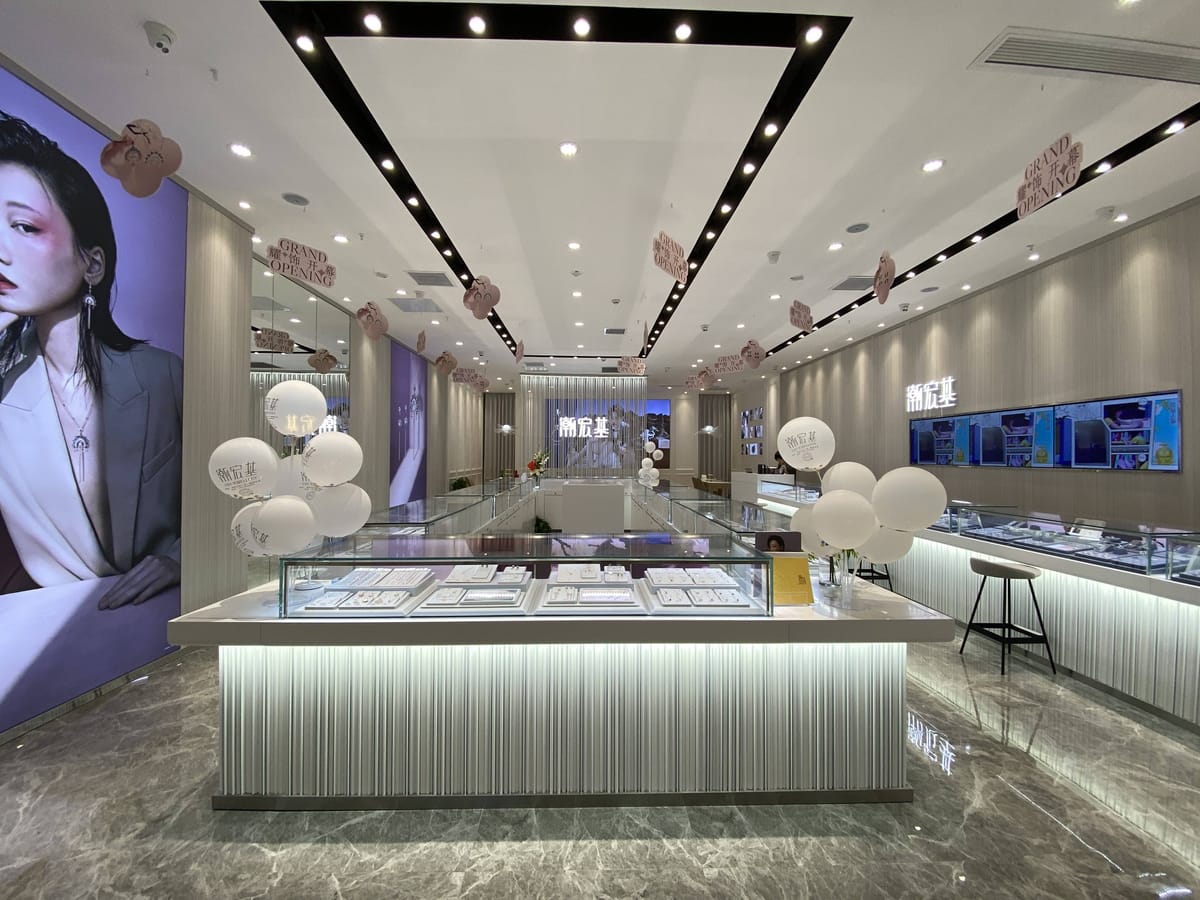
CHJ Jewellery, a Guangdong-based jewelry company, has revived its fortunes by pioneering a controversial product category: ultra-low gold content accessories that carry premium price tags. The strategy has propelled the company's market capitalization to double this year, offering a blueprint for traditional jewelers struggling to compete with both luxury brands and discount retailers in China's shifting gold market.
The company's signature products, dubbed "gold pancakes" by consumers, feature gold content as low as 0.1 grams—or even measured in milligrams—while retailing for hundreds to thousands of yuan. Despite containing minimal precious metal, these items have become bestsellers among young Chinese consumers seeking affordable entry points into gold ownership.
CHJ's earnings underscore the model's profitability. In the first half of 2025, the company posted double-digit growth in both revenue and net profit, with classic gold products rising from 20.24% of revenue in 2020 to 44.6%. This performance mirrors only Lao Pu Gold, the viral luxury-positioned gold retailer, among publicly traded peers.
The shift marks a strategic pivot for CHJ after years of failed diversification and market share losses to fast-fashion jewelry brands and premium competitors alike.
Accidental Entry into Micro-Weight Gold
Founded in 1997 by Liao Muzhi and his son Liao Chuangbin in Shantou, near Shenzhen's gold trading hub of Shuibei Village, CHJ initially pursued the high-margin path of fashion jewelry. The company emphasized frequent design updates and decorative pieces using K-gold, diamonds and gemstones—emulating brands like Swarovski rather than traditional gold retailers such as Chow Tai Fook.
This approach delivered superior margins, with CHJ's gross profit consistently exceeding legacy players like Lao Feng Xiang and Chow Tai Fook by significant margins. However, ill-timed diversification attempts between 2014 and the early 2020s into handbags, cross-border e-commerce and medical aesthetics failed to gain traction.
By 2023, CHJ faced mounting pressure. Fashion jewelry market share was eroding to Swarovski and similar brands, while the company's attempt to position itself in premium traditional gold using ancient techniques was undercut by Lao Pu Gold's success. That year, CHJ launched its micro-weight gold line—what CEO Liao Chuangbin diplomatically described as "using less gold material to make the same styles, reducing costs so consumers spend less amid high gold prices."
Applying Silver's Pricing Model to Gold
Gold retailing traditionally operates on thin margins. Most listed gold retailers maintain gross margins below 10%, with China Gold's margins once falling below 3%. The constraint stems from gold's transparent cost structure—daily spot prices are displayed prominently in every store, and raw material sourcing through regulated exchanges prevents the scale-based cost reductions common in other consumer goods.
Industry practice has established a ceiling of roughly 20% markup over base gold prices plus processing fees.
Silver jewelry, by contrast, achieves substantially higher margins despite transparent material costs. Low unit prices and weak investment attributes provide pricing flexibility. Jewelry brand Pandora achieved 79.83% gross margins in 2024, comparable to Hermès.
CHJ's micro-weight strategy imports this dynamic to gold. The approach centers on obscuring cost structures through minimal gold content. While fashion jewelry brands traditionally "mix sand into rice"—adding low-cost alloys, plating and dubious gemstones to valuable metals—micro-weight gold "mixes rice into sand," further muddying value perception.
A CHJ pendant shaped like a small dog contains 0.7 grams of gold but retails for RMB 2,679 yuan ($370), representing over RMB 1,800 yuan in markup above current gold prices. Products typically feature tiny, barely visible labels showing gold content, while hollow or filigree designs combined with other materials create visual impact suggesting greater value.
This contrasts sharply with competitors. Lao Pu Gold achieves industry-leading margins near 40% by positioning products as luxury goods through premium mall locations alongside Louis Vuitton and Hermès, fixed pricing above market rates, and artificial scarcity. However, that model's sustainability depends on continued gold price appreciation.
Converting Investment Behavior to Consumption
Gold purchases straddle investment and consumption behaviors. Investment prioritizes appreciation potential and low acquisition premiums—the markup over spot prices. Consumption responds to product differentiation but requires accessible price points.
This duality constrains pricing. High markups discourage investment purchases, while gold's absolute price level and recent sustained appreciation suppress consumption. Gold jewelry consumption volumes fell 26% in the first half of 2025 despite—or because of—prices hitting new highs 45 times this year.
Micro-weight gold dramatically shifts the balance toward consumption. Low gold content slashes absolute prices, reducing purchase friction. A 0.1-gram pendant costing hundreds of yuan creates less buyer pain than China Gold's high-margin but expensive large bars, despite carrying higher percentage markups.
Extensive intellectual property licensing—or unauthorized appropriations—adds pricing headroom while reinforcing consumption attributes. When Chow Tai Fook released a 38-gram gold bangle inspired by the video game "Black Myth: Wukong," CHJ quickly introduced a 0.95-gram "mini version" bracelet, offering cost-conscious consumers immediate access to the trend.
CHJ also instituted lifetime free bracelet restringing services, encouraging repeat store visits and pattern customization. According to company disclosures, customers aged 25-40 generate 80% of sales, with member repurchases contributing 45% of revenue.
Because gold carries expectations of high prices—reinforced by sustained appreciation—micro-weight products positioned at lower absolute prices create perceived "bargain" opportunities. They capture consumption-level margins while benefiting from gold's investment cachet.
Should gold prices continue rising, measurement in micrograms appears inevitable.