
Chinese-Made Electric Vehicles Capture Nearly 30% of UK Market as Sales Surge
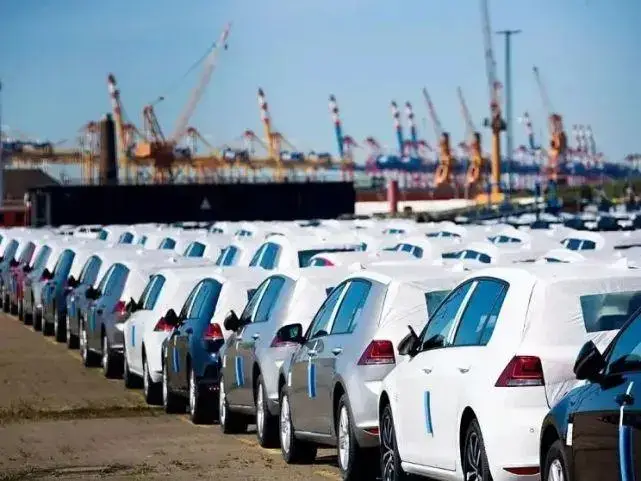
Chinese-manufactured electric vehicles (EVs) achieved a record market share in the United Kingdom in 2025, accounting for 27.9% of all electric cars sold in the country. This surge underscores the growing dominance of Asian manufacturing in the global automotive supply chain, even as local industry bodies warn of unsustainable costs associated with meeting aggressive government emission targets.
Data released by the Society of Motor Manufacturers and Traders (SMMT) reveals that of the more than 470,000 EVs sold in the UK last year, Chinese-built models solidified their presence, driving overall Chinese-made vehicle market share to a historic high of 13.5%. This equates to approximately one in every eight cars sold in the UK originating from China, fueled by aggressive expansion from brands such as BYD and Chery Automobile, with total sales of Chinese-made vehicles jumping by more than 50% year-on-year.
The rapid expansion of Chinese manufacturing comes amid a complex regulatory environment. While the influx of imported EVs helped push the UK’s electric vehicle registration rate to 23.4% for the full year—peaking at 32.3% in December—the industry fell short of the government's Zero Emission Vehicle (ZEV) mandate. Manufacturers are now grappling with significant financial pressure, having spent billions in discounting to stimulate demand.
Surging Imports and Brand Dynamics
The competitive landscape of the UK auto market shifted significantly in 2025. BYD, which surpassed Tesla Inc. to become the world’s largest electric vehicle seller last year, saw its UK sales grow more than fivefold. This expansion contributed heavily to the statistic that over a quarter of all EVs sold in Britain are now manufactured in China.
It is notable that the "Chinese-made" classification extends beyond indigenous Chinese brands. The SMMT data includes vehicles from Western heritage brands manufactured in China, such as MG—which is now Chinese-owned—and models from Sweden-headquartered Polestar. Additionally, a portion of Tesla’s inventory sold in the UK is produced at its Shanghai Gigafactory.
The shift in consumer preference is evident in the broader powertrain mix. When including hybrid models, battery-powered vehicles now account for nearly half of all new car sales in the UK. Plug-in hybrid electric vehicles (PHEVs) were the fastest-growing segment, recording a 35% increase in sales, while pure electric vehicle sales rose 24%. Conversely, demand for traditional internal combustion engines continued to wane, with petrol and diesel car sales falling by 8% and 15%, respectively.
Regulatory Targets Missed Despite Heavy Discounting
Despite the robust growth in EV adoption, the automotive sector failed to meet the UK government's ZEV mandate, which required 28% of new car sales in 2025 to be zero-emission. The final figure of 23.4% leaves manufacturers exposed to potential penalties. Companies that missed the quota must now buy credits from over-compliant rivals, use banked credits in future years, or cut CO2 emissions across their remaining fleet to compensate.
The financial toll of chasing these targets has been substantial. According to the SMMT, automakers invested £5.5 billion in 2025 to subsidize EV sales to approach the target, a figure that amounts to approximately £11,000 per vehicle. SMMT Chief Executive Mike Hawes described this level of spending as "unsustainable," arguing that the current quota policy mandates a supply level that exceeds natural market demand.
Policy Divergence from Europe
The strong sales figures for electric vehicles provide some political capital for the UK’s Labour government, which has committed to banning the sale of new petrol and diesel cars by 2030 and hybrids by 2035. This stance marks a divergence from the European Union, which has delayed its own internal combustion engine ban from 2035 to 2040.
However, the industry faces severe consequences for non-compliance with the UK's current trajectory. Manufacturers failing to bridge the gap between actual sales and the mandated targets risk fines of £12,000 per non-compliant vehicle. The SMMT has called on the government to relax these requirements, citing the discrepancy between the mandate and consumer appetite, even as Chinese supply chains prove increasingly vital to meeting the volume of electric vehicles required.