
Xiaomi’s New SU7 EV Set for April Launch as Tech Giant Doubles Down on Autos
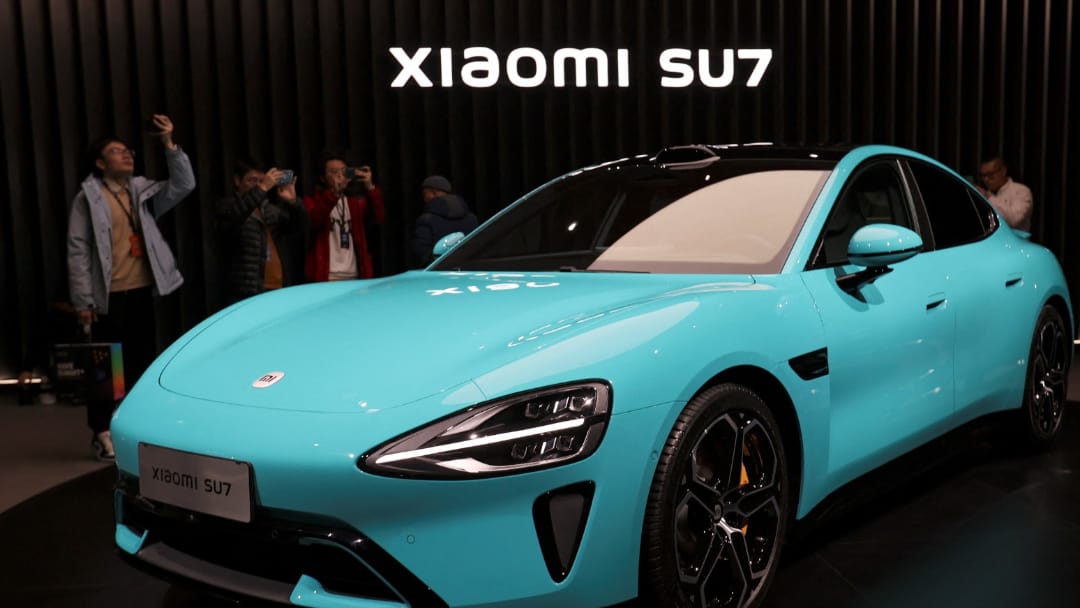
Xiaomi plans to launch the next generation of its SU7 electric sedan in April, intensifying competition in China’s crowded electric vehicle market as the technology giant builds on a strong initial foray into automotive manufacturing.
Lei Jun, the company's founder, chairman, and CEO, announced Tuesday that the 2026 model of the SU7 is scheduled for release this spring, with pre-orders beginning immediately. The updated model aims to sustain momentum following the debut of the original SU7 in March 2024, which Lei described as an "undisputed hit" in the industry.
Xiaomi’s new SU7 lineup offers three configurations with competitive pricing: the Standard Edition starts at RMB 229,900 (US$32,840), the Pro Edition at RMB 259,900 (US$37,130), and the Max Edition at RMB 309,900 (US$44,270).
Since deliveries began in April 2024, Xiaomi has delivered over 360,000 SU7 vehicles in just 21 months, averaging more than 17,000 units per month. This rapid scaling underscores the smartphone maker's successful diversification into EVs, a sector that has challenged other technology entrants.
The 2026 iteration of the sedan will feature several technical upgrades designed to appeal to premium buyers. According to Lei, the new vehicle will include an advanced intelligent chassis to improve driving dynamics, alongside significant enhancements to the smart cabin and driver-assistance systems.
Crucially for investors monitoring production costs and margins, the new model will standardize high-end components across all versions. Every 2026 SU7 will come equipped with LiDAR sensors and a full suite of driver-assistance hardware. Lei noted that safety features have been strengthened and battery range has achieved a "major breakthrough."
Technical specifications released alongside the announcement indicate a shift toward faster charging and higher efficiency. The 2026 SU7 will adopt an 800-volt high-voltage platform across the entire lineup, supporting 5C ultra-fast charging technology.
The vehicle will be powered by the second-generation Qilin battery, which increases energy density to 189 watt-hours per kilogram (Wh/kg) from the current model's 152 Wh/kg. This improvement pushes the car's comprehensive range under the China Light-Duty Vehicle Test Cycle (CLTC) to over 820 kilometers.
On the software and processing front, the standardized LiDAR will be paired with the "Thor U" chip to support high-level urban Navigation on Autopilot (NOA) capabilities, signaling Xiaomi’s intent to compete directly with rivals on autonomous driving features.
Aesthetic updates include new wheel designs, interior options, and the addition of a "Capri Blue" color scheme.
The announcement comes as Xiaomi solidifies its position as a serious automotive player, leveraging its consumer electronics supply chain and brand recognition to capture market share in the world’s largest EV market.