
Chinese Robotics Makers Capture 48% of Cordless Pool Cleaner Market as Legacy Players Lag in Wireless Transition
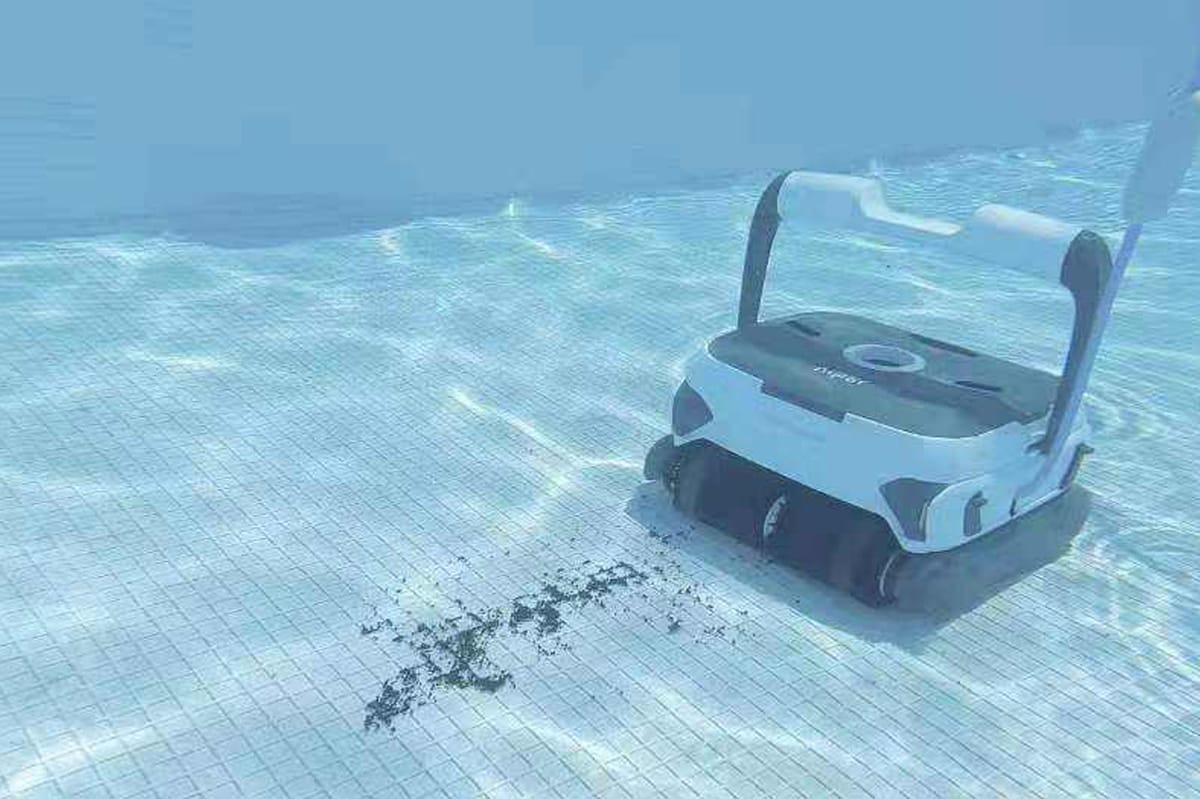
The global pool cleaning equipment sector is experiencing a technological inflection point that mirrors broader patterns in consumer robotics: established Western players commanding legacy wired markets while Chinese manufacturers dominate the emerging cordless segment. By 2024, Chinese firms held 48.6% of the global cordless pool robot market by volume, with Wangyuan Technology (WYBOT), Aiper, and Beatbot collectively shipping 440,000 units—nearly matching the entire cordless output of Maytronics and Fluidra combined. This divergence reveals not just product innovation cycles, but structural advantages in battery integration, rapid iteration, and willingness to bypass profitable installed bases.
$12.9 Billion Cleaning Market Splits Along Automation Lines
Global pool maintenance expenditure reached US$12.9 billion in 2024, serving 32.9 million residential and commercial pools concentrated in North America (34%). With manual cleaning costing US$80-150 monthly, robotic units priced between US$500-1,800 deliver payback within 12-18 months for weekly cleaning schedules.
Yet the transition is bifurcating. Corded robots, requiring external power and tethered to pool-side outlets, grew shipments 3% annually since 2019. Cordless models—powered by lithium battery packs and freed from cable entanglement risks—surged from 4% of unit sales in 2019 to 44.5% in 2024. Wangyuan Technology reports 97.1% of its H1 2025 revenue derived from cordless SKUs, with average selling prices rising 152% since 2022 to RMB 1,606 ($220) as the company shifted from OEM manufacturing to branded distribution.
This split matters because cordless technology arrived late to water robotics compared to terrestrial categories. Maytronics, controlling 34.8% of total pool robot shipments, launched its first cordless line (LIBERTY series) only in 2023—two decades after introducing the category. The company's product matrix still skews heavily wired: just 4 of 77 residential models on its U.S. site are battery-powered, priced $1,049-1,599 with basic navigation. Fluidra's Polaris brand similarly offers limited cordless options. Both firms' 2024 market share in the cordless segment fell below 10% combined, per industry shipment data.
Navigation Technology Fragmentation Prevents Winner-Take-All Dynamics
Unlike terrestrial cleaning robots where LiDAR and visual SLAM established performance benchmarks, underwater navigation lacks consensus architecture. Water refracts light, obscures cameras in turbid conditions, and attenuates infrared laser wavelengths by 100x compared to air. Chinese entrants are testing divergent solutions: Aiper's Scuba X1 Pro Max deploys 40 sensors fusing dual gyroscopes with ultrasonic arrays; Beatbot's AquaSense 2 Ultra integrates AI cameras with infrared and ultrasonic systems; MOVA's Rover X10 pioneers blue-light LiDAR, leveraging Appotronics' underwater laser modules with 10-meter effective range versus 0.1 meters for 905nm infrared.
This Cambrian explosion in sensor stacks reflects genuine technical constraints rather than marketing differentiation. Ultrasonic SLAM—currently most common—suffers accuracy degradation within 30cm of vertical walls. Inertial navigation accumulates drift errors over 90-minute cleaning cycles. Visual systems require minimum water clarity. Wangyuan Technology's patent filings show progression from single ultrasonic sensors (2014 models) to quad-sensor fusion arrays (2025 S3 model), yet company materials acknowledge path planning remains "exploratory" for irregular pool geometries.
The lack of standardization creates opportunity but defers economies of scale. Sensor bill-of-materials for mid-tier cordless units ranges US$45–80, versus US$12–18 for comparable terrestrial robots using mature time-of-flight modules. Gross margins reflect this cost structure: Wangyuan reported 65.2% in H1 2025—elevated for hardware but necessary given 35% combined sales and R&D spending as the firm builds distribution and iterates designs simultaneously.
Offline Channel Control Remains Unresolved Competitive Variable
Despite e-commerce's prominence in consumer robotics, pool equipment sales remain 64% offline through specialty dealers, home improvement chains (Home Depot, Lowe's, Leroy Merlin), and pool construction firms. Maytronics maintains 283 distributor relationships, 55% exceeding ten years tenure and collectively generating 80% of 2024 revenue. Fluidra's April 2025 investment of $1 billion for 27% of Aiper explicitly cited the Chinese firm's presence in "7,000+ retail doors across North America and Europe" as strategic rationale.
Wangyuan Technology's disclosure of 63% online sales concentration—71% of that via Amazon—exposes structural vulnerability. The company's offline partnerships remain undisclosed beyond general references to "European chains." Beatbot reports 2,000+ retail placements but lacks specificity on anchor accounts. This distribution gap matters because shelf space operates as zero-sum: The Home Depot's pool section allocates finite linear footage, and established brands occupying premium end-caps face displacement only through demonstrable performance failures or margin concessions.
After-sales infrastructure compounds the channel advantage. Maytronics' 2024 parts and accessories revenue reached 13% of pool robot sales, up from 5.2% in 2021, as cordless units—with battery degradation and complex electronics—generate higher failure rates than mechanical-only corded predecessors. The company operates regional service hubs with multi-day response commitments. Chinese competitors offer comparable 2-3 year warranties but rely primarily on centralized repair facilities and customer self-return shipping, creating friction in markets where pool season downtime carries high opportunity cost.
Market Structure Signals Prolonged Fragmentation Rather Than Rapid Consolidation
The cordless segment's CR5 concentration of 51.4% in 2024—with the top five all Chinese manufacturers—suggests the category remains in early-stage share accumulation rather than mature competitive equilibrium. Fluidra's minority investment in Aiper, contingent on the target reaching $370 million revenue at 15% EBITDA margins before potential control acquisition, indicates legacy players view partnership as lower-risk than organic development. Maytronics' 14% revenue decline in 2024, driven primarily by private pool robot sales falling 21%, demonstrates incumbent vulnerability when technological transitions outpace product roadmaps.
Three factors likely extend this fragmented phase: battery costs continue declining 8-12% annually, improving cordless unit economics; technical standards remain unsettled, permitting multiple viable approaches; and brand loyalty in pool equipment proves weaker than in home appliances, with 40% of U.S. pool owners purchasing their first robotic cleaner. The eventual victor in cordless pool robotics may matter less than recognizing the category exemplifies how Chinese hardware manufacturers now compete not through cost arbitrage but by accepting lower short-term margins to secure distribution in nascent automation categories where Western firms remain committed to legacy high-margin products.
By ChinaBiz Insider Analysis Desk