
Chinese Toy Companies Rush to IPO as 'Guzijingji' Economy Boom Tests IP Sustainability
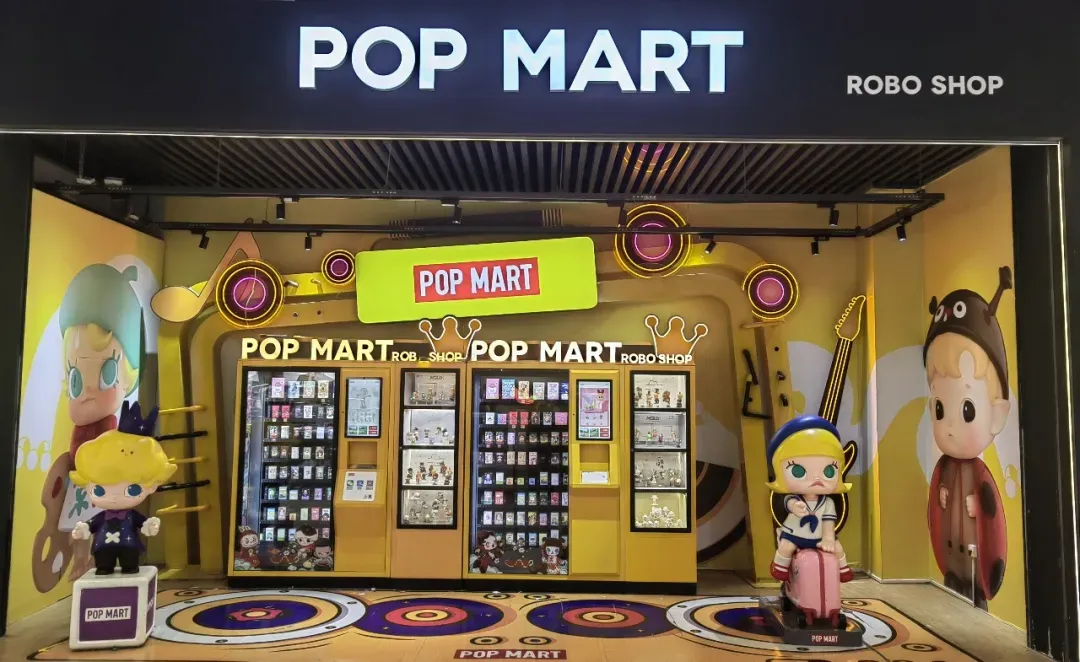
A wave of Chinese toy and collectible companies is lining up for initial public offerings in Hong Kong, riding the momentum of the "guzijingji" economy that has propelled Pop Mart to a market capitalization peak. The surge reflects investor enthusiasm for a sector that reached 240 billion yuan ($33 billion) in 2025, yet the rush to market raises questions about the sustainability of IP-driven business models.
At least six major players have filed or are preparing to file for Hong Kong listings, including card game giant KaYou, Pop Mart competitor 52TOYS, and Top Toy, a spinoff from Miniso Group. The timing coincides with heightened market attention to collectibles and character merchandise, known as "guzijingji" — a transliteration of the English word "goods" that refers to merchandise based on anime, manga and gaming intellectual property.
The IPO wave follows Pop Mart's extraordinary market performance, with shares climbing from around HK$10 in early 2024 to nearly HK$340 by the third quarter of 2025, driven largely by global demand for its LABUBU character line. That success has validated investor appetite for the sector, even as questions emerge about whether companies can replicate Pop Mart's IP development capabilities or face increasing dependence on licensed characters.
The pending listings will test whether the market can support multiple high-valuation players in a sector where IP scarcity, rather than production capacity or distribution channels, represents the primary competitive constraint.
Market Expansion Drives Listing Momentum
The Chinese market for character merchandise and collectibles expanded from less than 170 billion yuan in 2024 to more than 240 billion yuan in 2025, with projections to exceed 300 billion yuan by 2027, according to industry data. Active users interested in such products surpassed 30 million in 2025, with more than 12 million making purchases.
KaYou initiated its Hong Kong IPO process in early 2024, disclosing revenue of 10 billion yuan and adjusted net profit exceeding 4 billion yuan for that year. Despite strong financials, the company has yet to complete its listing as of early 2026. In May 2025, 52TOYS filed its prospectus, positioning itself as the company most similar to Pop Mart in business structure. The filing came after securing strategic investment from Wanda Film, which provided access to cinema distribution channels.
Tongshifu, a manufacturer of brass cultural products backed by Xiaomi founder Lei Jun, submitted its prospectus around the same time. Top Toy, incubated by Miniso, formally separated and filed for listing in September 2025. In January 2026, Suplay and Sunny&Sandy each submitted applications, targeting different market segments.
Wang Kelly, daughter of Seazen founder Wang Zhenhua, moved fastest among new entrants, injecting her collectibles retail brand Mitaki into China New Retail Supply Chain in December 2025.
Industry Evolution Concentrated in Recent Decade
The sector's rapid development in China spans barely 15 years. Pop Mart was founded in 2010 by Wang Ning, then 23 years old and a graduate of Sias International University in Zhengzhou. Early investors struggled to understand the business model of selling blind-box figurines to young adults.
KaYou followed a different trajectory. Founder Li Qibin, a former civil servant born in the 1970s, entered business in the 1990s to help rescue his father's luggage company from bankruptcy with debts exceeding 3 million yuan. Inspired by bubble gum trading cards, Li established a printing business serving the collectible card market before founding KaYou in 2011. The company subsequently secured licensing rights for globally recognized properties including Ultraman, Transformers and Naruto.
A cluster of companies emerged between 2014 and 2015. Blocо was founded in 2014 by Zhu Weisong, former partner of Youzu Interactive founder Lin Qi, who provided 100 million yuan in angel funding. That same period saw the establishment of 52TOYS by founders Chen Wei and Huang Jin, and Sunny&Sandy by Yang Jie, who sought to bring affordable collectibles to global markets from his rural Hunan background.
Suplay was founded in late 2019 by Huang Wanjun, a former investor and chief operating officer at Modian. The company established its Beijing headquarters in Dawangjing Center, steps from Pop Mart's offices. In 2020, Miniso opened its first Top Toy store, which has since grown into China's largest and fastest-growing collectibles retail chain by store count.
IP Control Emerges as Competitive Differentiator
Companies in the sector fall into three categories based on core capabilities. IP operators and product developers include Pop Mart, KaYou, Blocо, 52TOYS and Suplay. Channel-focused brands encompass Top Toy and similar retail concepts. Sunny&Sandy represents a manufacturing-focused model, leveraging proprietary technology that enables single-process molding of multi-color, multi-material toys and operates "dark factory" facilities capable of 24-hour automated production.
Regardless of business model, IP remains the fundamental driver. Even Top Toy, despite developing proprietary characters including Juanjuanyang and Nuomier, relies primarily on licensed properties such as Crayon Shin-chan, Sanrio and Disney franchises for revenue. KaYou's growth trajectory has consistently depended on securing and developing new IP licenses, from early Ultraman products to recent Little Pony partnerships.
Pop Mart has achieved relatively greater control through long-term artist collaborations that secure IP access while balancing value capture, licensing costs and operational control. However, even successful characters like Molly and LABUBU may lack the narrative depth and sustained content development that supports decades-long franchises such as Disney properties or Ultraman.
This creates a structural challenge for the industry. Production capacity is abundant, distribution channels are diverse, and consumer demand is robust, yet IP remains scarce. Companies that depend heavily on licensed properties face margin pressure from royalty payments, vulnerability to license expiration, and limited control over IP development decisions made by licensors.
Financial Performance Will Test Market Confidence
Upcoming quarterly results will prove critical for sustaining investor enthusiasm. Pop Mart's ability to maintain momentum for Molly and LABUBU while developing new properties including Xingxingren and Bichi will directly influence market expectations. Blocо faces questions about full-year profitability and whether it can balance high licensing costs with its value-pricing strategy.
KaYou must demonstrate growth beyond Ultraman and Little Pony, while awaiting final approval for its Hong Kong listing despite generating 10 billion yuan in annual revenue. Performance by these established players will shape market confidence in the sector's valuation multiples and growth sustainability.
For companies still in the IPO queue — 52TOYS, Top Toy, Sunny&Sandy and Suplay — the timing and terms of their listings will depend substantially on how leading companies navigate the tension between IP dependence and margin sustainability. The market's capacity to support multiple high-valuation players remains untested, particularly if IP licensing costs rise or consumer enthusiasm for existing characters wanes.
The sector's trajectory over the next several quarters will determine whether the current IPO wave represents a sustainable expansion of a maturing industry or a speculative peak driven by Pop Mart's exceptional but potentially difficult-to-replicate success.