
China's New Energy Vehicles Face Shrinking Sales Cycles as Market Saturation Intensifies
New energy vehicle models in China are struggling to maintain sales momentum beyond their launch months, with only three models achieving sustained success in 2025, as intense competition and rapid product iteration fundamentally reshape consumer behavior in the world's largest electric vehicle market.
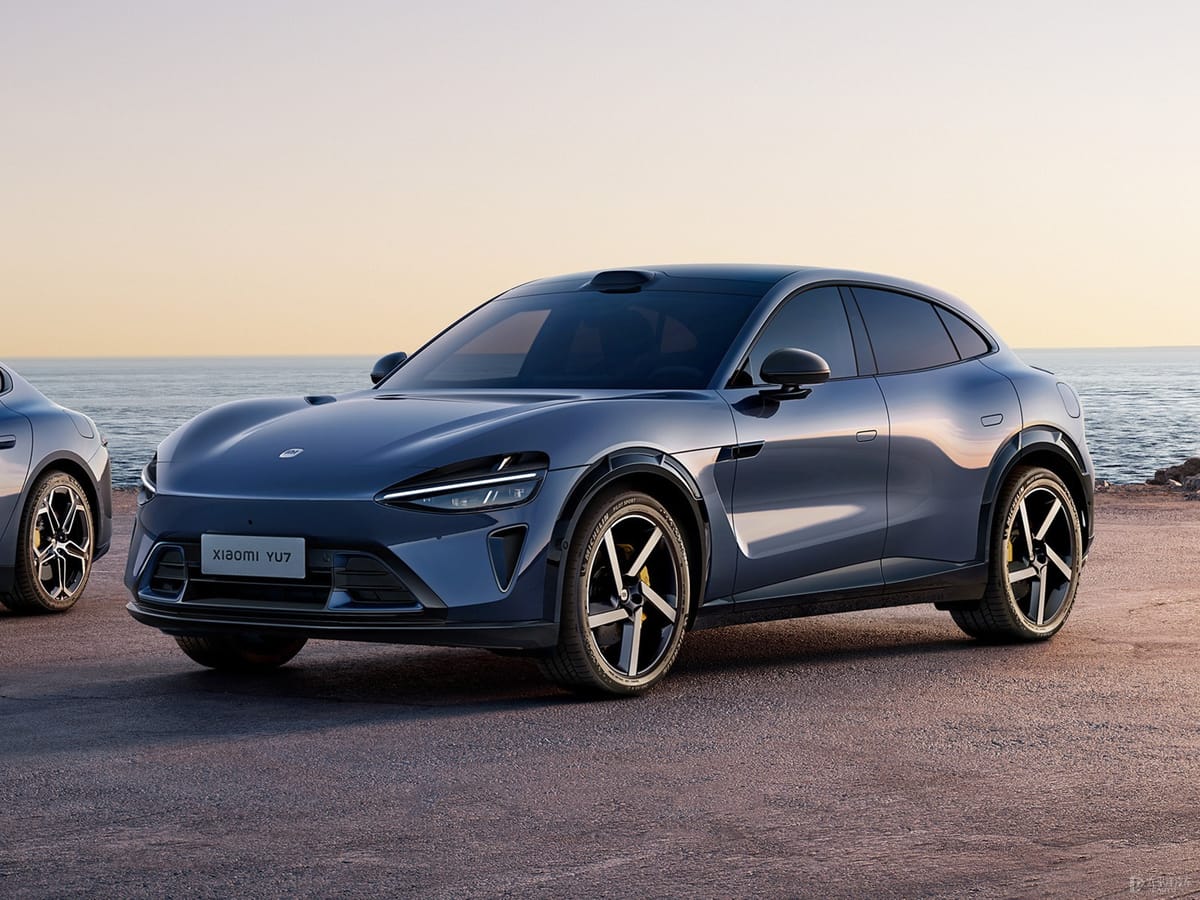
The phenomenon marks a sharp departure from earlier years when breakthrough models could sustain strong sales for years. In 2025, only Xiaomi YU7, Seres Aito M8, and Xingtu Xingjiang 7 met the benchmark of selling over 10,000 units monthly and exceeding 100,000 annual sales. The contraction reflects a market transition from explosive growth to mature-stage competition, where launch-day hype increasingly fails to translate into long-term demand.
Industry analysis shows new vehicles now face immediate sales decline within months of launch, despite generating strong initial orders and social media engagement. The pattern has become systematic rather than isolated, raising questions about product strategy and market sustainability as China's automotive sector navigates oversupply and heightened consumer skepticism.
The shift carries significant implications for automakers' profitability and strategic planning, as compressed product lifecycles increase development costs while reducing revenue windows. The trend also signals changing consumer psychology in a market where buyers increasingly delay purchases, anticipating better options or price cuts.
Product Proliferation Dilutes Individual Model Success
The Chinese new energy vehicle market has undergone dramatic transformation across distinct phases, with product longevity inversely correlated to market maturity. Models launched during 2019-2020, including Tesla Model 3, BYD Song Pro DM, and Wuling Hongguang MINIEV, established multi-year sales dominance by entering a market with limited alternatives and pioneering consumer segments.
The 2021-2022 period maintained relatively stable product cycles, with vehicles like Tesla Model Y, BYD Qin PLUS, and Seres Aito M7 achieving sustained success through clear market positioning. However, 2023 marked a turning point as price competition intensified and new model density increased sharply, compressing the advantage window for launches like Wuling Binguo and BYD Seagull.
By 2024, the market entered an explosion phase with approximately 105 new or refreshed new energy models among 150 total passenger vehicle launches. Models including Xiaomi SU7, Li Auto L6, and multiple BYD variants competed in crowded price segments where parameter advantages lasted only weeks. The saturation created cannibalization effects both across brands and within individual manufacturers' lineups.
Development cycles have compressed from traditional 36-48 months to 12-18 months, with some brands executing three generational updates annually. This acceleration exceeds consumer psychological capacity to absorb changes, as differentiation points established at launch are quickly matched by competitors. The resulting market fragmentation prevents individual models from building sustained mindshare even when achieving technical excellence.
Consumer Caution Undermines Launch Momentum
Rapid product iteration has generated adverse psychological effects among buyers, creating what industry observers term "backstab expectations" that actively suppress sustained sales. Consumers increasingly recognize first-wave purchasers as risk-takers, with common scenarios including specification upgrades and price cuts within months of initial delivery, or delayed feature implementations due to regulatory constraints.
This awareness has fundamentally altered purchasing behavior along two dimensions. Resale value expectations have deteriorated as frequent model updates make residual value calculations uncertain, while purchase decisions are systematically delayed as consumers adopt wait-and-see approaches. The pattern contributed to absence of expected sales surges in Q4 2025 despite government incentive programs.
Purchase tax exemptions and trade-in subsidies provided throughout 2024 and until October 2025 functioned as demand-pulling mechanisms that front-loaded purchases without creating sustainable buying power. As economic conditions evolved, consumers extended vehicle replacement cycles and adopted more conservative evaluation criteria focused on software update commitments, after-sales stability, parts ecosystem maturity, and three-to-five-year obsolescence resistance.
The maturation has bifurcated the market into two consumer segments. Conservative buyers gravitate toward established models like Tesla Model 3, which built long-term credibility through consistent over-the-air updates and stable product definitions. Meanwhile, early adopters continue purchasing new releases, fragmenting attention across launches but providing insufficient volume for individual model success.
Marketing Intensity Fails to Sustain Engagement
Technology companies entering the automotive sector have introduced consumer electronics marketing playbooks emphasizing pre-launch momentum building through leaked images, regulatory filings, and staged reveal events culminating in pricing announcements. While this approach generates launch-day excitement, it creates engagement challenges for post-launch phases including user community management, over-the-air update communications, and after-sales service coordination.
Multiple manufacturers face internal resource conflicts as marketing attention shifts rapidly between refreshed existing models and entirely new launches, diluting support for individual products. The "plant and harvest simultaneously" strategy requires continuously high execution across all customer touchpoints, with online enthusiasm quickly dissipating and offline channels struggling to convert interest into completed sales.
The phenomenon intensified throughout 2025 as the market transitioned from growth to stock competition, with consumers shifting from impulse purchases to calculated decisions. Manufacturers now confront competition across multiple dimensions—not only against rival brands in shared price segments but also against their own portfolio offerings and the broader expectation that superior alternatives will emerge within months.
Some brands have adopted "launch now, refine later" strategies, bringing vehicles to market before full feature completion and relying on over-the-air updates to deliver promised functionality. This approach has impacted the credibility window established by more thoroughly developed 2023-2024 launches, as consumers increasingly question whether initial specifications will be fully realized.
The compressed sales cycle phenomenon represents a structural challenge rather than temporary market fluctuation. As the industry confronts how to sustain individual model sales across traditional five-year product lifecycles, the question of maintaining relevance in a hyper-competitive, rapidly iterating market remains unresolved.