
Citi Survey Reveals Pop Mart's Explosive Global Growth Trajectory as Consumer Base SurgesWorks
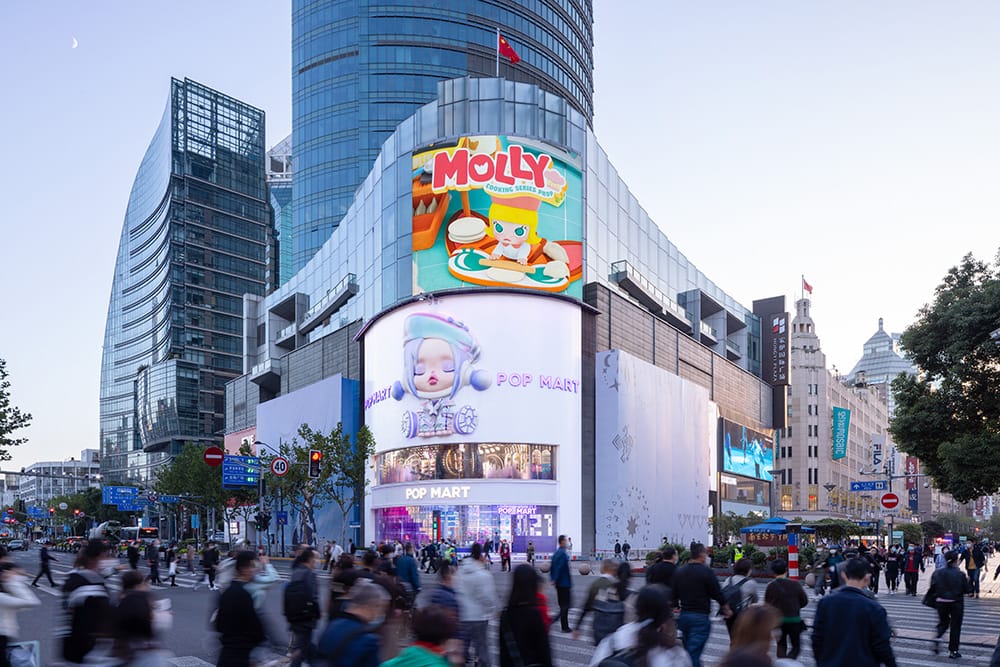
Citigroup Global Markets released a comprehensive consumer survey on January 27, 2026, covering 1,501 Pop Mart customers across five countries, revealing aggressive expansion in the company's user base and sustained purchase momentum that defies recent market concerns about fading collectibles demand.
The investment bank maintains its Buy rating with a price target of HK415.00, representing a 92% upside from the closing price of HK216.20, as the data demonstrates Pop Mart's ability to continuously attract new consumers while maintaining high engagement levels across mature and emerging markets.
Fresh Blood Fuels Growth Engine
The survey's most striking finding challenges the narrative of declining secondary market prices signaling waning interest. A remarkable 76% of respondents made their first Pop Mart purchase within the past year, with 45% becoming customers within just three months. China and Japan showed particularly strong new customer acquisition, with over half of respondents in these markets being three-month-or-less newcomers.
"In contrast to the drop in secondary price which the market had been concerned about due to fading interest, Pop Mart's user base continues to grow globally as supply improves," the Citi analysts noted. Critically, only 9% of respondents purchase from secondhand platforms, suggesting the primary market remains robust and the company's direct channels dominate consumer acquisition.
Purchase Frequency Defies Discretionary Spending Slowdown
The consumption pattern data reveals an engaged customer base with high repeat purchase behavior. Thirty-four percent of respondents shop for Pop Mart products monthly, while 29% purchase quarterly. The US and China demonstrated the highest purchase frequency, while Japan showed more sporadic buying patterns.
Looking forward, 87% of respondents indicated they are "somewhat or very likely" to purchase Pop Mart products in the next three months. New product series, limited editions, and seasonal releases emerged as the primary purchase drivers. Significantly, 26% of consumers plan to increase their purchase frequency, with China (39%) and the US (31%) showing the strongest propensity for accelerated buying.
When asked what would drive more frequent purchases, respondents cited wider product ranges, better quality, and lower prices—with pricing particularly important in Australia, the UK, and the US markets where Pop Mart products command premium positioning.
Brand Satisfaction and IP Diversification
Customer satisfaction metrics came in strong, with 54% reporting being "very satisfied" with Pop Mart—reaching 70% in the US market. An additional 39% were "somewhat satisfied," leaving minimal dissatisfaction across all surveyed markets.
The IP portfolio analysis revealed LABUBU's dominance while highlighting underappreciated potential in other characters. LABUBU ownership stood at 47% overall, but the survey uncovered surprising strength for Twinkle Twinkle (27% ownership), Skullpanda (25%), Crybaby (23%), and Molly (22%).
"The survey results indicate that the interest in non-LABUBU IPs in overseas markets might be underestimated especially Twinkle Twinkle with ownership in the US beyond our expectation," the analysts observed. Twinkle Twinkle showed particularly strong performance in the US market, suggesting Pop Mart's IP diversification strategy is gaining traction beyond its flagship character.
LABUBU Momentum Sustained
Nearly half of respondents were first attracted to Pop Mart by LABUBU, with particularly high ratios in Japan (62%) and the US (59%). Among LABUBU owners, 88% possess at least two items, with 46% owning between two and five pieces. The average US consumer owns approximately 10 Pop Mart items overall, leading all surveyed markets.
Unique design, trend-following, and limited-edition appeal drove LABUBU purchases. Critically, only 2% of respondents indicated they would not purchase LABUBU products in the future, with "new product releases," "innovative designs," and "new colors" identified as key factors for continued engagement.
Spending Power and Market Expansion
Average spending varied significantly by market, with Australian respondents leading at US$132 per capita, followed by China (US$130), the US (US$110), the UK (US$108), and Japan (US$95). The maximum price consumers would pay for a blind box figure averaged US$25-31, with China showing the highest willingness at the upper end of this range.
The "blind box" element remains central to the purchase experience, with 80% of respondents rating it as important—reaching 94% in China. This validates Pop Mart's core product strategy of combining collectibility with surprise mechanics.
Competitive Positioning
While 40% of respondents already purchase from competing brands including Disney, LEGO, Sanrio, Jellycat, and Squishmallows, Pop Mart appears to be capturing wallet share within a growing collectibles market rather than facing zero-sum competition. Notably, 61% of LABUBU owners also purchased Sanrio products, suggesting complementary rather than substitutional consumption patterns.
The demographic profile skews younger, with 41% of respondents aged 18-34, and shows balanced gender distribution at 50-50 male-female. Annual household income averaged approximately US$70,000-100,000 across markets, indicating Pop Mart's appeal to middle-to-upper-middle-class consumers with discretionary spending capacity.
Citi's proprietary data tracker shows sustained momentum in app downloads, web traffic, and Instagram engagement, particularly during holiday seasons. With store count expansion continuing—Japan now has 63 locations, up from 41 in August 2025—the physical retail footprint is accelerating alongside digital channels.
The analysts project 2026 revenue of RMB 52.5 billion (US$7.3 billion), representing 35% growth from 2025E RMB 38.9 billion (US$5.4 billion). At current levels, the stock trades at 14.0x 2026E P/E, representing a significant discount to the company's growth trajectory.