
Decathlon’s Uphill Battle in China: A Billion-Dollar Sale to Fix a Broken Strategy
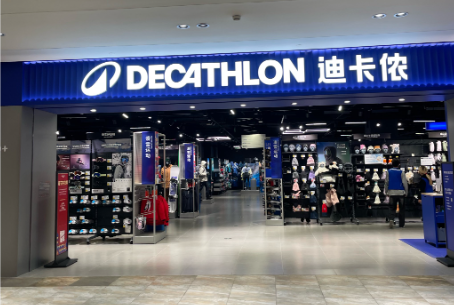
The French sporting goods giant, once a titan of affordability, is selling a stake in its China unit after a failed pivot to the high-end market. The move signals a potential strategic retreat and a costly reckoning with its own identity in a fiercely competitive landscape.
In a cavernous Decathlon store on the outskirts of Shanghai, a longtime customer stood bewildered. For years, these sprawling blue-and-white warehouses were a temple of affordability for China's burgeoning middle class, a place to buy a first tennis racket, a sturdy backpack for a weekend hike, or a simple, functional swimsuit. They were affectionately, and accurately, known as the “poor man’s wardrobe.” But on this day, nestled among the familiar, brightly colored basics was something jarring: a road bike with a price tag approaching 70,000 yuan (nearly $10,000).
The bike, a sleek carbon-fiber machine from Decathlon’s professional line, represented more than just a new product. It was a symbol of a radical, and ultimately flawed, ambition. This single item crystallized the identity crisis that had gripped the French retailer, a crisis that has now forced one of the world’s most famously private, family-owned companies to consider an unprecedented move.
In a maneuver that underscores the depth of its predicament, Decathlon is now planning to sell a stake of about 30% in its China operations, according to a report by Bloomberg. The deal could value the unit at between €1 billion and €1.5 billion (about $1.6 billion), a significant figure but one that comes at a cost to its foundational principles. For a company controlled for nearly half a century by the Mulliez family—a dynasty that has fiercely guarded its equity—the decision to bring in outside investors is a dramatic concession to the punishing realities of the modern Chinese market.
The move marks a critical inflection point for a brand that once seemed invincible in China. After decades of mastering the art of low-cost, high-volume retail, Decathlon finds itself losing its footing, squeezed between the mass market it once dominated and a premium segment it failed to conquer. The potential sale is not just a financial transaction; it is a strategic surrender, an admission that the formula that made it a household name may no longer be enough to win in China.
From Factory Floor to Retail Empire
Decathlon’s relationship with China began not in a gleaming retail store, but on the factory floors of the 1980s. For over a decade, the country was primarily a production base, a vital cog in Decathlon’s global supply machine. The company established a production office in Guangzhou in 1994, embedding itself deep within the country’s manufacturing heartland.
The strategic shift came in 2003 with the opening of its first retail store in Shanghai. Having built a robust local supply chain, Decathlon was ready to sell directly to the Chinese consumer. The timing was perfect. China was in the midst of a government-backed health and fitness boom. The number of people regularly participating in sports surged past 400 million, creating a vast new market of entry-level athletes hungry for affordable gear.
Decathlon didn't just sell products; it sold an experience. Its signature "sports supermarket" format was a revelation. Sprawling stores became playgrounds, with areas for customers to shoot basketballs, test rollerblades, and practice their golf swing. It was a form of retail-as-entertainment that served as a sporting-goods education for millions. This, combined with an early and aggressive push into e-commerce supported by four massive, self-owned logistics hubs, created a seamless, full-chain operation that was the envy of its rivals. From 2013 to 2017 alone, its China revenue soared from roughly 4 billion yuan to 10.5 billion yuan as its store count doubled.
The Gospel of ‘Value for Money’
The engine of this growth was a relentless focus on two principles: radical affordability and total supply-chain control. Decathlon mastered the art of "value for money" long before it became a marketing buzzword. While hailing from France, the home of luxury, it was a breath of fresh, inexpensive air.
This was not about being cheap, but about being ruthlessly efficient. For years, the company famously capped its marketing budget at a mere 1% of revenue, eschewing expensive celebrity endorsements and high-profile sponsorships. Growth was driven almost entirely by word of mouth.
Its structural advantage was even more formidable. China became the only market outside of France where Decathlon operated a full-chain model—from design and manufacturing to logistics and retail. By 2025, with approximately 200 stores, four of its own factories, and around 400 partner manufacturers, over 90% of the products sold in Decathlon China were made in China. This deep integration provided an unparalleled cost advantage and the agility to respond to local tastes. A sophisticated supplier management system, which segmented partners into different tiers, created a flexible and loyal network that shared in the company’s success.
A Pivot Too Far
Yet, after 2022, the unstoppable machine began to sputter. The spectacular growth of the previous decade evaporated. Globally, Decathlon’s revenue growth plunged from 21.3% in 2021 to a mere 1.15% by 2023. China, once the star performer, saw sales decline during the pandemic and fail to recover to 2019 levels even by 2023.
Faced with this slowdown, the company launched an audacious "self-rescue" mission in 2024. It shed its old, understated logo for a sleeker design, ramped up marketing spend, and signed a high-profile partnership with the Paris Olympics. But the most significant shift was a strategic pivot toward the premium market. On top of its nine mass-market brands, it launched four new professional lines, including VAN RYSEL for road cycling and SIMOND for climbing.
In China, the transformation was even more aggressive. The company set up live-streaming studios for Tmall and Douyin in its Shanghai headquarters and began opening smaller, 1,500-square-meter concept stores in major cities, moving away from its big-box model. In a telling move, it hired Zhang Xiaoyan, a key executive who was instrumental in Lululemon’s meteoric rise in China, as its new Chief Marketing Officer. The message was clear: Decathlon wanted to learn the secrets of the “middle-class magic” that Lululemon had perfected.
The strategy backfired. While revenue in 2024 ticked up 5.2% on a constant currency basis, the increased costs associated with marketing and product development crushed profitability. Net profit plummeted 15.5% to €787 million, its lowest in four years.
'Have You Abandoned the Poor?'
The core of the problem was a fundamental misunderstanding of its brand equity. As Decathlon chased a more affluent customer, it began systematically raising prices. The classic 99-yuan quick-dry T-shirt jumped to 149 yuan; a 249-yuan fleece jacket was repriced at 499 yuan; and a pair of hiking shoes went from 199 yuan to 1,099 yuan. Between 2022 and 2024, the average selling price of a Decathlon product surged by 52%.
Consumers who had built the brand’s success felt betrayed. In May 2025, the hashtag #HasDecathlonAbandonedThePoor? trended on Weibo, attracting 120 million views. A senior executive in China attempted to justify the changes, explaining that "performance, materials, and design have all been upgraded," and insisting that even the 70,000-yuan bicycle represented "the best value for money."
But for many, value had become irrelevant at that price. When a brand built on accessibility starts selling products that rival niche, high-performance labels, it enters a new and unforgiving arena. Decathlon’s new professional gear was now competing against brands with deep roots and powerful brand cachet: Giant and Trek in cycling; Nike and Anta in running; and Arc’teryx and Lululemon in apparel. It had no standout product to break through the noise. According to data from Eeen, Decathlon’s offerings in categories like sun protection and badminton showed mediocre performance in 2025.
Furthermore, Decathlon’s brand DNA lacked the social currency that drives premium outdoor and lifestyle purchases in China. A survey found that over 43% of young consumers view activities like camping and hiking as a form of "social currency." For them, the brand on their jacket is as important as its waterproof rating. After years of cultivating an image of mass-market pragmatism, Decathlon could not suddenly become the centerpiece of an aspirational Instagram post.
A Strategic Retreat or a Tactical Reset?
Against this backdrop, the decision to sell a stake appears both logical and necessary. The company has reportedly hired a leading investment bank and is in talks with several international private equity firms and sovereign wealth funds. Negotiations are ongoing, with a key sticking point being the size of the stake; some investors are pushing for more than 30%, while the Mulliez family is reluctant to cede majority control. A deal could be finalized by late 2025 or early 2026.
This is not necessarily a signal of a full retreat from China. Instead, it mirrors a strategy successfully employed by other Western giants: trading equity for local expertise. In 2017, McDonald’s sold the franchise rights for its China business to a consortium including state-backed CITIC and Carlyle Group. Under local leadership, "Golden Arches (China)" embarked on a rapid, digitally-focused expansion. By 2025, its store count had tripled to over 7,100, serving more than 1.3 billion customers annually. Similarly, Yum China, parent of KFC and Pizza Hut, was spun off in 2016 with investment from local partners and has since thrived by tailoring its offerings to Chinese tastes.
For Decathlon, bringing in a local partner could provide the market agility and consumer insight it currently lacks. It is a tacit acknowledgment that what works in France or the rest of the world may require a different playbook in China.
The brand's dilemma is classic: it tried to be everything to everyone and risked becoming nothing special to anyone. It wanted the volume of the mass market but the margins of the premium segment, and in the end, it faltered in both. Even now, customer data tells a clear story. Among nearly 200,000 reviews on its Tmall flagship store, "value for money" is mentioned in 38.7% of comments, far outpacing "quality" (21.2%) or "wide selection" (15.6%). The market has not forgotten who Decathlon is, even if the company itself seemed to.
The path forward will depend on whether new partners and a new strategy can help it rediscover its equilibrium. To build something new, something old must be given up. For Decathlon, that may mean sacrificing a measure of control to regain its footing on the challenging terrain of the Chinese market. It is a high-stakes gamble, but it may be the only one it has left. As it navigates this transaction, the future of the French retailer in its most crucial overseas market will be decided not by its storied past, but by its capacity for change. The glory of a global brand, in the face of a local market, can never be maintained by history and lineage alone.