
China's Robotic Hand Race Intensifies as New Players and Strategies Emerge
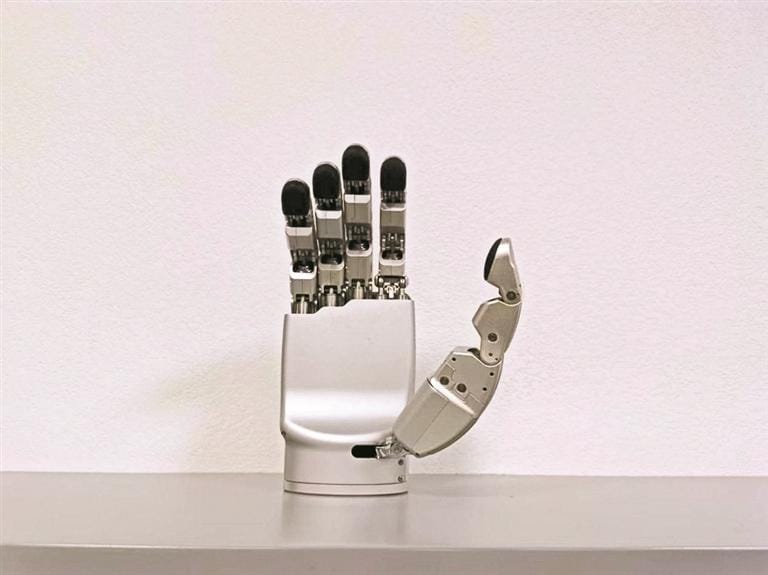
China's market for dexterous robotic hands is rapidly evolving from a niche segment into a fiercely competitive arena, fueled by the global boom in embodied artificial intelligence. A complex landscape is taking shape, defined by three distinct categories of players employing at least six different business strategies, all vying for a share of a market projected to exceed $3.7 billion by 2031.
The latest sign of this escalating competition comes from robotics firm AgiBot, which recently began direct sales of its AgiBot OmniHand series. The company priced its 10-degree-of-freedom model at RMB 9,800 yuan (US$1,350), a move that breaks from the common practice of bundling hands with full humanoid robots. This decision signals a potential strategic shift to capture a broader market, intensifying pressure on both specialized hand makers and other robot manufacturers.
The financial stakes are significant. According to QYResearch, China’s dexterous hand market reached 255 million in 2024 and is forecast to grow at a compound annual growth rate of 41.6% to $3.739 billion by 2031. This explosive growth is attracting a diverse range of companies, each bringing unique strengths and strategies to the table.
This burgeoning market is being contested by three main factions: vertical specialists focused solely on hand technology, full-stack robotics companies integrating hands into their own systems, and cross-industry newcomers leveraging existing manufacturing prowess. Their divergent approaches are fragmenting the path to commercialization, turning the sector into a dynamic testbed for technology and business models.
A Three-Way Race for Dominance
The competitive field for dexterous hands in China is clearly delineated into three groups. The first consists of vertical specialists that concentrate exclusively on dexterous hands and their core components. This group includes firms like INSPIRE-ROBOTS, Linker Hand, and OYMotion Technologies. Their deep focus allows for rapid product iteration, a wider variety of models, and flexible customization, making them the primary source of shipments in the current market.
The second group is composed of full-stack integrators, primarily robot manufacturers that develop hands as integral parts of their broader systems. Companies such as Unitree Robotics, AgiBot, and UBTECH Robotics fall into this category. Their main advantage lies in system-level optimization, ensuring seamless integration between the hand, arm, and control software to deliver a complete, end-to-end solution for customers.
Finally, cross-industry newcomers are entering the fray, leveraging strengths from related fields. Firms with backgrounds in precision components or servo motors, like Zhaowei Mechatronics and Leadshine Technology, are tapping into their established manufacturing capabilities, supply chains, and cost-control expertise. While they possess significant resources for scaling production, many of these players lack a first-mover advantage and face a learning curve in core software and control algorithms.
Six Strategies Define the Battleground
As technology paths for drive systems and finger configurations have yet to converge, companies are differentiating themselves through six distinct business strategies.
The "Specialist Supplier" model, adopted by firms like Linker Hand, focuses on producing standardized, high-performance hands as modular components for robot integrators. In contrast, "Full-Chain Players" like INSPIRE-ROBOTS not only sell complete hands but also supply the market with core components like micro servo actuators, creating multiple revenue streams. INSPIRE-ROBOTS aims for 10,000 hand units sold in 2025 after selling over 4,000 in the first half of the year.
Other companies are pursuing hybrid models. "Medical/Robotics Hybrids" such as OYMotion and BrainCo leverage their expertise in bionic prosthetics to develop dexterous hands for robotics, creating a synergistic loop between the two markets. Meanwhile, companies with a history in industrial automation, like Dahuan, are pursuing a "Full Product Line" strategy, offering everything from simple electric grippers to advanced dexterous hands to serve a wide spectrum of customer needs.
A fifth strategy involves serving as an "In-House Supplier," where hands are developed exclusively for a company’s own robots, a path taken by international players like Tesla and Figure AI, as well as domestic firms like Unitree. The final approach is the "Software-Led Integration" model, where companies like Psi-Intelligence offer a complete package of hardware, tightly integrated algorithms, and pre-trained models, selling a holistic grasping solution rather than just a physical product.
The Path to Commercialization
Beyond technical specifications, the ultimate winners will be those who can overcome the core challenges of commercialization: cost, scalability, and reliability. The market is pushing for dexterous hand prices to fall below the RMB 10,000 mark, a goal that requires domesticating core components, optimizing manufacturing processes, and adopting modular designs to reduce assembly costs.
On the technology front, tendon-driven systems are emerging as a promising trend to overcome the traditional trade-offs between strength, speed, and dexterity. Several exhibitors at the recent World Robot Conference showcased tendon-based designs, and even AgiBot, currently selling a linkage-driven hand, recently patented a tendon-based version, indicating a future direction for the industry.
Ultimately, the intelligence of these hands depends on data. Creating a closed-loop system—where real-world data from deployed hands is used to train and refine AI models, which are then deployed back to the hardware via software updates—is critical. This requires deep coupling between hardware and software, as algorithms must be finely tuned to the specific mechanics of each hand.
However, the most crucial hurdle for industrial adoption may be reliability. In demanding factory environments, metrics like mean time between failures and ease of maintenance are paramount. The success of simpler, more robust electric grippers has already proven that for many customers, stability trumps sophistication. The first companies to deliver consistently reliable dexterous hands will likely gain the quickest path to a significant commercial foothold.