
Decoding China's AI Glasses Market: Forging the Next 'iPhone Moment' in Consumer Tech
In a comprehensive report, Chinese market intelligence firm iResearch Inc. (艾瑞咨询) provides an in-depth analysis of the burgeoning AI glasses sector in China, examining its trajectory toward becoming the next "iPhone moment" in consumer technology. The study offers a detailed forecast of the industry, covering pivotal trends across the supply chain, consumer demand, retail strategies, and the broader industrial ecosystem.
The following is a complete translation of the "Trend Outlook" section of the report. It presents a forward-looking analysis of how technological advancements, coupled with evolving consumer behaviors and business models, are set to propel the AI glasses market from a niche gadget category toward mainstream adoption, shedding light on the forces that will shape its future in China and beyond.
Trend Outlook
Supply Side: Technological Iteration and Supply Chain Maturation to Drive Product Upgrades
The evolution of AI glasses is being fundamentally driven by advancements on the supply side, where breakthroughs in hardware performance, the acceleration of domestic component substitution, and the expansion of manufacturer ecosystems are converging to facilitate significant product upgrades.
Hardware performance is achieving critical milestones that form the foundation for mass-market products. On-device dedicated chips are boosting computing power density by over 50%, enabling localized AI functions and reducing dependency on the cloud. Concurrently, the application of solid-state batteries and silicon-carbon anode materials is extending battery life beyond 10 hours, while the use of lightweight materials like carbon fiber and titanium alloys allows for a more comfortable, "unfelt" wearing experience. In display and interaction, the industry is shifting from prism projection to waveguide technology, which offers an expanded field of view and improved brightness. The gradual commercialization of MicroLED technology is set to enhance color reproduction by 30%. Furthermore, environmental perception capabilities are growing exponentially with the integration of over ten sensor modules, including ToF depth cameras, IMU inertial navigation, and ambient light sensors. This enables sophisticated functions like spatial modeling, object recognition, and health monitoring, allowing devices to intelligently allocate computing resources based on the environment, thereby reducing power consumption by 30% and extending battery life by 20%.
Simultaneously, an accelerated push for domestic substitution is reshaping the industrial landscape. The localization rate for core components has surpassed 60%, with companies like Crystal Optoelectronics (水晶光电) and Lante Optics (蓝特光学) breaking the dominance of Japanese and German firms such as Hoya and Zeiss. The国产化率 for RF front-end modules has exceeded 70%, and brightness for domestically produced MicroOLED screens has surpassed 5,000 nits at a cost 50% lower than Sony's OLEDs. Battery technology is also seeing domestic innovation, with miniaturized "blade" batteries from BYD and silicon-based anode batteries from Sunwoda Electronic Co., Ltd. (欣旺达电子股份有限公司) achieving energy densities of 220Wh/kg. This trend is bolstered by policy and capital; China's National Integrated Circuit Industry Investment Fund Phase III is focusing on AI chips and sensors, and industry chain financing exceeded RMB 20 billion in 2023. These factors have contributed to a 65% reduction in the Bill of Materials (BOM) cost for AI glasses since 2019, enabling entry-level products to be priced in the RMB 500-1,000 range.
The manufacturer ecosystem is also expanding rapidly. The number of companies entering the AI glasses market is growing, with an estimated 59 Chinese firms showcasing products at CES 2025. Consumer electronics giants like Apple Inc. and Huawei Technologies Co., Ltd. (华为技术有限公司) are pursuing vertical integration to create "super terminal" ecosystems linking glasses, smartphones, and smart homes. Meanwhile, other players are developing differentiated services through deep integration between hardware and AI companies. Open platforms are activating a massive developer ecosystem, with companies like Google LLC and Baidu, Inc. (百度) providing over 200 APIs to accelerate application diversification and foster a user-generated content (UGC) environment that promotes social sharing.
This supply-side evolution is driving a clear product upgrade path across different categories, moving from single-function devices to multi-scenario platforms, and from hardware-driven products to a closed loop of services.
- AI Audio Glasses are advancing with bone conduction, far-field voice recognition, and lightweight designs. Their applications are expanding from listening to music during commutes to real-time translation and hearing assistance, delivering value through hands-free operation and enhanced privacy.
- AI Camera Glasses, featuring cameras with over 8 million pixels and AI-powered editing, are evolving for scenarios like vlog shooting, sports tracking, and real-time photo enhancement. They provide value by offering an unobstructed first-person perspective and improving creative efficiency.
- AI Display Glasses (AI+AR) are integrating waveguide displays, spatial computing, and environmental interaction. Their use cases now include information visualization, remote collaboration, and blended reality experiences for work, life, and entertainment, extending user cognition and enabling third-space interaction.
Demand Side: Market Explosion Sparked by Scenario Expansion and Enhanced User Experience
The rapid growth of the AI glasses market is being fueled by an expansion of consumer scenarios and significant improvements in user experience, which together are increasing user purchase intent.
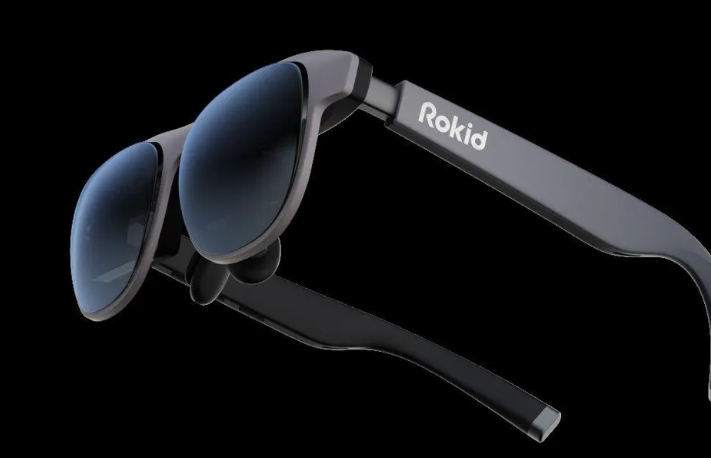
AI-driven consumer scenarios are continually expanding, moving from single functions to integrated "AI+X" applications. For instance, AI glasses from Lawaken Technology (李未可科技) support cross-border, less-common language translation for business travel; Huawei Vision Glass Pro monitors heart rate and motion tracking for sports; and products from multiple manufacturers now support AR navigation for office assistance. Use cases are covering high-frequency daily routines, such as RayNeo Innovation's (雷鸟创新) X3 Pro providing stereoscopic navigation for commuters and Rokid's glasses offering AI camera beautification for social entertainment. The market is also penetrating previously untapped segments, such as AI glasses for the elderly featuring fall detection and simplified voice commands.
User purchase intent is increasing as technology matures and prices become more accessible. The introduction of cost-effective models has stimulated entry-level demand, while differentiated pricing for mid-to-high-end products caters to diverse consumer needs. Technical maturation has lowered the barrier to entry, with many AI and AI+AR glasses now weighing under 40 grams and offering 8-10 hours of battery life, addressing early concerns about bulkiness and short power life. The integration of diverse large language models and optimized algorithms has enriched use cases and interaction efficiency, sparking greater consumer interest. Furthermore, social proof, driven by celebrity collaborations and KOL endorsements, has fueled impulse purchases among younger users who see the devices as social symbols.
The user experience is also undergoing a major upgrade, shifting from "passive reception" to "proactive service." Interaction is evolving from physical buttons to a multimodal fusion of voice, vision, gestures, and eye-tracking. Content ecosystems are becoming closed-loop service chains, with manufacturers like Huawei integrating their own media resources for seamless cross-device playback and others like RayNeo Innovation and Rokid partnering with content providers to enrich entertainment options. Concurrently, there is a growing emphasis on personalization and privacy protection. Manufacturers are embedding privacy-centric computing modules directly into the devices and refining user data management to deliver personalized services without compromising security.
Looking ahead, AI glasses are positioned to become a significant billion-unit market category. Global shipments are forecast to grow from 340,000 units in 2023 to over 5.85 million in 2025 and 17.3 million in 2027, eventually surpassing 26 million units by 2028. The Chinese market is projected to experience even faster growth, expanding from 100,000 units in 2023 to an estimated 9.72 million by 2028, making it one of the fastest-growing regions in the world.
Retail End: Integration of Retail Channels and Experiential Marketing is Key
The key to unlocking market potential lies in a sophisticated retail strategy that integrates online and offline channels through experiential marketing, creating a bi-directional value flywheel that drives sustained growth. This model is built on a foundation of enabling technologies, interconnected data, and a coordinated supply chain.
This dynamic creates a feedback loop where offline experiences drive online ecosystem upgrades. In-store demonstrations, such as real-time AR navigation or instant health monitoring feedback, can be repurposed as authentic video content for online marketing, building user trust. Personalized service interactions at the retail level, captured by AI-powered sales assistants, generate precise user profiles that enable targeted online promotions and subscriptions. Critically, direct user feedback on product pain points like battery life is relayed to R&D, fueling rapid online launches and marketing for improved product iterations.
In the other direction, the online ecosystem activates the value of the offline experience. Online content marketing and social campaigns attract high-potential users, who are then driven to physical stores with targeted offers like appointment-based trial coupons. Online services, such as device management and diagnostics, are extended to offline stores, allowing customers to receive in-person support. Furthermore, online user behavior data informs offline retail decisions, guiding inventory selection and staff training to improve conversion rates. This constant, bi-directional flow of traffic, data, and service enhancements creates a self-reinforcing cycle of market growth.
Industry End: Technological Innovation and Ecosystem Fusion are Inevitable Trends
To meet evolving consumer expectations, the future of the AI glasses industry will be defined by two parallel trends: continuous technological innovation with functional fusion, and deeper industry chain integration with ecosystem synergy.
On the technology front, a deep integration of AI with AR/VR is underway. AI glasses are evolving from single-function tools to multimodal interactive platforms that extend cognition, with more manufacturers expected to launch AI+AR glasses supporting mixed reality in the next three years. Computational photography is also making significant strides, with advanced sensors and AI algorithms dramatically improving image quality and enabling "eyewear photography" to become a mainstream way of capturing moments. In displays, technologies like Micro-LED and optical waveguides are enabling lighter, thinner designs with high brightness, as seen in products like the RayNeo X3 Pro. Future advancements in flexible display technology could further expand application scenarios.
In parallel, the industry is moving toward greater integration and collaboration. China's mature supply chain, exemplified by companies like Goertek Inc. (歌尔股份有限公司) which contract-manufactures for Meta, allows for rapid product iteration. The falling costs of technologies like optical waveguides will accelerate the popularization of AR displays. Manufacturers are building out ecosystems by opening platforms to developers, and the on-device deployment of powerful large language models will enhance local processing capabilities, reducing cloud dependency. Cross-brand collaborations are also proving to be a successful market-entry strategy, with partnerships like Ray-Ban and Meta, and Rokid and Bolon Eyewear (暴龙眼镜), paving the way. In the future, more consumer electronics brands and even automotive manufacturers are expected to join this collaborative ecosystem.