
Deep Robotics Files $347M STAR Market IPO as Industrial Quadruped Sales Drive Profitability
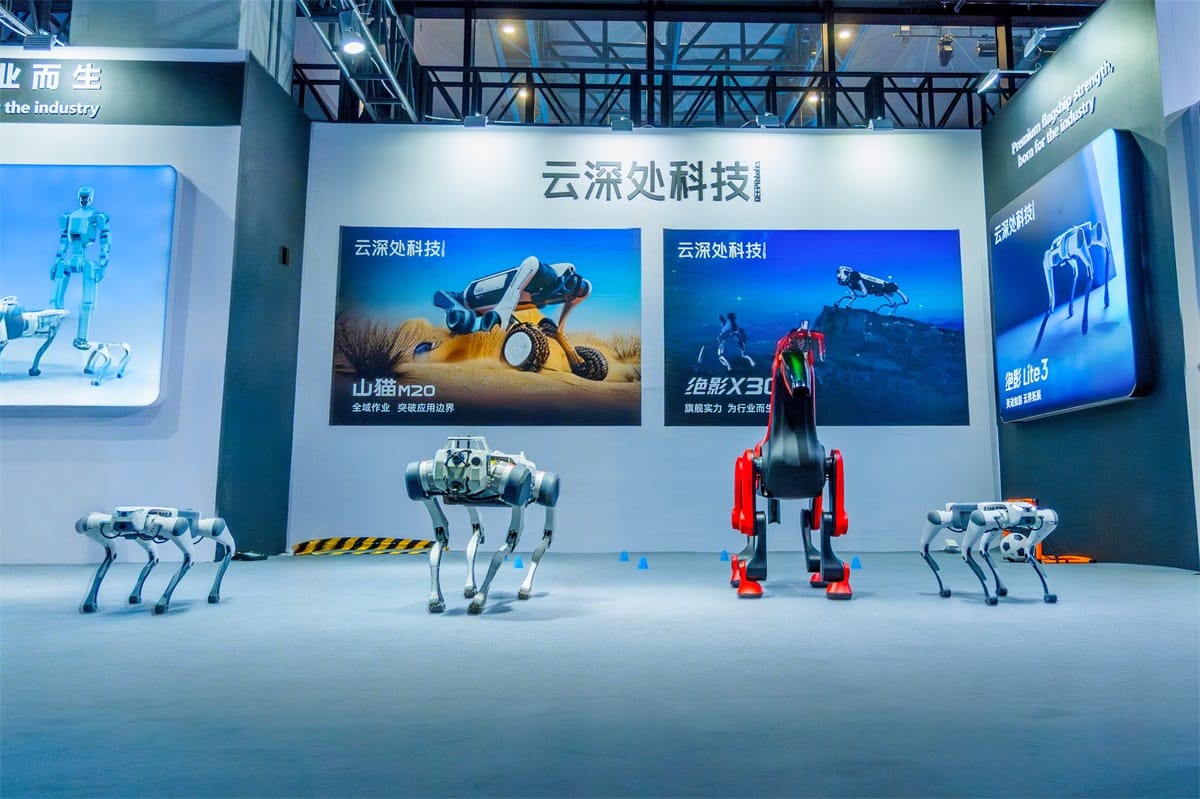
Hangzhou Deep Robotics is seeking to raise RMB 2.5 billion (US$347.2 million) in a Shanghai STAR Market initial public offering, leveraging its 2025 transition to profitability to test public market appetite for embodied artificial intelligence.
The Shanghai Stock Exchange accepted the company’s application on May 18, 2026, marking a critical turning point for China’s robotics sector as it shifts from venture capital incubation to public market scrutiny. The filing establishes a clear commercialization benchmark for AI hardware, demonstrating that industrial B2B applications are currently the primary viable revenue engine for robotics firms.
Initial market feedback suggests investors are increasingly prioritizing companies with proven revenue models over pure conceptual AI plays. Deep Robotics’ move accelerates the capitalization of the "Hangzhou Six Dragons" tech cluster, following the successful Hong Kong listing of Manycore and a parallel IPO application by competitor Unitree Robotics.
Quadruped Volumes Drive Profitability Reversal
The core catalyst behind Deep Robotics' IPO viability is a stark financial turnaround driven by the scaled deployment of its enterprise-grade robots in power grid inspection, emergency rescue, and public security.
Financial data from the prospectus reveals a steep growth trajectory. Revenue surged from RMB 50 million in 2023 to RMB 337 million (US$46.8 million) in 2025. More importantly, the company reversed its net losses of RMB 26 million in 2023 and RMB 13 million in 2024, posting a net profit of RMB 29 million (US$4.0 million) for fiscal year 2025.
This profitability is heavily concentrated in the company's Jueying X series quadruped robots. The product line generated RMB 196 million (US$27.2 million) in 2025, accounting for 58.11% of total revenue. Sales volumes for the Jueying X series more than doubled year-over-year to 681 units in 2025, indicating that quadruped robots have crossed the threshold from pilot testing to standardized industrial procurement.
Product Diversification Subsidizes Humanoid R&D
While humanoid robots dominate industry narratives, Deep Robotics' revenue breakdown exposes the current gap between technological ambition and commercial reality. The company’s newly launched wheeled-legged robot, the Shanmao M series, rapidly captured market share in 2025, generating RMB 74 million and accounting for 22.11% of core revenue in its debut year.
Conversely, the company’s humanoid DR series remains strictly in an exploratory commercial phase. Despite targeting all-weather outdoor scenarios like industrial manufacturing and emergency response, humanoid products generated merely RMB 823,000 in 2025—less than 1% of total revenue.
The RMB 2.5 billion IPO proceeds are strategically earmarked to bridge this gap. Capital will be deployed toward developing embodied AI algorithms and large models, expanding manufacturing capacity, and extending the product matrix. The underlying business logic is clear: Deep Robotics is utilizing cash flow from its mature quadruped and wheeled-legged segments to subsidize the capital-intensive R&D required to commercialize humanoid robots.
Listing Standards Signal Regulatory Preferences
Deep Robotics selected the STAR Market’s Standard II for its listing, which requires an estimated market capitalization of at least RMB 1.5 billion (US$208.3 million), recent-year revenue exceeding RMB 200 million, and cumulative R&D investment over the past three years accounting for no less than 15% of cumulative revenue.
By easily clearing the RMB 200 million revenue threshold in 2025, the company validates a regulatory and market preference for "hard tech" enterprises that balance aggressive R&D spending with sustainable commercialization capabilities. As the "Hangzhou Six Dragons" continue their march toward public markets, Deep Robotics’ financial blueprint offers a definitive reality check for the broader embodied AI supply chain: survival now dictates that hardware must generate immediate industrial value while waiting for the humanoid market to mature.
Related Coverage:
Deep Robotics Targets IPO as Surging Deployment Demand Fuels Supply Chain Expansion