
DeepSeek Closes $6.9B Round as Liang Wenfeng Lays Out AGI Roadmap and Chip Strategy
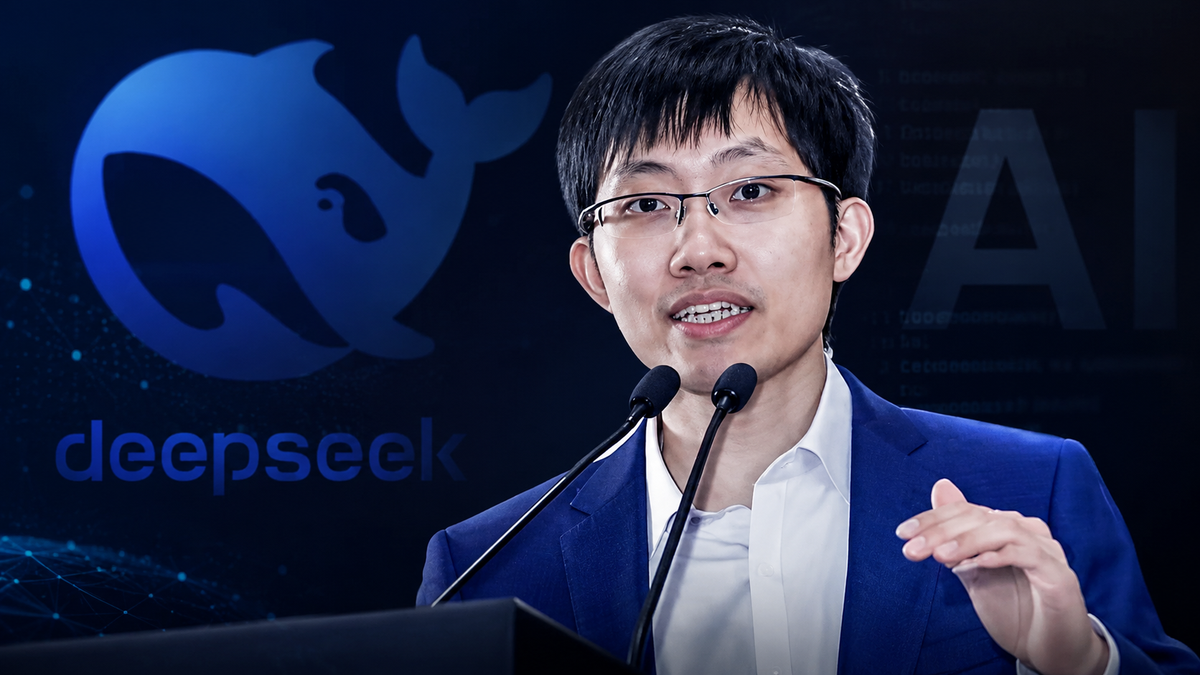
DeepSeek has closed its first-ever external funding round at more than RMB 50 billion (US$6.94 billion), abandoning founder Liang Wenfeng's long-held "no fundraising, no IPO, no commercialization" doctrine — a strategic reversal that reframes the Hangzhou-based AI laboratory as a fully capitalized contender in the global race toward artificial general intelligence.
The round values DeepSeek at approximately RMB 367.5 billion (US$51 billion) pre-money, making it one of the most richly priced private AI companies outside the United States. The investor syndicate reads as a who's-who of China's technology and industrial capital: Tencent contributed RMB 10 billion, Contemporary Amperex Technology (CATL) put in RMB 5 billion, while NetEase, JD.com, and IDG Capital each committed RMB 3 billion. The National AI Industry Investment Fund anchored the state-backed tranche at RMB 1 billion. Liang himself injected RMB 20 billion of personal capital — the single largest check in the round — a signal that founder conviction, not outside pressure, drove the pivot.
In a nearly four-hour internal investor session obtained by Tencent Technology, Liang delivered 118 numbered remarks spanning organizational philosophy, compute constraints, chip geopolitics, and a step-by-step AGI timeline. The transcript offers the most granular public window yet into how DeepSeek intends to deploy its new war chest — and why it believes restraint, not scale, remains its core competitive weapon.
Liang Frames Fundraising as Risk Mitigation, Not Monetization
The most analytically significant disclosure in the session is not the headline figure but the rationale behind it. Liang stated explicitly that team stability — not compute acquisition or market share — is DeepSeek's "only non-negotiable core interest." The funding round, he said, substantially neutralized that risk by delivering meaningful option payouts to the company's earliest and most critical researchers.
"As long as I can maintain team stability, I will definitely achieve AGI — it's that simple," Liang said, according to the transcript.
This framing carries direct implications for how investors should read the capital structure. The RMB 50 billion raise is not primarily an offensive war chest; it functions as a retention instrument and a signal of institutional permanence. Liang acknowledged that spending the full amount on hardware will itself be operationally difficult: "If we can spend RMB 20 billion on procurement this year, that would be a superb result for our purchasing team."
The company's API pricing philosophy reinforces this logic. Liang described the current pricing model as targeting a ten-month hardware payback cycle — a deliberately sub-market margin designed to maximize adoption rather than extract rent. He confirmed that demand for API tokens is price-inelastic at current levels, meaning DeepSeek is consciously foregoing upside. "If we were maximizing profit, we would have set the price much higher," he said.
AGI Roadmap Reveals a Four-Stage Architecture: CoT → Agent → Continuous Learning → Singularity
Liang articulated a sequential development ladder that diverges meaningfully from the "capabilities benchmark" framing dominant in Western AI discourse. His roadmap:
- Chain-of-Thought (CoT) — completed in 2025, enabling higher-order reasoning.
- Agent frameworks — the current focus in 2026, expanding the operational envelope of models.
- Continuous learning — identified as the critical missing capability; without it, Liang argues, agents cannot substitute for human employees in open-ended tasks.
- Self-iterating intelligence / singularity — the point at which models can autonomously develop successor versions, followed eventually by embodied intelligence for physical-world applications.
"The next-generation model must have continuous learning capability to deserve that label," Liang said. "Before that, all we can do is reduce cost, improve performance, and increase speed. The real breakthrough requires continuous learning."
Liang was explicit about what DeepSeek will not pursue: video generation, 3D modeling, and world models were all categorized as commercially attractive but strategically irrelevant to the AGI mainline. The near-term product priority is Coding Agent, which Liang described as the highest-leverage vertical for accelerating internal research velocity. The logic is self-referential: a better coding model speeds up the development of the next model.
Compute Gap With U.S. Quantified at 6–18 Months and 20x Resources, But Liang Sees a Closing Window
On the question that most directly affects DeepSeek's competitive positioning, Liang offered a notably precise self-assessment. China trails the U.S. by 6 to 18 months in frontier model capability — "roughly two years, but achieved with one-twentieth the compute," he said — and the company's stated ambition is to compress that gap to three to six months while maintaining its efficiency advantage.
The constraint, Liang argued, is not talent but silicon. "Talent is not the bottleneck. Compute is the biggest bottleneck. The talent gap is, in essence, a compute gap — because with less compute, we run fewer experiments and develop fewer researchers." He assessed the China-U.S. talent differential as minimal at the individual level, attributing observed capability differences entirely to resource asymmetry.
On the scaling debate, Liang pushed back against the "Scaling is dead" narrative circulating in Silicon Valley: "When Silicon Valley says Scaling has hit a ceiling, that's true for Silicon Valley. For China, we are nowhere near that ceiling — we haven't scaled data, model size, or training cost anywhere close to those levels."
Huawei Chip Pivot Accelerates as DeepSeek Declares NVIDIA Ecosystem Increasingly Optional
Perhaps the most consequential strategic signal in the transcript concerns the semiconductor supply chain. Liang stated that DeepSeek's V3 model, while still trained on NVIDIA hardware, was developed entirely outside NVIDIA's software ecosystem — using an internally developed high-level compiler called TileLang as the abstraction layer.
"V3 used NVIDIA cards but did not use NVIDIA's ecosystem," Liang said. "We have already almost entirely decoupled from NVIDIA's software stack."
Looking forward, Liang assessed Huawei's 910C SuperNode as capable of fully substituting NVIDIA's GB200 and GB300 on a performance-per-dollar basis, with a hardware equivalency ratio of approximately four Huawei cards per one NVIDIA card. The remaining constraint is production capacity, not technical parity. "I believe within one year, we will see a fact-based reversal of the perception that domestic chips are unusable," he said. "In five years, I don't think capacity will still be the binding constraint."
The strategic implication for the broader supply chain is significant. DeepSeek's deep technical collaboration with Huawei — Liang confirmed the company is actively participating in Huawei's chip ecosystem development — positions the two firms as co-architects of a China-native AI compute stack that could reduce the entire sector's dependence on NVIDIA exports over a multi-year horizon.
Competitive Landscape: Liang Sees Cost and Time as the Only Durable Differentiators
On the global competitive map, Liang offered a structural view that deflates the winner-take-all narrative. He projected that the large language model market will ultimately support only a small number of frontier providers globally — perhaps two to three in the U.S. and a similarly concentrated set in China — with differentiation narrowing to three variables: cost, latency to capability milestones, and user experience.
"There won't be monopoly profits," he said. "Those who control costs better will earn slightly more; those who don't will earn slightly less. That's all."
On the China-U.S. competitive dynamic, Liang argued that Chinese AI providers will occupy a structurally lower-cost position — analogous to China's role in manufacturing — and that this cost advantage will be systemic rather than cyclical. He assessed Anthropic's current lead over OpenAI as a temporary phase, predicting that OpenAI and Google will resume trading the frontier position over time.
Liang was notably candid about the domestic market: "There are too many companies building foundation models in China right now. The U.S. has maybe three. China has far too many. Consolidation is inevitable."
Open-Source Commitment Deepened: Strongest Models to Remain Publicly Available
Liang reaffirmed and extended DeepSeek's open-source commitment, stating that the company's most capable models — including future V4 releases with native multimodal support — will be released publicly. He dismissed the strategic logic of closed-source development as unproven and argued that open-sourcing the full production model (not a degraded variant) creates a compounding goodwill effect without meaningful competitive cost.
"I cannot see any necessary advantage to being closed-source," he said. "Open-sourcing does not affect our revenue model at all."
The company's forthcoming V4 model will support native multimodality, though Liang categorized multimodal capability as a product component rather than a core intelligence milestone — consistent with his broader framework of distinguishing between commercially valuable features and AGI-critical research directions.
IPO Timeline and Revenue Trajectory Suggest 2027 Listing Remains Plausible
While Liang did not address IPO timing directly in the disclosed transcript, the financial parameters he outlined are consistent with a 2027 listing scenario reported separately. He indicated that B2B API revenue could reach "several hundred million U.S. dollars" in the current fiscal year, and that profitability at the net income level is within reach within the next 12 to 24 months under base-case demand growth assumptions. Annual revenue has been separately reported as approaching US$500 million on an annualized basis.
The investor syndicate's composition — combining strategic corporates (Tencent, CATL, JD.com, NetEase), growth capital (IDG), and state policy funds — suggests a deliberate pre-IPO capitalization table designed for eventual public market transition rather than indefinite private operation.
Related Coverage:
DeepSeek Eyes 2027 IPO, Targets RMB 10B Pre-Listing Raise in China AI Race