
DeepSeek Weaponizes Compute Costs to Force Global AI Consolidation in 2026
Chinese artificial intelligence developer DeepSeek has permanently slashed its flagship V4-Pro API pricing to near-zero margins, weaponizing recent architectural breakthroughs to force a structural consolidation across the global large language model (LLM) sector.
The May 22 announcement, locking in a 75% lifetime discount effective May 31, 2026, drops the cost of processing 100 million cached input tokens to an unprecedented RMB 2.5 (US$0.36). This aggressive recalibration undercuts the output pricing of global peers like OpenAI’s GPT-5.5 by a factor of 30, effectively commoditizing basic LLM compute power to digital utility levels.
Market feedback has been swift. While application developers and enterprise clients anticipate an immediate plunge in operational costs for complex workflows, domestic mid-tier model developers face existential threats. The pivot signifies a definitive end to the industry’s mild subsidy-driven competition, accelerating earlier 2026 projections by Baidu CEO Robin Li regarding structural cost deflation in the AI sector.
Algorithmic Overhauls Propel Margin Compression
DeepSeek's pricing strategy diverges from traditional venture-subsidized price wars, anchoring instead on tangible inference optimizations. Internal technical specifications indicate the V4-Pro integrates a next-generation mixed attention mechanism. This algorithmic restructuring compresses single-inference compute consumption to 27% of its predecessor while slashing VRAM requirements by 90%.
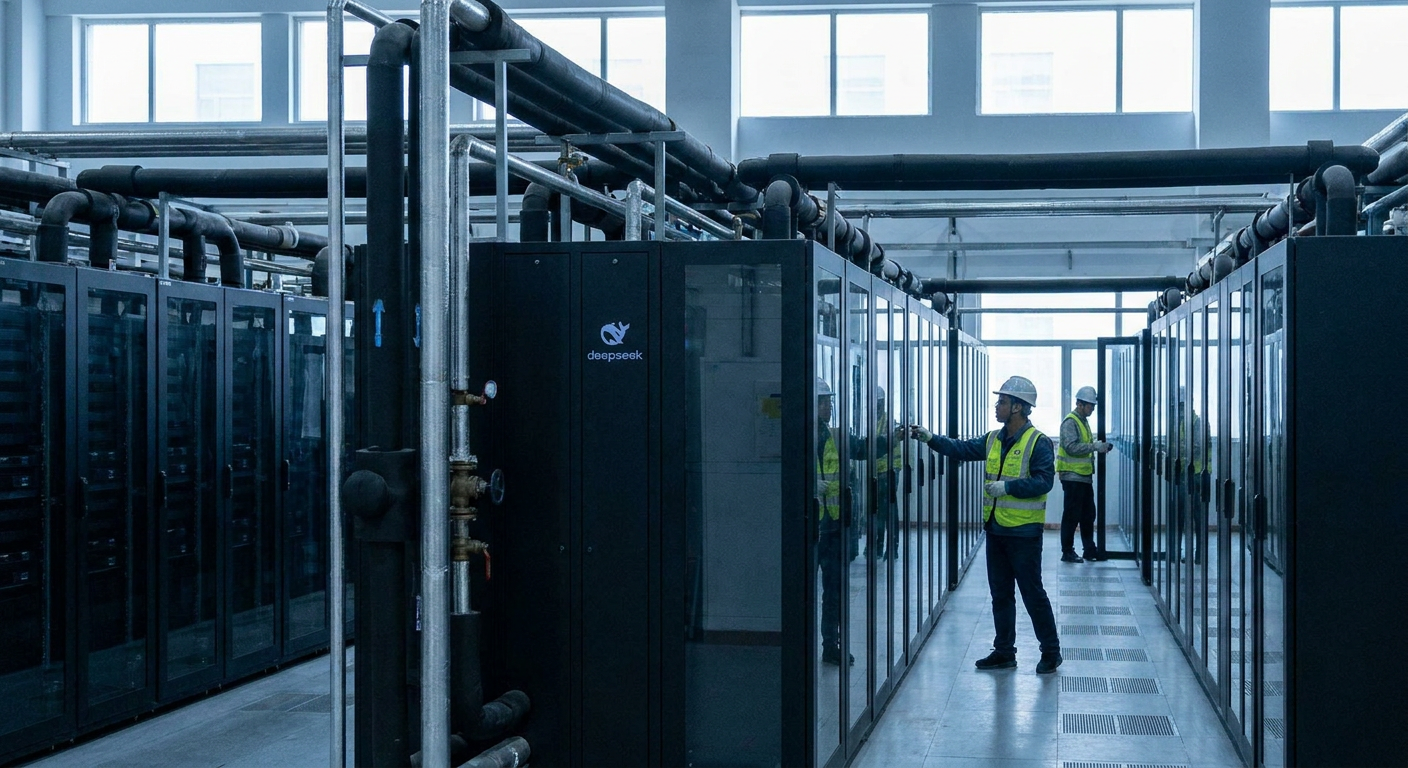
By mitigating reliance on brute-force GPU accumulation and reducing physical data center overhead, DeepSeek has structurally erased the foundational costs that hamstring competitors. Standard cached input tokens now cost RMB 0.025 (US$0.003) per million, while uncached input and output tokens are priced at RMB 3 (US$0.43) and RMB 6 (US$0.87) per million, respectively. This technological moat renders the high-margin API business models of legacy developers fundamentally obsolete.
US$10 Billion Capital Injection Secures AGI Runway
Parallel to the pricing overhaul, market sources confirmed DeepSeek initiated a RMB 70 billion (US$10.14 billion) funding round, underpinned by a RMB 20 billion (US$2.90 billion) personal commitment from founder Liang Wenfeng. This capital fortress effectively insulates the firm from short-term monetization pressures.
By explicitly directing capital toward base-layer infrastructure and Artificial General Intelligence (AGI) research, the firm operates a closed-loop strategy. DeepSeek is sacrificing immediate API margins to capture massive developer traffic, which in turn generates the real-world execution data required to further refine models and lower marginal costs, creating an insurmountable industry feedback loop.
Ecosystem Pivot Triggers Industry Consolidation
The transition from high-margin API models to a "token-as-a-utility" paradigm fundamentally rewrites AI economics for the latter half of the decade. For developers building Retrieval-Augmented Generation (RAG) databases, autonomous agents, and automated coding frameworks, the erasure of token cost constraints serves as a catalyst for mass commercialization and deployment.
Conversely, tier-two Chinese AI startups—historically reliant on API arbitrage and gradual feature updates—find their core revenue streams evaporated. As token processing transitions from a premium commodity to standard digital infrastructure in 2026, the competitive matrix shifts. Survival no longer depends on inference pricing, but on ecosystem capture, proprietary data integration, and the speed of AGI iteration.
Related Coverage:
DeepSeek Intensifies AI Race with New Model Tailored for Chinese Chips