
NIO’s Razor-Thin Profit Masks China Auto Industry’s Brutal Shakeout
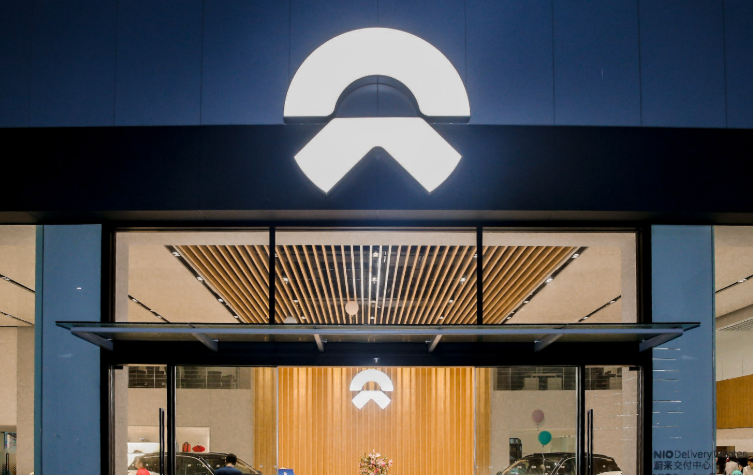
Chinese electric vehicle maker NIO Inc. reported an operating profit of RMB 66.8 million (US$9.3 million) in Q1 2026, marking its second consecutive quarterly profit—an achievement that comes as China’s broader auto industry continues to see collapsing margins amid a historic demand downturn.
The result highlights a sharp divergence: while twelve major automakers reported declining net income and industry-wide profit margins fell to a decade-low of 2.9%, NIO’s premium positioning strategy is generating thin but positive returns in a market where scale alone no longer guarantees survival.
Market Context: Industry-Wide Bloodletting
China’s automotive sector contracted sharply in Q1 2026.
Passenger vehicle sales fell 23.4% year-over-year, while new energy vehicle (NEV) domestic sales declined 23.8%, according to data from the China Association of Automobile Manufacturers (CAAM).
Total auto production and sales dropped 6.9% and 5.6%, respectively, pushing overall industry profit margins down to 3.2%—levels not seen since the 2016 downturn.
Seven of twelve major listed automakers reported profit declines. Aggregate earnings across ten major manufacturers even trailed a single battery supplier’s profitability, underscoring a severe value-chain distortion.
Premium Positioning as Defensive Moat
NIO’s Q1 revenue surged 112.2% year-over-year to RMB 25.53 billion (US$3.55 billion), driven by strong demand for its flagship ES8 SUV.
The ES8, priced above RMB 400,000 (US$55,600), delivered 100,000 units in 215 days since launch. It ranked No.1 in both the large SUV segment and the >RMB 400,000 category for five consecutive months.
Notably, nearly 50% of buyers reportedly switched from BMW, Mercedes-Benz, and Audi.
Vehicle margin reached 18.8%, roughly 6x the industry average of 3.2%, enabling significantly higher per-unit profitability than mass-market peers.
CEO William Li framed this positioning as an escape from the “meat grinder” of the RMB 100,000–200,000 segment, where discounting and cost-plus pricing have eroded profitability.
“Users are tired of comparing range and lidar counts. They’re asking what resonates about the brand.”
According to Li, the industry is transitioning from a “chaotic phase” to a “clarification phase,” where brand identity increasingly outweighs incremental specifications.
Battery Swapping Network Reaches Break-Even
A less visible but structurally important development: NIO’s service business gross margin now exceeds the operating cost of its battery swap network.
The company operates over 3,000 swap stations nationwide and has completed 100 million cumulative swaps.
Li noted that each new station now requires joint ROI approval across energy, regional, and brand teams—marking a shift from capital expansion to disciplined deployment.
“We’ve moved from a budget-driven buildout to an ROI-ranked queue.”
This signals a transition of the network from scale-driven expansion to efficiency-driven optimization.
Fragility Beneath the Surface
Despite positive operating profit, NIO’s RMB 66.8 million earnings represent less than 0.3% of quarterly revenue—leaving the company highly sensitive to volatility.
A single supply shock, recall event, or demand slowdown could erase profitability.
Near-term pressures include the simultaneous launch of five flagship models in Q2, including ES9 (May 27), a five-seat ES8 variant (July), and updates to Onvo L80/L90. These launches require concurrent battery compatibility and infrastructure upgrades, likely increasing capex.
More broadly, China’s consumption slowdown is increasingly affecting discretionary purchases, with premium segments typically lagging 6–12 months behind mass-market cycles.
While NIO’s order backlog provides short-term buffer, CEO Li acknowledged:
“The next one to two years will be difficult.”
Meanwhile, luxury incumbents are intensifying price competition. BMW and Mercedes-Benz flagship SUVs are now offering unprecedented discounts, compressing pricing power in the RMB 400,000+ segment from above.
The Verdict: Structural Capability, Cyclical Exposure
NIO’s Q1 results confirm that premium pure-electric vehicles can generate profits even in China’s most difficult auto market in a decade.
With RMB 69 billion in cumulative R&D investment across batteries, autonomous driving, chips, and operating systems, the company is beginning to translate technological investment into cost advantages and brand differentiation.
Cash reserves of RMB 48.2 billion (US$6.7 billion) and three consecutive quarters of positive operating cash flow place NIO among the most financially resilient new EV entrants.
However, profitability remains extremely thin.
The company must now prove it can:
- Maintain pricing discipline during multi-model launches in Q2
- Sustain high-end demand amid macro weakness in Q3
- Scale its energy and service ecosystem profitably in Q4
Li’s framing—“phase two competition is about systems, not hits”—is conceptually sound. But whether it holds in China’s 2026 demand environment remains untested.
NIO has built an exit path from industry-wide losses. But the margin of safety remains narrow—and external conditions continue to deteriorate.
Related Coverage:
Nio’s Sales Outlook Brightens, But Aggressive Price Cuts Squeeze Margins