
Deutsche Bank: Horizon Robotics Is Democratizing Autonomous Driving for the Masses
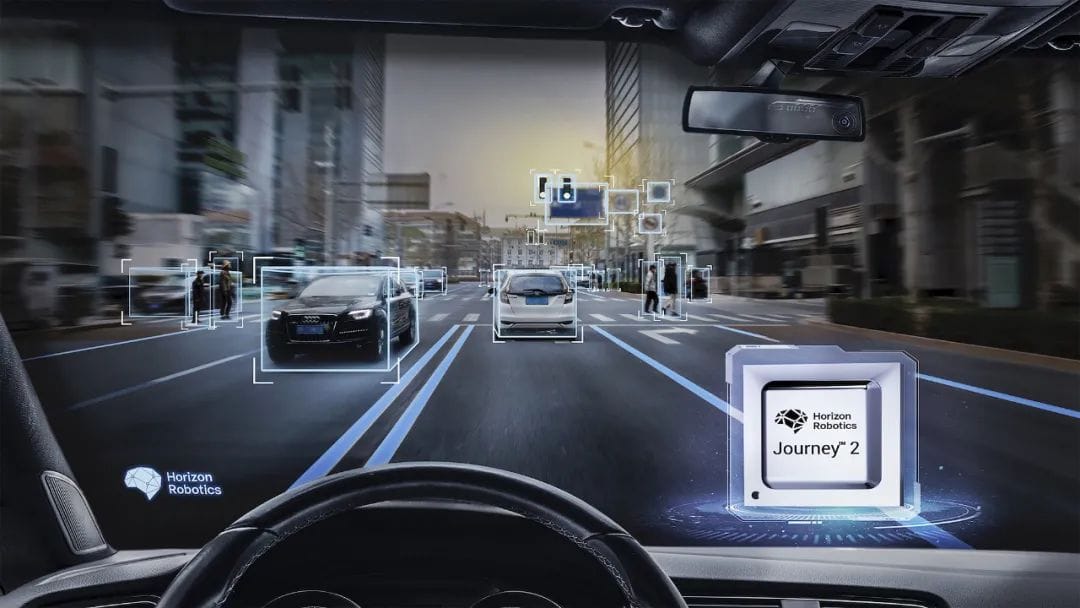
While Western markets continue to grapple with the regulatory complexities and prohibitively high costs of autonomous driving, China’s domestic champions are rapidly commoditizing the technology, pushing advanced self-driving capabilities into mass-market vehicles at price points that would seem impossible in Silicon Valley.
In a research note released on December 1, 2025, Deutsche Bank has reiterated a "Buy" rating on Horizon Robotics, raising the curtain on a pivotal shift in the auto-tech sector. The report, penned by analyst Bin Wang, highlights the company’s aggressive rollout of its "Horizon SuperDrive" (HSD) solution. Deutsche Bank has slapped a target price of HKD 10.50 on the stock, suggesting significant upside from its current trading level of HKD 7.88.
Why does this matter? Because Horizon Robotics is proving that high-compute urban navigation is no longer the exclusive domain of luxury EVs. By flooding the market with affordable, high-performance chips, they are enabling legacy automakers and new entrants alike to offer "human-like" driving experiences for under $20,000.
The "HSD 600" Breakthrough
The focal point of the Deutsche Bank report is the deployment of the HSD 600 solution. On November 28, 2025, Chery Automobile launched its EXEED "ET5" extended-range electric vehicle (EREV). This mid-sized SUV is not just another entrant in the crowded Chinese EV market; it is the first vehicle to integrate the HSD 600 autonomous driving solution.
Pricing is the killer application here. The vehicle is priced competitively between RMB 135,000 yuan (US$18,620) and RMB 150,000. At this price point, consumers are getting a vehicle equipped with a single J6P chip capable of 560 TOPS (Tera Operations Per Second).
Deutsche Bank notes the hardware density is staggering for a budget vehicle:
"The 'EXEED ET5' SUV's autonomous driving utilizes a single J6P chip (560 TOPS) and 27 sensors (1 LiDAR, 3 mmWave radars, 11 cameras, 12 ultrasonic radars) to offer advanced driving capabilities."
The market response was immediate. Chery reported over 5,000 non-cancellable orders for the ET5 within the first three hours of its launch. As the analyst team observes, this is a "testament to its competitive pricing and advanced technology."
A Tiered Strategy for Market Dominance
Horizon Robotics is not merely relying on a single chip; they are building a tiered ecosystem designed to capture every segment of the auto market. The report details a tie-up with 10 automakers across 20 different vehicle models, including giants like Volkswagen and Changan Automobile.
The Deutsche Bank report outlines the three-pronged HSD lineup, which effectively segments the market by computational power and price sensitivity:
- The Entry Level (HSD 300): Featuring dual-J6M chips (256 TOPS), this targets vehicles around the RMB 100,000 mark. It debuted in the Changan Automobile Deepal L60 sedan on November 18, 2025.
- The Mid-Range (HSD 600): Powered by the single J6P chip (560 TOPS), targeting the RMB 150,000 segment, as seen in the Chery launch.
- The High-End (HSD 1200): Utilizing dual-J6P chips for a total of 1,120 TOPS. This top-tier solution is designed for premium vehicles priced around RMB 200,000, offering "advanced urban point-to-point autonomous driving."
This segmentation allows Horizon Robotics to embed itself deeply into the supply chains of major OEMs, providing a scalable architecture that competitors will find difficult to displace.
The Asset-Light Robotaxi Pivot
Perhaps the most intriguing strategic nuance in the Deutsche Bank update is Horizon’s approach to the robotaxi narrative. Rather than burning cash on heavy assets and fleet management—a trap that has snagged many US tech firms—Horizon is positioning itself solely as the "arms dealer" of the autonomous revolution.
The report highlights that the company plans to provide its HSD (likely the high-powered HSD 1200) as a technology foundation for operators. Deutsche Bank explains:
"This strategy positions Horizon Robotics as a solution provider, partnering with entities like Hello to offer full-stack hardware and software, rather than manufacturing, owning, or operating robotaxi fleets."
By avoiding the operational expenditures of acting as a transportation network company, Horizon leverages its core competency—chips and software—while offloading the regulatory and operational risks to its partners.
Conclusion
As 2025 draws to a close, the narrative in the Chinese diverse auto-tech sector is shifting from "will it work?" to "how cheap can we make it?" Deutsche Bank’s bullish stance on Horizon Robotics underscores a broader trend: the democratization of advanced computing in transportation. With a solid order book, a strategic partnership with major OEMs like VW and Chery, and a shrewd asset-light robotaxi strategy, Horizon appears poised to capitalize on the mass adoption of Urban-NOA (Navigate on Autopilot) in China.
While Western analysts debate the ethics of AI, Chinese consumers are pre-ordering it by the thousands for the price of a compact sedan.