
Humanoid Robots Far From Factory Floor Despite Order Surge, Industry Experts Say
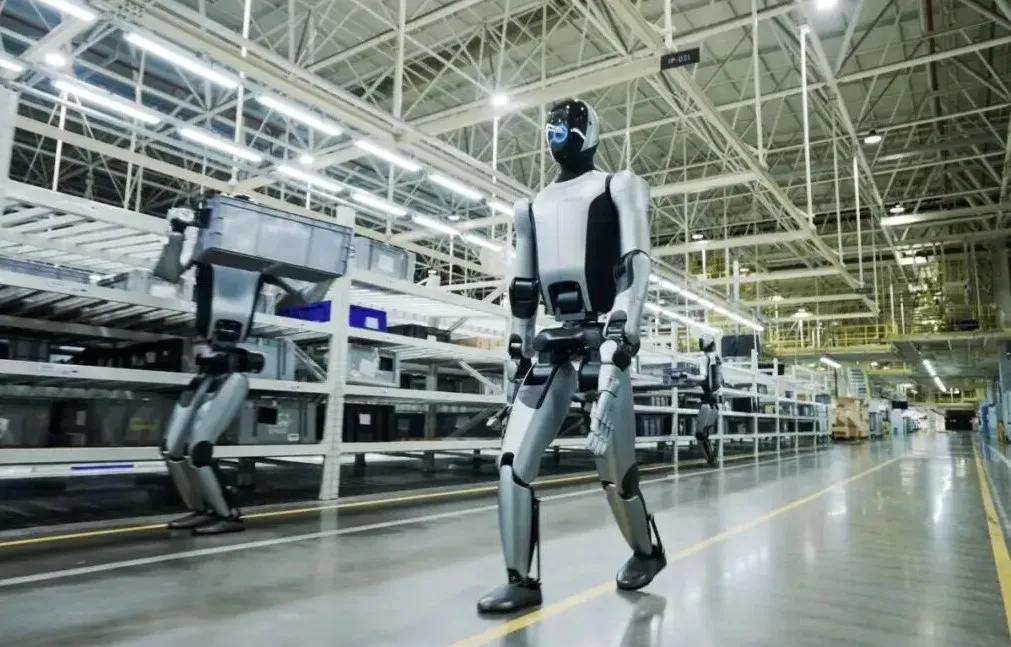
Humanoid robots in China are attracting significant orders but remain years away from replacing human workers in factories, as technical limitations and data constraints continue to hamper widespread industrial deployment.
Recent months have seen a flurry of activity in China's humanoid robotics sector. UBtech Robotics reported annual orders exceeding RMB 600 million ($83million)for its Walker series,while AgiBot and Unitree Robotics jointly secured a RMB 124 million ($17million) procurement contract from China Mobile.
Despite the progress, industry experts emphasize that humanoid robots remain in early-stage trials for industrial applications. Current deployments focus primarily on auxiliary tasks such as material handling, sorting and loading operations in controlled environments, rather than complex manufacturing processes.
Three Core Technical Bottlenecks
The primary constraint lies in embodied intelligence, according to industry specialists. Robot AI models have not yet reached a critical breakthrough point, resulting in limited environmental adaptability and task comprehension capabilities. Experts point to the need for better coordination between large models handling task planning and generalization, and smaller models executing specific actions.
Dynamic balance and precise control present additional challenges. While humanoid robots have advanced in locomotion capabilities, they struggle with stability in complex factory environments featuring varied floor surfaces and obstacles. Xiong Rong, chief scientist at Zhejiang Humanoid Robot Innovation Center, advocates combining model predictive control with data-driven approaches.
Hardware limitations, particularly in dexterous hand manipulation, remain far below human capability. High-precision sensors required for tactile feedback carry prohibitive costs that restrict scalable deployment.
Data Emerges as Critical Constraint
Industry leaders identify data as the fundamental bottleneck. Jiang Lei, chief scientist at the National Innovation Center for Humanoid Robots, notes that development paradigms have shifted from model-based to data-driven approaches as robots evolve toward embodied intelligence.
Beijing Institute for General Artificial Intelligence developed CLONED, a full-body teleoperation system addressing high-quality data scarcity. Current data-driven reinforcement learning techniques face challenges in data diversity and model generalization.
Virtual-real integration has emerged as a key pathway. Virtual environments efficiently generate diverse scenarios for training, while real-world data ensures algorithm reliability in practical applications. Beijing's Yizhuang district has launched an embodied intelligence social experiment program, opening nearly 1,000 real-world data collection sites to build a petabyte-scale dataset.
Gradual Path to Commercialization
Jiao Jichao, vice president at UBTECH Robotics, predicts humanoid robots will first gain traction in industrial settings, expand to commercial applications such as guidance and exhibition services in 2026, and potentially reach household deployment within eight to ten years.
Xu Jincheng, founder of PaXini Tech, estimates that compact humanoid robots could enter factories within five years, supporting a progressive expansion strategy that enables technical accumulation and cost optimization.
Industry participants call for unified standards covering data formats, hardware interfaces and safety protocols to avoid redundant investment and resource waste.
Timeline for Breakthrough
Experts identify two critical development phases. The first inflection point, comparable to ChatGPT's emergence, could arrive as early as mid-2026. A second turning point enabling mass adoption, similar to DeepSeek's impact, is more likely to materialize between 2027 and 2028.
The coming years represent a crucial period for humanoid robot commercialization. Industry observers stress that achieving the transition from laboratory demonstrations to practical industrial applications requires continued breakthroughs in intelligent algorithms, motion control and hardware reliability before humanoid robots can function as competent auxiliary labor units.