
DJI Enters Consumer 3D Printing Market with Investment in Intelligent Pie
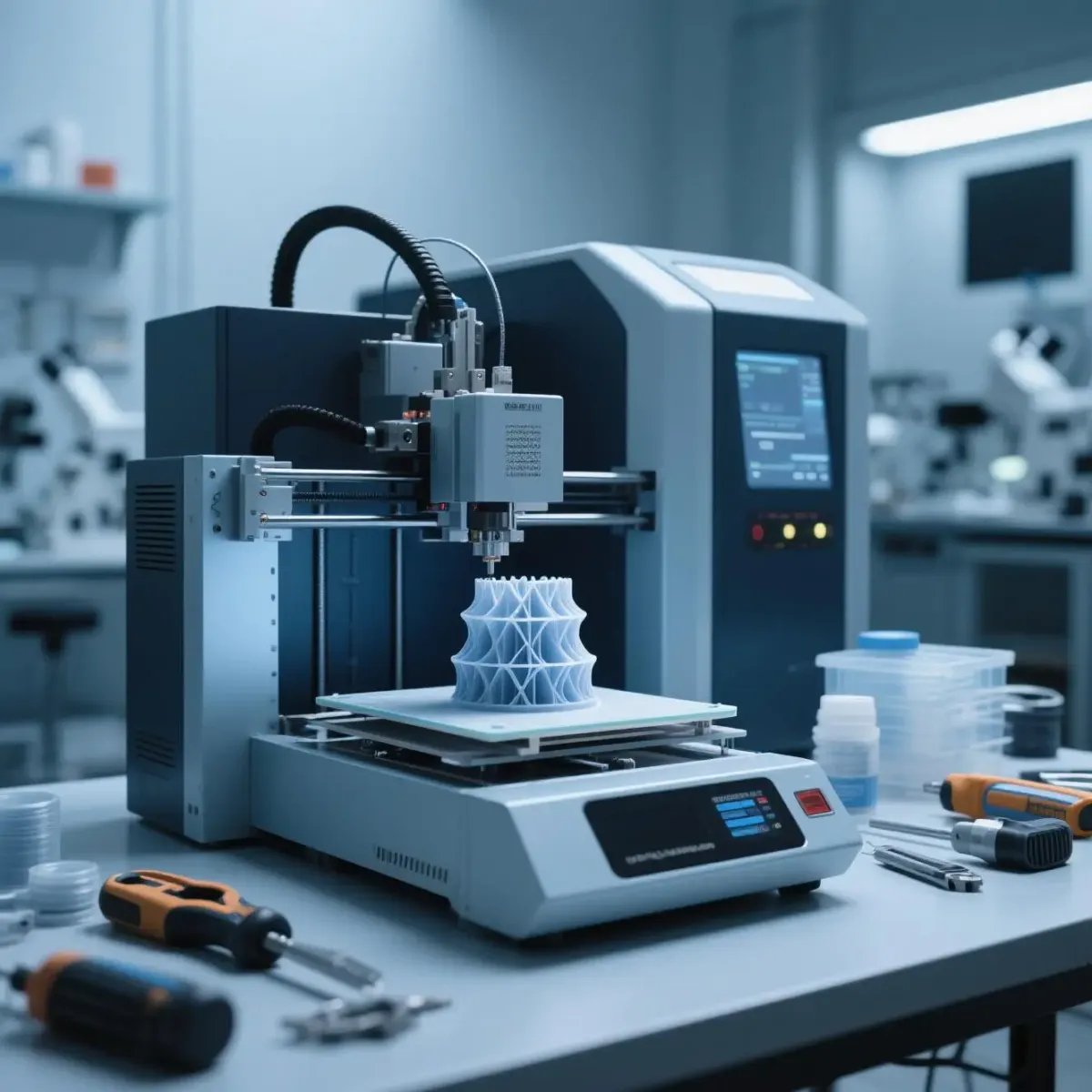
DJI has confirmed its investment in consumer-grade 3D printing company Intelligent Pie, marking the drone manufacturer's latest expansion beyond its core aviation and imaging products.
The Shenzhen-based company told reporters that the investment reflects confidence in the development potential and industry growth prospects of consumer-grade 3D printing technology, aligning with its consistent innovation strategy. The investment news was first disclosed by Tao Ye, founder of desktop 3D printing unicorn Bambu Lab, who revealed that the investment agreement included clauses specifically related to Bambu Lab.
Bambu Lab's founding team, including its chief technology officer and chief operating officer, previously worked at DJI. Since its 2020 establishment, Bambu Lab has achieved significant financial growth, with 2024 revenues reaching 5.5 billion to 6 billion yuan (US 756 million to US 825 million) and net profit approaching 2 billion yuan. First-quarter 2025 revenue alone neared 2 billion yuan.
Founded in 2015, Intelligent Pie is among China's early entrants in the consumer 3D printing sector, focusing on stereolithography (SLA) and fused deposition modeling (FDM) technologies.
DJI's move comes amid rapid global expansion in consumer 3D printing. According to CONTEXT, overseas entry-level 3D printer shipments surged 22 percent year-over-year in the first quarter of 2025, exceeding one million units for the first time. China's 3D printer exports totaled US$610 million in 2024, up 77.2 percent annually.
CITIC Securities noted that strong overseas demand may signal future domestic market trends. The firm attributed market growth to declining equipment and consumable costs, alongside the proliferation of 3D model communities driven by intellectual property economics, enabling consumers to access creative designs at minimal cost.
Guojin Securities highlighted that 3D printing's rapid, small-batch production characteristics align with consumer demand for personalized and limited-edition products. Technological advances including multi-nozzle systems and automatic leveling have improved user accessibility.
Artificial intelligence is further lowering barriers to entry. Guojin Securities observed that generative AI enables users to create 3D models through simple text or image inputs, while improvements in printing precision and material variety expand application scenarios.
Market data indicates the consumer 3D printing industry reached US 4.1 billion in gross merchandise value in 2024, projected to grow to US 16.9 billion by 2029, representing a 33 percent compound annual growth rate.
Industry analysts recommend focusing on equipment manufacturers with comprehensive printing ecosystems and companies with polylactic acid (PLA) production capabilities. PLA, made from corn starch or sugar-based plants, is a mainstream environmentally friendly material for consumer 3D printers and is expected to benefit from downstream demand growth.