
DJI Enters Robot Vacuum Fray, Betting Drone-Grade Engineering Can Outlast Hype
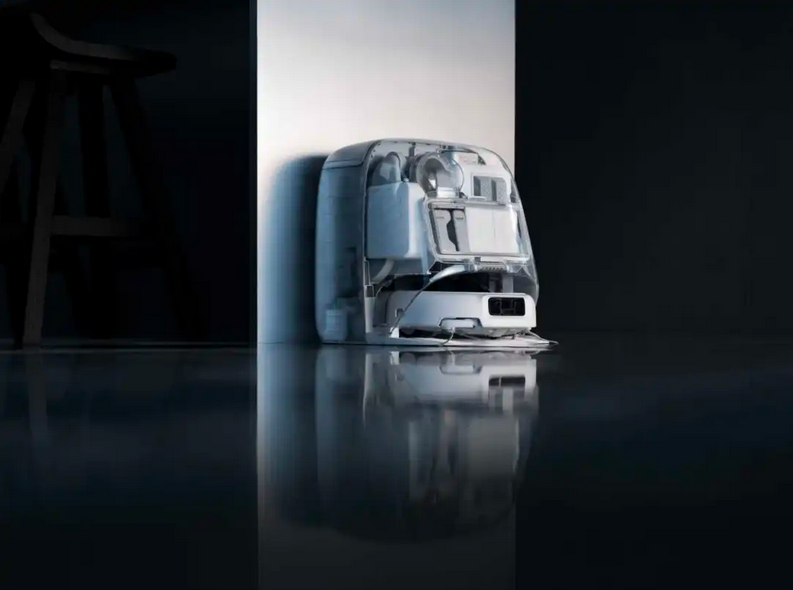
DJI, the world’s dominant drone manufacturer, is entering the crowded robotic vacuum market with its long-awaited ROMO, a device that deliberately shuns popular industry trends in favor of a deep-rooted focus on fundamental engineering, long-term reliability, and user experience.
After a development cycle spanning nearly five years, the company is launching a product that notably rejects common features like roller-mops and caterpillar tracks. Instead, DJI is wagering that its core competencies in motors, sensor technology, and industrial design—honed in the demanding aerospace sector—can produce a more durable and effective device.
The move marks a significant test of DJI’s product-led growth strategy in a new, highly competitive consumer electronics segment. By prioritizing robust engineering over marketing-driven features, DJI is issuing a direct challenge to established players, betting that consumers are fatigued by high-maintenance gadgets and will reward superior, practical design.
This patient, methodical approach contrasts sharply with the fast-paced, feature-driven cycle of the current robot vacuum market. The ROMO’s years-in-the-making debut signals DJI's intent to compete on performance and quality, expecting its product to win over users who value reliability above all else.
A Calculated Rejection of Trends
In a move counter to market momentum, DJI abandoned two of the industry’s most popular cleaning technologies: the roller-mop and the caterpillar-track mop. The company had developed and tested prototypes of both but ultimately concluded they prioritized marketing appeal over practical, long-term user experience.
According to DJI engineer Qing Ke, roller-mops, while effective for certain liquid spills, created secondary problems like odor diffusion and struggled with edge cleaning. The maintenance burden was also a major concern, with issues like clogged pipes, smelly water tanks, and difficult-to-clean components creating what the company calls a high "invisible maintenance cost." The caterpillar-track design presented similar long-term reliability issues.
"It’s a question of whether you are willing to solve problems internally or let users pay the price," Ke stated, arguing that such features were adopted by the industry as a new marketing angle.
Instead, DJI reverted to a twin-disc rotating mop system, focusing on perfecting the fundamentals of self-cleaning. It engineered a "four-way spray system" inside the base station, adding extra jets at an increased cost to ensure the cleaning base itself is thoroughly washed without user intervention.
Redundant Sensors for Unfailing Navigation
At the core of the ROMO’s intelligence is a sensor suite derived directly from DJI’s drone technology. The company, which pioneered the use of dual-camera vision for obstacle avoidance in its Phantom 4 drone in 2016, has equipped the ROMO with a dual-camera system augmented by solid-state Time-of-Flight (ToF) LiDAR.
This creates a redundant perception system designed for maximum stability. DJI’s ToF LiDAR is a solid-state unit, a key distinction from the rotating mechanical LiDAR common in the industry. This design eliminates the spinning “hat,” a component prone to mechanical failure and water damage, which the company claims has a failure rate as high as 15% in conventional designs. “Unstable avoidance is the same as no avoidance at all,” DJI asserts, noting its internal testing requires 100% success across 100 trials before a system is approved.
By deploying three sets of ToF sensors—one more than the typical industry standard—DJI claims a 50% increase in data collection for more stable positioning. The system’s algorithms, adapted from drone flight control systems, provide millimeter-level spatial perception, allowing the robot to clean within 3cm of obstacles like charging cables without entanglement, thereby maximizing cleaning coverage.
Drone-Grade Power and Refined Acoustics
Leveraging its extensive experience in high-performance drone motors, DJI equipped the ROMO with a power system capable of generating 25,000Pa of suction—surpassing many high-end competitors. However, the company is quick to state that raw suction power is not a true measure of cleaning efficacy, which depends more on airflow.
DJI’s fan system, optimized with drone-inspired fluid dynamics and blade design, is said to produce 1.5 to 2 times the airflow of competing products. This allows it to lift heavy debris and deeply embedded dust.
To manage the noise associated with such power, DJI implemented a multi-stage acoustic dampening system. This includes precision balancing of the fan blades, an angled air duct lined with sound-absorbing cotton, and a specially designed three-path "silencing chamber" in the base station. The result, according to Ke, is a quieter operation with a sound profile more akin to white noise than a disruptive vacuum whine.
The Radical Transparency of Industrial Design
Perhaps the ROMO’s most defining feature is its large-scale transparent chassis, an industry first. The decision was so central to the product’s identity that DJI scrapped a near-production-ready design last year to fully realize the concept, a process that took an additional year.
The move was driven by a philosophy that “good technology shouldn't be invisible.” By making the internal components—from the fan to the motors and wiring—visible, DJI aims to showcase its engineering and manufacturing precision. This choice presented significant challenges, as every internal element had to be laid out for both functional efficiency and visual aesthetics.
To prevent the transparent material from appearing dirty, engineers designed sealed internal modules and a magnetic cover system to isolate the core components from dust and grime. This transparency forces a higher standard of quality control, as no internal flaw can be hidden from the user.
Betting on Quality with a User-First Promise
DJI is backing its engineering-first approach with a robust service and warranty package designed to build consumer trust. The company uses higher-cost, metal-braided, burst-proof pipes for its water connections and includes a pressure-reducing valve as standard—a component often sold as an optional extra by home appliance brands.
Reflecting confidence in its build quality, DJI offers a "replace, not repair" policy for the ROMO, citing the difficulty of disassembling the transparent unit without contamination. The product comes with a two-year warranty, extendable to three.
To further lower the barrier to entry, DJI is offering a 30-day, no-questions-asked return policy. "We expect users to vote with their feet," Ke said. This strategy mirrors the product-led growth that turned its drones and gimbals from niche gadgets into industry standards, relying on user satisfaction and word-of-mouth rather than massive advertising campaigns.