
iQOO Unveils Z10 Turbo+ With MediaTek's Top Chip, Targeting Budget Gaming Segment
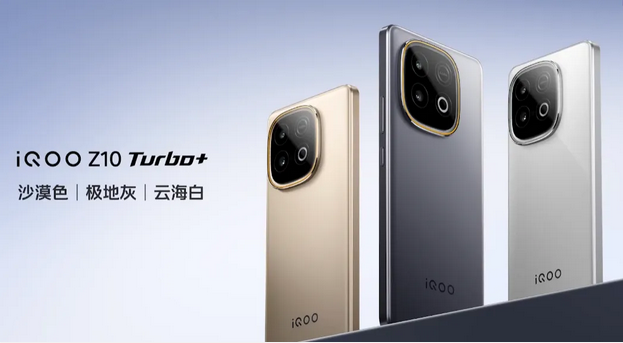
iQOO has launched its new Z10 Turbo+ smartphone, packing a flagship-level processor and a substantial battery into a device aimed at the competitive, performance-focused mid-range market.
The new model, unveiled on August 7, is powered by MediaTek Inc.'s latest Dimensity 9400+ chipset. It also features a large 8,000mAh battery, a significant increase from its predecessor’s 6,400mAh capacity, designed to support extended high-performance gaming sessions.
Priced to start at 2,199 yuan (approximately $305), the Z10 Turbo+ is positioned to directly challenge competitors such as Xiaomi Corp.'s Redmi K80 Ultra. The aggressive pricing, which is further reduced by government subsidies, targets price-sensitive consumers who prioritize processing power and battery life for mobile gaming.
To bolster its gaming credentials, the phone also integrates iQOO’s proprietary Q2 gaming chip to enhance frame rates and energy efficiency. It is equipped with a 6.78-inch, 144Hz high-refresh-rate display, underscoring its focus on the mobile esports audience.
Performance Geared for Gaming
At the core of the Z10 Turbo+ is MediaTek’s Dimensity 9400+ processor, supported by LPDDR5X Ultra RAM and UFS 4.1 storage. The company reports that this configuration achieved a benchmark score of 3.26 million on the AnTuTu testing platform. The device’s performance is further augmented by the self-developed Q2 gaming chip, which iQOO claims enables higher frame rates at lower power consumption.
The company highlighted specific gaming benchmarks, stating that the device can run "Honor of Kings" at 120 frames per second on maximum settings with an average power consumption of just 4 watts, keeping the rear panel temperature at a maximum of 40.5°C. The phone will also exclusively support 1.5K resolution and 144fps concurrently for "Peacekeeper Elite." Additionally, it is slated to receive native 144fps support for upcoming titles like "Valorant Mobile" and "Delta Force: Hawk Ops."
Display and Battery Endurance
The Z10 Turbo+ features a 6.78-inch flat display with a 1.5K resolution and a 144Hz refresh rate. The panel is a C9+ substrate from CSOT, capable of reaching 2,000 nits of full-screen peak brightness and utilizes 4320Hz high-frequency PWM dimming for eye comfort.
A key selling point is its 8,000mAh battery, which is housed in a body measuring 8.16mm in thickness and weighing 212 grams. The capacity is made possible by third-generation silicon battery technology. To complement the large battery, the device supports 90W fast charging. According to iQOO, a nine-minute charge can provide enough power for three hours of gameplay in "Honor of Kings."
Connectivity and Other Specifications
The device is equipped with a range of modern connectivity options, including 5.5G cellular support, Wi-Fi 7, dual-band GPS with quad-band Beidou, and full-function NFC which supports over 100 university campus cards in China. It also features an infrared blaster and a "kilometer-level network-free communication" capability. For audio, the phone introduces a "high-definition, low-latency voice" feature for "Honor of Kings," said to cut voice chat latency by 30.7%.
Other hardware includes stereo speakers, an X-axis linear motor for haptic feedback, and an IP65 rating for dust and water resistance. The rear camera system consists of a 50-megapixel main sensor with optical image stabilization (OIS) and an 8-megapixel ultra-wide lens, utilizing imaging algorithms from parent company Vivo's flagship models.
Pricing and Market Position
The iQOO Z10 Turbo+ is available in several configurations, with pricing that positions it as one of the most affordable devices featuring the Dimensity 9400+ chip.
- 12GB + 256GB: 2,199 yuan (~$305), or 1,869.15 yuan with subsidy
- 16GB + 256GB: 2,499 yuan (~$347), or 2,124.15 yuan with subsidy
- 12GB + 512GB: 2,699 yuan (~$375), or 2,294.15 yuan with subsidy
- 16GB + 512GB: 2,999 yuan (~$417), or 2,549.15 yuan with subsidy
This pricing strategy directly undercuts its primary rival in the segment, the Redmi K80 Ultra. To achieve this price point, one of the notable material choices is a plastic middle frame, a common trade-off in the mid-range performance category.