
DJI Faces Unprecedented Competition Across New Battlefields
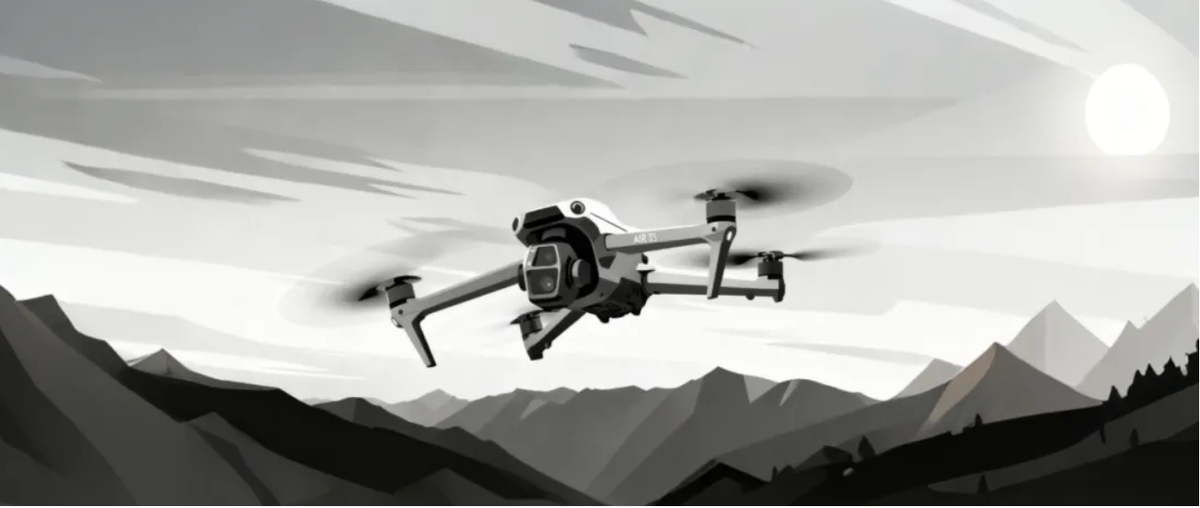
DJI, the world's dominant drone manufacturer with over 13,000 patents and 70% of the global consumer drone market, is confronting its most competitive year yet. The Shenzhen-based giant is pushing aggressively into new sectors including 3D printing, panoramic cameras, and robot vacuums as growth slows in its core business, but faces entrenched rivals in each arena.
In November, DJI invested hundreds of millions of yuan in Shenzhen Creality, a 3D printing manufacturer, marking its latest expansion beyond aerial imaging. The move comes as DJI's consumer drone market growth rate has plunged from 45% in 2020 to 18% in 2024, according to China Research and Intelligence. With consumer drones approaching saturation, the company is seeking growth elsewhere—but finding well-armed competitors at every turn.
The investment also reflects internal tensions. Reports suggest DJI passed over Bambu Lab, a 3D printing startup founded by former DJI employees, allegedly including anti-poaching clauses in its Creality deal. Bambu Lab founder publicly criticized the move, highlighting DJI's struggle to retain talent as former employees launch competing ventures backed by investors eager to bet on "DJI alumni."
DJI's expansion efforts have sparked battles across multiple fronts. Insta360 has dominated panoramic cameras while launching its own drone, challenging DJI's home turf. In robot vacuums, DJI faces established players including Ecovacs, Roborock, and Xiaomi. The company's diversification is proving more necessity than choice as it seeks new revenue streams.
3D Printing: Betting on Second Place
DJI's investment in Shenzhen Creality positions the company in a fast-growing sector projected to reach $50 billion globally by 2028, expanding at 20% annually according to Grand View Research. Creality represents one of Shenzhen's "Big Four" 3D printing manufacturers controlling 90% of the global entry-level market.
Creality reported revenue of RMB 1.6 billion ($220million) in 2024, with annual growth exceeding 40220 million, targeting RMB 5 billion ($690 million) within three years.
Yet Creality trails Bambu Lab significantly. The DJI spinoff generated RMB 5.5-6 billion ($760−830million) in 2024 revenue with nearly RMB 2 billion($276 million) in net profit—a 30% margin—according to local media reports. Bambu Lab dominated Singles' Day sales on Tmall and JD.com, and is reportedly closing a funding round led by Tencent Holdings Ltd. at a $10 billion valuation.
DJI's choice reflects strategic calculation beyond pure financial returns. By backing Creality while allegedly restricting investment in Bambu Lab, founder Frank Wang addresses what he identified a decade ago as the company's greatest threat: competitors with capital to poach talent. The investment secures exposure to 3D printing while constraining a former-employee venture.
Consumer Drones Hit Ceiling
DJI's core business faces structural headwinds despite exceeding early projections. Wang predicted in 2016 that drone market saturation would cap DJI revenue at RMB 20 billion ($2.8billion). Media estimates place 2024 revenue above RMB 80 billion ($11 billion), with drones remaining the primary contributor.
The company commands over 70% of global consumer drones, but growth is slowing sharply. China's consumer drone market expansion rate dropped from 45% in 2020 to 18% in 2024, according to China Research and Intelligence. The market's deceleration makes horizontal expansion urgent.
Industrial drones offer better prospects. From January through September 2025, agricultural drone subsidies in China covered approximately 60,000 units, with 89.35% from DJI and 10.12% from XAG, according to government data. However, the broader low-altitude economy—including passenger aircraft—presents the largest opportunity.
China's low-altitude economy is projected to reach RMB 1.5 trillion ($207billion) in 2025 and exceed RMB 2 trillion ($276 billion) by 2030, according to the China Aviation Industry Conference. DJI launched a commercial cargo drone in June, but faces competition from EHang and XPeng HT in the emerging passenger segment. Expansion depends partly on regulatory approval for low-altitude airspace.
Defending Core While Attacking Flanks
DJI's horizontal moves into cameras and home appliances leverage its stabilization and imaging technology but have triggered counter-offensives. The company entered panoramic cameras with the Osmo 360, directly confronting Insta360, which responded by developing drones to invade DJI's core market.
Market share data in panoramic cameras shows intense rivalry. Jiuqian Consulting reports DJI held 43% of global Q3 2025 sales versus 49% for Insta360. Frost & Sullivan offers starkly different figures: 75% for Insta360, just 17.1% for DJI in consumer panoramic cameras. Insta360 topped Tmall's Singles' Day rankings in panoramic cameras, action cameras, and smartphone gimbals. The company reported revenue of RMB 6.61 billion ($913million) in the first three quarters of 2025, up 67.18913 million drone business, Insta360's RMB 97 billion ($13.4 billion) market capitalization justifies DJI's aggressive response.
In robot vacuums, DJI launched its premium ROMO brand into a crowded field. Luotu Technology data shows China's Q3 2025 online sales led by Ecovacs, Roborock, Mijia, NARWAL, Dreame, and DJI in sixth place. Each top competitor generates tens of billions in annual revenue and holds entrenched positions. For a market entrant, sixth place represents modest progress in a commoditized category with limited differentiation potential.
DJI displays its Osmo 360 cameras prominently and ROMO vacuums at store entrances, as observed at a Guangzhou retail location in November. The company leverages its imaging expertise in action cameras, capturing 66% global revenue share in Q3 2025 according to Jiuqian Consulting, while its Pocket 3 gimbal camera has sold over 10 million units cumulatively.
Strategic Offense as Necessity
DJI's multi-front expansion reflects competitive pressure from all directions. Insta360, Dreame, Xiaomi, and Huawei Technologies Co. eye the drone leader's stronghold, while DJI confronts established players in cameras, home appliances, and 3D printing through internal development and investment.
The company's core stabilization and imaging technologies provide differentiation in related categories, demonstrated by its action camera success. However, replicating that performance across diverse sectors—each with entrenched competition and mature technology—poses execution challenges. ROMO vacuums must compete on features and price against rivals with years of iteration and supply chain optimization.
For DJI, attacking adjacent markets represents not optional expansion but strategic necessity. With consumer drones approaching saturation and industrial applications dependent on regulatory timelines, the company requires new growth engines to sustain momentum. Whether through organic development or investment, DJI's future depends on winning battles far from its home territory—against opponents equally determined to protect their ground.