
Dreame Technology Enters Drone Market, Intensifying Rivalry with DJI
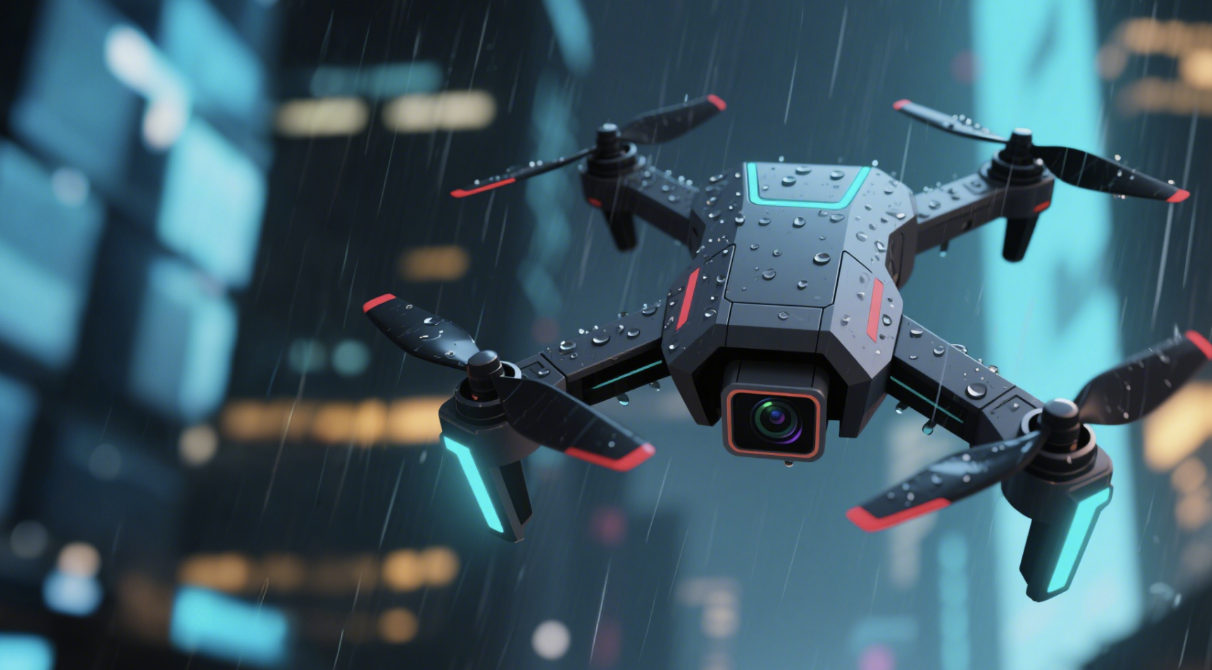
Dreame Technology, a prominent Chinese smart-home appliance manufacturer, is expanding into the consumer drone market, a strategic pivot that positions it as a new challenger to industry giant DJI and highlights a growing trend of cross-sector competition among China’s hardware firms.
The company confirmed on August 20 that it will formally develop a drone business, aiming to capture a share of the country’s burgeoning "low-altitude economy," a sector estimated to be worth a trillion-yuan (approximately $139 billion). The move marks another significant diversification for the robotic vacuum maker, which has also recently pushed into large home appliances.
Dreame’s expansion is already underway, with the company actively assembling a professional drone research and development team whose core structure is now in place. Recent job postings reveal recruitment for key positions, including a head of drone business operations and sales, a channel director, and specialized navigation algorithm engineers.
The announcement comes just weeks after drone market leader DJI launched its first flagship robotic vacuum, directly entering Dreame’s core territory. This escalating rivalry, where technology companies are increasingly encroaching on each other's established markets, is becoming a defining theme in the smart hardware landscape in 2025.
From Floors to Skies: Leveraging Existing Tech
Industry observers note that Dreame’s foray into drones is supported by a strong foundation of transferable technology developed for its robotic cleaning products. The company’s expertise in three-dimensional spatial perception, dynamic obstacle avoidance, and high-speed digital motors can be directly adapted for drone flight control and navigation systems.
For instance, the technology used in its robotic vacuums to generate centimeter-level precision dynamic maps could significantly enhance drone recognition accuracy and exponentially improve the success rate of obstacle avoidance. Furthermore, Dreame’s established smart manufacturing infrastructure and global supply chain are expected to facilitate the rapid industrialization and mass production of its new drone products.
A Return to Aeronautical Roots
While the expansion may appear to be a reaction to DJI's recent moves, sources close to the company suggest the plan predates its competitor's entry into the home appliance market. This strategy is deeply rooted in the company's DNA and the background of its founder.
Dreame’s founder and CEO, Yu Hao, is a graduate of Tsinghua University’s aerospace engineering program and is recognized as one of China’s earliest quadcopter developers and the inventor of the tri-copter. He also founded Tsinghua's "Sky Works," a hub for aerospace innovation from which many of Dreame's founding members hail. This background provides the company with inherent advantages as it enters the aviation-centric drone industry.
Search for New Growth Amid Stiff Competition
Dreame’s diversification is also a strategic response to the intense competition and limited market penetration in its home turf of robotic vacuums. According to IDC data, the Chinese robotic vacuum market grew by only 6.7% in 2024. In this crowded field, Dreame held a 12.2% market share, trailing competitors like Ecovacs (25.4%), Roborock (21.6%), Narwal (16.3%), and Xiaomi (13.7%).
Faced with a maturing domestic market, Dreame is pursuing new product categories to unlock further growth, a strategy aligned with Yu Hao’s belief that great enterprises demonstrate "continuous entrepreneurial capabilities." However, simultaneously expanding into large appliances and drones presents a significant test for Dreame's management and resources.
Challenging an Industry Goliath
Entering the drone market means confronting an entrenched leader. DJI currently dominates the global consumer drone industry with a market share exceeding 70%. Despite this, the market's potential continues to attract new players, including Dreame and camera maker Insta360.
Industry insiders believe opportunities still exist for newcomers to address unsolved user pain points, such as improving flight experience, imaging capabilities, and smart interaction. As Dreame formalizes its challenge, the outcome will depend on how effectively it can leverage its technological strengths to innovate in a sky long ruled by a single giant.