
Driverless Delivery Vehicle Price War Intensifies as Costs Plunge Below $3,000
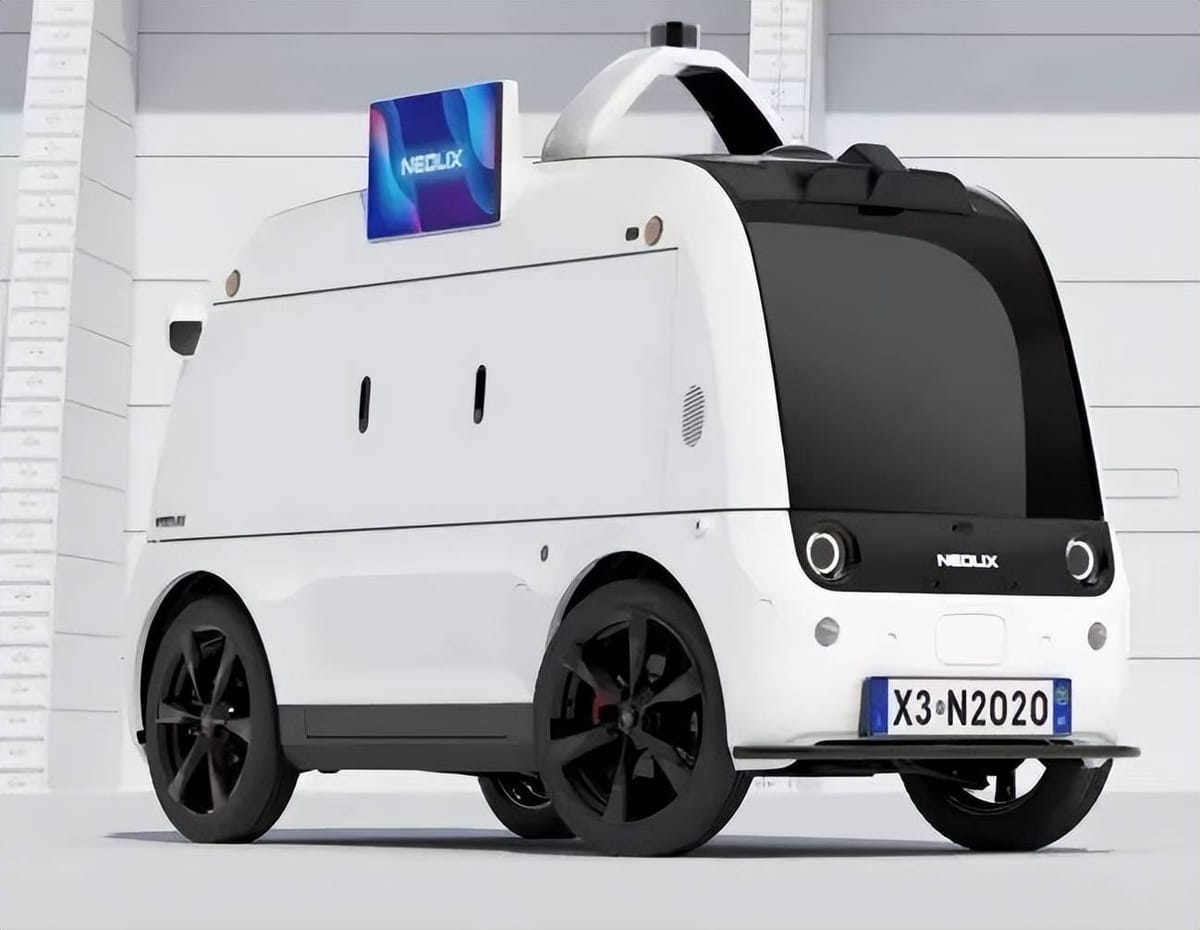
The autonomous delivery vehicle market is experiencing unprecedented price competition, with vehicle costs dropping from around RMB 1 million yuan (US$ 140,000)in 2018 to below RMB 20,000 yuan in 2025. Leading manufacturers are now offering zero down payment plans and lifetime free full self-driving (FSD) services to capture market share in China's rapidly expanding last-mile delivery sector.
Industry newcomer Desay SV Automotive launched its "Chuanxing Zhiyuan" autonomous vehicle brand on September 2, unveiling two low-speed delivery models targeting campus and commercial complexes. The move signals growing interest from traditional automotive suppliers in the lucrative unmanned delivery space.
Neolix, a prominent player in the sector, announced a "zero down payment, zero interest, 48-installment" financing plan for its X3 and X6 cargo vehicles on September 3, coupled with lifetime free FSD services. The aggressive pricing strategy marks a significant escalation in the ongoing price war that has already transformed the industry's business model from bundled hardware-software packages to separate vehicle sales and service subscriptions.
The price competition reflects broader industry maturation, with leading companies shifting focus from pure technology development to cost optimization and service differentiation as technical capabilities increasingly converge across major players.
Dramatic Price Decline Reshapes Market
The autonomous delivery vehicle market has witnessed a dramatic price collapse over the past seven years. According to reports, vehicles that cost approximately 1 million yuan including service fees in 2018 dropped to 200,000-300,000 yuan by 2019-2021.
The turning point came in 2022 when Haomo.AI introduced its "Little Magic Camel 2.0" priced at 129,000 yuan, subsequently reducing costs to below 90,000 yuan the following year. This year has seen even steeper declines, with Zelos Tech's E6 model priced at just 19,800 yuan plus 1,800 yuan monthly FSD subscription, and Cainiao's new vehicle model selling for 21,800 yuan, discounted to 16,800 yuan during promotional periods.
The rapid price reduction reflects technological cost optimization, economies of scale, and strategic market positioning by leading companies seeking to establish dominant positions in the emerging sector.
Business Model Evolution Drives Competition
The industry has fundamentally restructured its commercial approach, transitioning from bundled "vehicle plus service" packages to separated hardware sales and software-as-a-service models. This shift addresses previous customer concerns about high upfront costs and unpredictable long-term service pricing.
Major players have achieved significant deployment scale, with Neolix operating over 7,500 vehicles as of July and targeting 10,000 units by year-end. Zelos Tech has delivered 5,000 vehicles, while Rino.AI projects 5,000 active vehicles by 2026. These deployment numbers demonstrate the sector's rapid commercialization and growing market acceptance.
Competition now centers on four key factors: product quality, road permits, pricing, and service differentiation. As technical capabilities converge among leading manufacturers, pricing advantages and service innovations have become primary competitive differentiators.
Service Integration Becomes Key Battleground
Road permits represent a critical competitive advantage, functioning as regulatory authorization for autonomous vehicle operations. Companies employ different strategies: Zelos enables customers to apply independently, Neolix provides comprehensive permit management, and Rino.AI leverages SF Express's logistics network for rapid expansion.
According to industry analysis, last-mile delivery represents the largest cost reduction opportunity for express delivery companies, with delivery fees accounting for over half of per-package costs. Under moderate assumptions, autonomous vehicles handling 30% of deliveries could reduce logistics costs by approximately 4% for franchise-based express companies.
The revenue structure for autonomous delivery vehicle companies comprises vehicle sales and recurring FSD service subscriptions. Neolix's lifetime free FSD offering challenges the prevailing monthly or annual subscription model, potentially forcing industry-wide pricing adjustments and accelerating the shift from hardware-driven to service-driven competition strategies.