
Chinese Phone Case Makers Strike Gold in Middle East Luxury Market
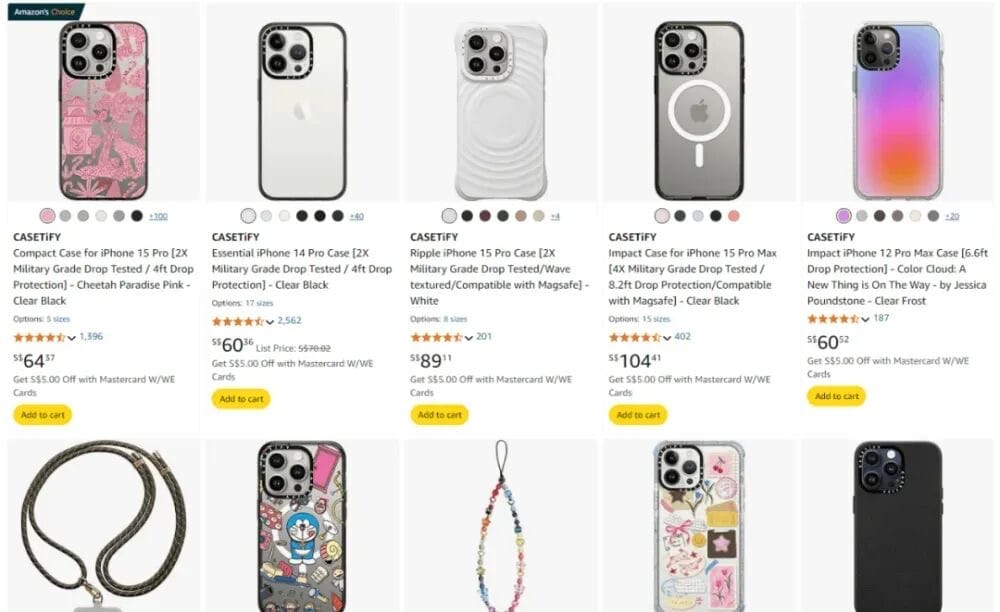
Chinese manufacturers of mobile phone accessories, squeezed by hyper-competition in their domestic market, are finding a surprisingly lucrative new frontier in the Middle East. Once a low-margin commodity, the humble phone case has been transformed into a high-end, sought-after status symbol in the region, allowing Chinese brands to pivot from price wars to premium brand-building on a global stage.
In Dubai's bustling electronics markets, a basic phone case that would be unremarkable in China can sell for as much as 85 AED (US$23) and still face stock shortages. This stark price disparity highlights a market ripe with opportunity, where local consumer tastes for ostentatious design and a lack of domestic manufacturing have created a significant demand gap. Chinese firms are capitalizing on this by offering everything from aerospace-grade materials to AI-powered customizable screens.
The strategic shift is paying off. Premium models featuring advanced materials or technology command prices between 50and50and80, with one company exporting around 50,000 AI-enabled cases monthly. For investors, this trend signals a broader evolution in China's export strategy, moving beyond simple arbitrage to establishing valuable international brands. As the global phone replacement cycle lengthens, the accessories market is booming, and the Middle East has become a key battleground for high-margin growth.
This burgeoning demand is built on a foundation of strong profitability. While standard cases offer gross margins of 30-40%, proprietary brands can achieve much higher returns. Shenzhen Jame Technology, for instance, reported a gross margin of 54.67% on its own branded products in its 2023 financial statement. The success validates a new export model where design, branding, and cultural adaptation—not just low cost—drive value.
An Untapped Demand for 'Bling'
The strong appetite for premium phone cases in the Middle East is rooted in a unique intersection of cultural aesthetics and economic reality. While daily attire may be conservative, many consumers in the region possess a strong affinity for vibrant colors and elaborate ornamentation. Gold tones, symbolizing wealth, and intricate geometric patterns, central to Islamic art, are highly favored. Consequently, phone cases adorned with faux crystals, prominent logos, and bold, gilded elements are perceived not as gaudy, but as tasteful expressions of status and personal style. This cultural preference provides a ready market for Chinese suppliers capable of producing diverse and visually striking designs that are simply unavailable locally.
The Local Manufacturing Void
Despite strong purchasing power and surging demand, the Middle East has a near-nonexistent local manufacturing base for consumer electronics accessories. Decades of economic reliance on oil revenues have resulted in an underdeveloped light industrial sector and a deep-seated dependence on imports. High labor costs further inhibit local production; the average post-tax monthly salary in Dubai is approximately 2,985, making it difficult to establish cost−competitive factories. Even with government initiatives like SaudiArabia′s"StandardIncentivesProgram"(SIP),launched in early 2025 to attract foreign manufacturers with cash subsidies up to 50million(US13.3 million) per project, bridging the manufacturing gap with mature production hubs remains a distant prospect. This leaves a vacuum that China's manufacturing ecosystem is perfectly positioned to fill.
Shenzhen's 'Speed and Scale' Advantage
The success of Chinese brands in the Middle East is powered by the unparalleled agility and scale of the country's supply chain, particularly in the Pearl River Delta. This manufacturing engine enables a "small-batch, quick-response" model, allowing designs to go from concept to physical sample in as little as seven days and reach mass production in fifteen. Brands can rapidly test new styles on e-commerce platforms and, once a "hot seller" is identified, immediately scale up distribution. This flexible production capability is a formidable competitive advantage, enabling Chinese companies to continuously refresh their offerings and stay ahead of fast-moving trends in a way local or other international competitors cannot match.
Building Brands, Not Just Shipping Boxes
The most successful Chinese exporters have moved far beyond simply reselling products. They are strategically building brands by investing in innovation and storytelling to justify a premium price. TORRAS, for example, has amassed over 1,300 patents, won international accolades like the Red Dot and iF Design awards, and burnished its image with corporate social responsibility initiatives, such as tree-planting programs. This approach has allowed it to command prices of 20−60, well above the market average, by creating perceived value that resonates with environmentally and brand-conscious Middle Eastern consumers. This strategy marks a clear departure from the old model of leveraging information asymmetry for a quick profit, proving that sustainable growth lies in brand equity.
A New Playbook for Global Expansion
The journey from low-cost producer to premium international brand is guided by a new, systematic playbook. This strategy, adopted by leading firms like Casetify, PITAKA, and Jame Technology, rests on three core pillars:
First is a commitment to regulatory compliance. Many Middle Eastern countries have strict environmental and safety standards for imported goods. Brands that proactively secure international certifications like RoHS, FCC, and GCC gain a crucial competitive edge and build trust with distributors. PITAKA, for instance, uses aerospace-grade aramid fiber that meets these standards, while Jame Technology has evolved its materials to include anti-bacterial coatings and recycled content.
Second is the development of localized logistics and operations. To meet consumer expectations for fast shipping, Chinese brands are establishing overseas warehouses in key markets like the UAE, cutting delivery times to 3-7 days. This infrastructure is critical for enabling efficient returns and after-sales service, transforming the business from a "one-time sale" into a relationship that fosters brand loyalty.
Third is sophisticated cultural adaptation in design. Rather than relying on generic "luxury" tropes, successful brands conduct deeper research into cultural nuances. This includes creating designs that incorporate abstract interpretations of Islamic geometric art or elegant Arabic calligraphy, appealing to a desire for cultural identity paired with modern aesthetics. By redefining the phone case from a simple protective item to a vehicle for personal expression, these brands are unlocking significant brand premium and paving the way for sustainable growth in a global market projected to exceed RMB 120 billion (US$16.6 billion) by 2030.