
Energy Monster Faces Boardroom Drama as Power Bank Industry Contracts
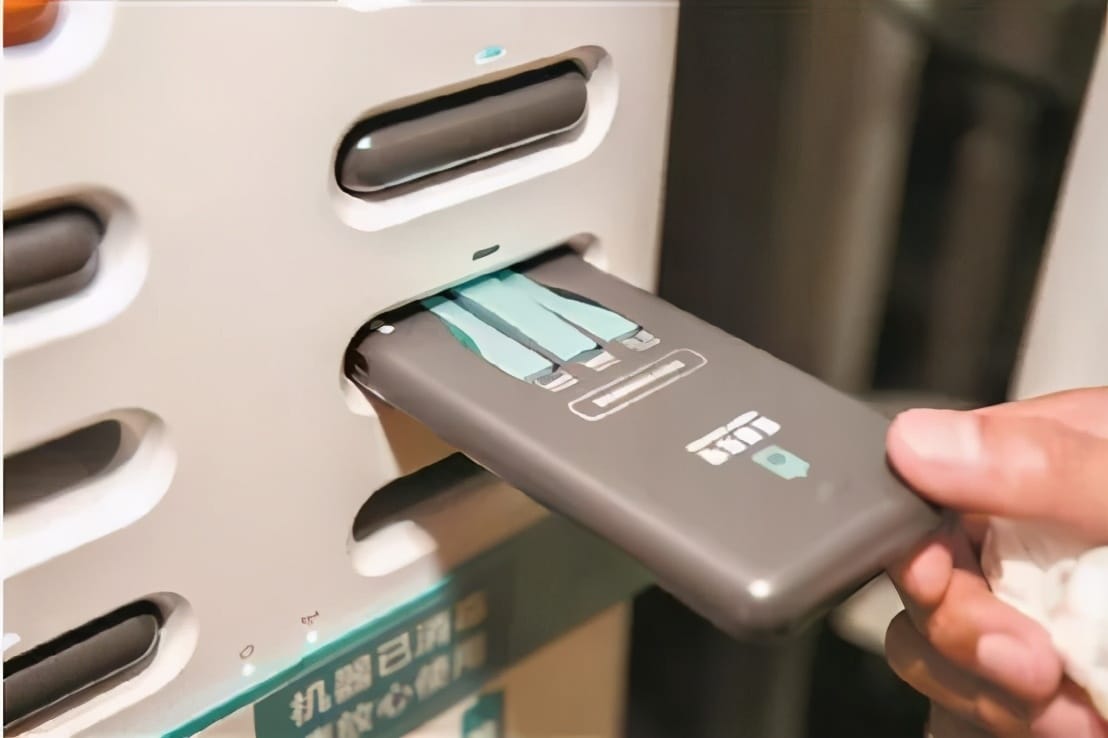
Energy Monster Technology's board has rejected a higher takeover bid from Hillhouse Capital, choosing instead to proceed with a significantly lower offer that has sparked investor outrage and highlighted the deepening crisis across China's shared power bank sector. The controversial decision underscores mounting financial pressures as the industry grapples with declining revenues and safety scandals.
The company's board recently rejected Hillhouse Capital's 1.77 per American Depositary Share privatization offer made in August, opting to maintain its original 1.25 per ADS deal with Xinchen Capital and a management consortium. The decision has drawn sharp criticism from shareholders, as the accepted price falls below the company's cash value per share of approximately 1.63, based on 413 million in cash reserves reported last year.
Energy Monster's stock price has plummeted to just one-tenth of its initial public offering value, leaving investors facing additional losses even at these depressed levels. Some shareholders have labeled the management-led deal a breach of trust and threatened overseas litigation against the company.
The privatization controversy reflects broader systemic challenges facing the shared power bank industry, including sustained revenue declines and a supply chain crisis triggered by multiple device explosions that have intensified regulatory scrutiny across the sector.
Financial Pressures Mount
Energy Monster's privatization stems directly from severe financial distress that has plagued the company since its 2021 public listing. Despite achieving peak revenue of 3.6 billion yuan ($500 million) that year, the company swung to a loss of 125 million yuan as profitability proved elusive.
The financial deterioration accelerated in 2024, with revenue plunging 36% to 1.89 billion yuan from 2.96 billion yuan in 2023. The company returned to losses, posting a net deficit of 13.5 million yuan after achieving a 88.7 million yuan profit the previous year.
Strategic pivots from direct sales to consignment models have failed to stem losses. While the shift reduced direct operation burdens, revenue sharing with network partners and high incentive payments have created new cost pressures, resulting in continued cash flow challenges.
Safety Crisis Exposes Industry Weaknesses
A series of power bank explosions has exposed fundamental safety issues across the industry's supply chain. In June, a Romoss power bank exploded while charging in a university dormitory, igniting bedding and prompting at least 21 Chinese universities to ban specific high-capacity models citing explosion risks.
Romoss subsequently announced recalls of over 490,000 devices across three models produced between June 2023 and July 2024, citing battery cell material defects that could cause combustion under extreme conditions. Anker Innovations simultaneously recalled 1.15 million power banks globally, highlighting the widespread nature of safety concerns.
Investigations traced the problems to shared supplier Amprius, which outsourced production to a Jiangxi factory that substituted substandard separator materials and falsified quality reports. However, industry analysts note that power bank companies' reliance on ultra-low pricing to compete contributed to cost-cutting measures that compromised safety standards.
Limited Competitive Moats
Despite Energy Monster's dominant 36% market share in shared power banks, according to iResearch, the company has struggled to convert market leadership into sustainable profits. The broader power bank manufacturing sector faces structural challenges with low entry barriers and minimal differentiation opportunities.
The global power bank industry remains highly fragmented, with the top five manufacturers controlling just 18% of market share. Among global leaders, only Anker Innovations operates primarily as a dedicated power bank company, while Xiaomi and Huawei's financial performance bears little correlation to charging device sales.
Scale advantages have proven limited in both manufacturing and shared power bank operations. Direct operation models burden operators with device depreciation costs of 18-30%, merchant revenue sharing of 50-70%, and extensive maintenance requirements. Premium locations typically favor highest bidders, forcing operators to surrender increasing profit margins to secure strategic placements.
Capital Exodus Signals Sector Decline
The industry's struggles mark a dramatic reversal from 2017's investment euphoria, when shared power banks attracted hundreds of millions in venture funding. Tencent, GSR Ventures and prominent angel investor Wang Gang invested 100 million yuan ($13.9 million) in Xiaodian Technology's pre-Series A round, while IDG Capital and Sunwoda backed Jiedian Technology's Series A funding.
However, investors underestimated rapid improvements in smartphone battery capacity and fast-charging technology by manufacturers like Apple, Huawei and Xiaomi. These advances reduced shared power bank usage to primarily emergency scenarios rather than regular consumer behavior, undermining projections of universal adoption across China's mobile user base.
The "low-price cultivation, high-price harvesting" strategy favored in internet businesses has proven unsuccessful in shared charging. While hourly rates climbed from 1 yuan to 3-8 yuan, with premium locations charging up to 10 yuan per hour, standalone power bank prices simultaneously fell to 30-40 yuan ($4-6), making purchase more economical than repeated rentals for many consumers.