
Europe September Car Sales Surge 11%: BYD Deliveries Jump Nearly Five-Fold as Tesla Falls 10%
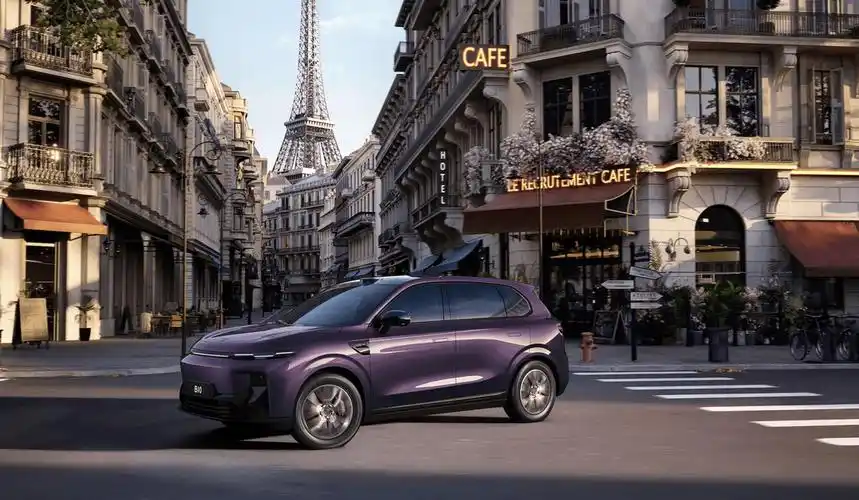
New car sales in Europe rose 11% in September, driven by growing demand for affordable electric and plug-in hybrid vehicles, as Chinese automaker BYD surged nearly five-fold while Tesla registrations declined 10%.
The increase marks the third consecutive monthly gain for the region, with registrations reaching 1.24 million units across the European Union, Britain and the European Free Trade Association, according to data released Tuesday by the European Automobile Manufacturers' Association. Sales of fully electric vehicles and plug-in hybrids jumped by a third, accounting for nearly a third of total registrations.
BYD captured 2% of the European market in September, up from 0.4% a year earlier, as deliveries surged 398%. Tesla's market share meanwhile contracted to 3.2% from 4.0% in September 2024, continuing the brand's decline in the region.
The growth was led by Germany and the UK, which posted gains of 13% and 14% respectively, driven in part by the launch of new mass-market electric models and strong demand in the UK ahead of the twice-yearly number plate change.
Affordable EVs Drive Market Recovery
The broader availability of mass-market electric options helped European manufacturers compete with expanding Chinese rivals. Deliveries of plug-in hybrids rose 62% last month, while sales of full battery electric vehicles increased 22%. Together, these vehicle types accounted for nearly a third of registrations in the region.
Models such as Volkswagen AG's Skoda Elroq crossover and Renault SA's R5 compact car contributed to the surge as consumers chose from a growing number of affordable electrified vehicles. Collectively, battery electric, plug-in hybrid and hybrid electric cars accounted for about 64% of EU registrations, up from 57% in September 2024.
Carmakers have ramped up plug-in hybrid production to comply with emissions standards by offering vehicles that are more affordable and profitable than pure battery electric cars. However, ACEA noted that "the battery-electric car market share held steady at 16.1% year-to-date, still below the pace required at this stage of the transition."
Traditional Manufacturers Show Mixed Results
Among major European manufacturers, Stellantis NV and Renault Group performed best, with registrations rising 11.5% and 15.2% respectively. Volkswagen Group's sales increased 9.7%, while BMW Group rose 4.2% and Mercedes-Benz gained just 0.5%.
Total registrations climbed across all five major European markets, with Spain posting the strongest growth at 16.4%, followed by the UK at 13.7%, Germany at 12.8%, Italy at 4.2% and France at 1%.
The UK performance was bolstered by September being historically a strong sales month due to the twice-yearly issuance of new number plates, with the latest number sequence helping improve resale values.
Trade Tensions Cloud Outlook
The sales increase offers some respite for an industry facing multiple headwinds, including US President Donald Trump's tariffs and slower-than-expected electric vehicle adoption. European manufacturers including Germany's BMW, Volkswagen and Mercedes-Benz continue to struggle in China as local manufacturers beat them on price and software capabilities.
However, the strong September showing may prove short-lived as European carmakers have emerged in the crosshairs of worsening trade tensions between the West and China. Manufacturers and suppliers are racing to find alternatives for chips made by Nexperia, a previously little-known manufacturer that has become the subject of a political standoff between China and the Netherlands. Beijing has also clamped down on the supply of rare earths, leaving a range of industries exposed.
Uncertainty over the future of EU plans to phase out new combustion-engine car sales by 2035 is also holding back EV adoption. German Chancellor Friedrich Merz is pushing for the measures to be watered down after companies led by Robert Bosch GmbH announced tens of thousands of job cuts. France this month said the EU must retain a degree of "flexibility," signaling support for its domestic auto industry.
Some manufacturers have already curbed production amid waning demand for expensive battery-powered models. Volkswagen reduced volumes for a week at a German site this month due to weak demand for the electric Audi Q4 e-tron, while Stellantis halted some European factories.