
Exoskeleton Startup Hypershell Valued at $400 Million as China’s Tech Supply Chain Unlocks Consumer Market
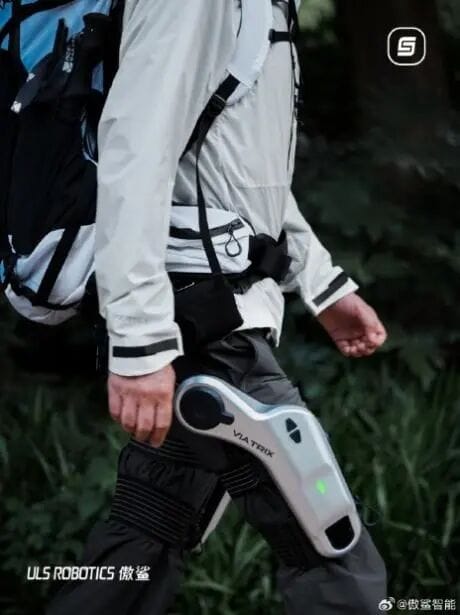
A confluence of manufacturing efficiencies and demographic pressures is driving a boom in China’s consumer exoskeleton market, transforming a sector once dominated by high-cost medical and industrial devices into a mass-market retail category. Enabled by supply chain spillovers from the electric vehicle and drone industries to reduce component costs, startups are now delivering wearable robotics capable of enhancing mobility for the elderly and outdoor enthusiasts at a fraction of historical prices.
Hypershell, a fast-growing player in this emerging sector, announced in late November 2025 that it had completed its Pre-B and B funding rounds, raising a total of US$70 million. The fresh capital injection, backed by high-profile investors including Lightspeed China Partners (managed under Guanghe), 5Y Capital, and Meituan Dragonball, pushes the company’s post-money valuation to nearly US$400 million. The funding underscores shifting investor sentiment, which had previously viewed exoskeletons as a niche application with limited commercial viability due to prohibitive pricing.
The market's pivot toward consumer-centric products has triggered rapid adoption. While legacy medical exoskeletons often cost upwards of US$80,000, new entrants are leveraging China’s hardware ecosystem to offer devices between US$300 and US$2,000. This elasticity was demonstrated in March 2025, when RoboCT’s "EasyGo" personal exoskeleton sold out its initial inventory in just 15 seconds upon launch, with subsequent batches clearing in minutes, highlighting significant latent demand among retail consumers.
This commercial traction is fueled by broader "active aging" trends as global populations face declining mobility. By 2035, the exoskeleton market is projected to reach US$40 billion, driven by an estimated compound annual growth rate of roughly 28%. The availability of affordable hardware is enabling a transition from passive assistive devices, such as wheelchairs, to active augmentation technologies that extend the physical capabilities of users suffering from age-related muscle loss.
Breaking the Cost Barrier
Historically, the exoskeleton industry faced an "impossible triangle" of achieving high performance, lightweight design, and low cost simultaneously. Traditional medical units, such as those from ReWalk, command prices as high as US$85,000, limiting their reach to specialized rehabilitation centers. Industrial counterparts, while powerful, grapple with heavy battery requirements and poor ergonomics.
Hypershell claims to have disrupted this dynamic through its proprietary "Omega" architecture and a single-motor drive system introduced in 2023. These innovations reduced the weight and cost of the hardware by approximately 50%. Consequently, the company successfully launched the Hypershell Go via Kickstarter, followed by the Hypershell X Ultra in September 2025. Priced around US$2,000, the X Ultra offers up to 40% physical energy savings. The company has now established sales channels in over 70 countries, shipping tens of thousands of units. While marketed heavily toward outdoor hikers, data indicates substantial uptake among elderly users seeking to reclaim customized mobility.
The "Iron Triangle" of Competition
The validation of the consumer model has intensified competition among domestic manufacturers, creating a diverse "Iron Triangle" of key players pivoting from B-side to C-side markets. While companies like Fourier Intelligence continue to secure heavy funding—totaling roughly RMB 1.4 billion yuan (US$194 million)—for primarily professional-grade applications, others are aggressively targeting retail users.
RoboCT (RoboCT Technology) has made one of the most successful pivots. Its EasyGo exoskeleton, priced at RMB 2,500 yuan (US$347), targets personal mobility assistance. Founder Zhang Ji Yun noted that the initial sell-out was unexpected, leading to substantial backlogs. Concurrently, ULS Robotics (AoSha Intelligence), known for industrial exoskeletons used in sectors like aviation and mining, formally entered the consumer space in mid-2025. At the World Artificial Intelligence Conference (WAIC), ULS released the VIATRIX, a power-assist exoskeleton priced between RMB 6,799 yuan (US$944) and RMB 7,899 yuan (US$1,097).
Other innovative approaches include Kenqing Tech, which introduced the Ant-H1 Pro, a lightweight device weighing just 2.4kg tailored for the elderly, retailing for RMB 12,000 yuan (US$1,666) on e-commerce platforms like JD.com and Tmall. In the crowdfunding arena, Beijing-based Dnsys Innovation Tech raised US$2.46 million for its Z1 knee exoskeleton, further validating the demand for lightweight, joint-specific assistance.
Supply Chain Spillovers and Demographic Tailwinds
The rapid cost reduction in Chinese robotics is structurally linked to the maturity of adjacent industries. The dominant position of Chinese companies in the electric vehicle and drone sectors—led by giants like DJI—has created a surplus of high-performance, low-cost components. Critical parts such as high-power-density motors, aviation-grade aluminum-magnesium alloys, and high-rate lithium batteries have seen costs plummet, making the physics of a "thousand-yuan" exoskeleton financially viable.
This supply chain advantage intersects with a critical demographic reality: sarcopenia and aging. Research indicates that after age 30, muscle mass decreases by 3% to 8% per decade. By 2030, over 100 million people globally aged 65 and older are expected to require mobility assistance due to muscle loss. China is anticipated to represent the largest share of this market at 24.7%. The shift toward consumer exoskeletons effectively delays the onset of disability, supporting "active aging" policies by allowing the elderly to maintain social connections and independence longer.
Regulatory Framework and Future Outlook
Despite the commercial boom, the sector faces growing pains regarding standardization and safety. The rapid influx of consumer-grade devices has outpaced the establishment of a unified national standard system for performance and safety testing.
Wang Hongwu, Director of the Robotics and Core Components R&D Center at the 21st Research Institute of China Electronics Technology Group Corporation (CETC), emphasized the urgency of establishing industry norms. Current efforts are focused on defining standards for safety, performance metrics, and testing methodologies. Standardizing the supply chain and modular components is expected to further drive down production costs, ensuring that exoskeletons evolve from niche novelties into essential household tools for an aging society.