
The $7.5 Trillion Pivot: Morgan Stanley Breaks Down the “Who, What, and When” of the Humanoid Robot Takeover
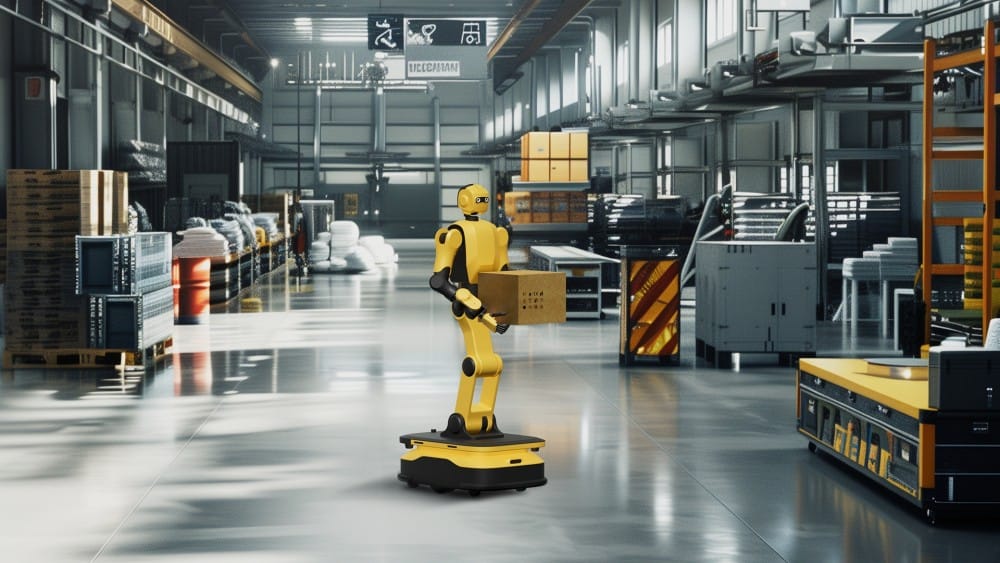
The timeline for the industrial revolution of the 21st century—the widespread adoption of humanoid robots—is accelerating faster than consensus estimates suggest. In a pivotal research note released on December 14, 2025, Morgan Stanley Asia Pacific’s equity research team, led by Sheng Zhong, dives deep into the operational reality of this shift. Following up on their initial China Humanoid Survey, the bank’s latest “AlphaWise” data paints a picture of a sector rapidly moving from theoretical R&D to factory-floor deployment.
With a staggering global market potential estimated at US$7.5 trillion by 2050, the question is no longer ifhumanoids will arrive, but specifically what work they are expected to do. The answers provided by 86 executives and deep-dive interviews with 28 industry respondents suggest a pragmatic, ruthless focus on efficiency and safety is driving the capital expenditure cycle.
The "Lights Out" Factory Ambition
The primary driver for adoption remains clear: manufacturing and logistics optimization. According to the survey, 62% of the executives interviewed expect to launch pilot or significant humanoid projects by 2027. The endgame for many of these respondents is the creation of fully automated, "lights out" factories where production lines and logistics—spanning assembly, packaging, and quality inspection—run without human intervention.
Morgan Stanley notes that the demand is not for generic automation, but for solutions to specific operational pain points. "Safety and efficiency improvements were the key pain points that enterprises expect humanoid robots to solve," the report states. This includes replacing humans in high-risk, repetitive tasks such as hazardous maintenance, patrol duties, and underwater operations.
The Long-Tail: Agriculture and Construction
Perhaps the most intriguing takeaway from the December 2025 data is the broadening scope of demand capabilities. While the market fixates on factory floors, the survey highlights underappreciated potential in the construction and agriculture sectors. Despite receiving less media attention, these industries represent over 30% of China’s labor force and offer massive labor replacement potential.
Respondents identified specific "long-tail" opportunities, including the picking and pruning of greenhouse-grown crops and livestock patrol. However, the report captures a crucial caveat: the unstructured environments of a farm or construction site are infinitely more complex than a factory floor. Consequently, there is a loud call from the industry for "more research and tailored solutions" to navigate these chaotic variables.
Integration is the New Moat
Hardware dexterity is becoming table stakes; the real battleground is shifting to software and interoperability. The feedback from the survey emphasizes that humanoids cannot operate in a vacuum. To be viable, these units must act as mobile data collectors—uploading equipment data and integrating seamlessly with existing Order Management Systems (OMS) and predictive maintenance protocols.
"Software functionality and IoT connectivity are emerging as critical differentiators for vendors," Morgan Stanley writes, noting that integrators who can bridge the gap between robot interoperability and legacy systems will capture the early fragmented market.
Investment Implications: The Winners in a Fragmented Landscape
The consensus view from Morgan Stanley is that we are in a transition phase: shifting from traditional industrial robots to intelligent robots, and ultimately to humanoids. However, the path to general-purpose artificial general intelligence (AGI) robots will be paved by specialized integrators focusing on distinct verticals.
The bank highlights several key players expected to benefit from component proliferation early in this cycle:
- Inovance (Shenzhen Inovance Technology): Viewed as a core beneficiary, with valuation models applying a 35x P/E for 2026.
- Hengli Hydraulic (Jiangsu Hengli Hydraulic): The bank notes a target revenue for humanoid robot parts of RMB 4 billion yuan (US$555 million), leveraging a higher price-to-sales ratio due to expected strong margins.
- Leaderdrive (Leader Harmonious Drive Systems): Valued via DCF for its humanoid reducer and planetary roller screw segments.
- Hesai (Hesai Group): Positioned for upside if LiDAR adoption by traditional OEMs accelerates faster than anticipated.
The Bottom Line
We are witnessing the early fragmentation of a multi-trillion-dollar market. While the "general purpose" robot remains the long-term holy grail, the medium-term opportunity lies in specialized robots that can survive the harsh realities of the factory floor, the construction site, and the cornfield. As 2025 draws to a close, the smart money is betting that the transition from human labor to humanoid labor is about to leave the drawing board.