
From Mutual Respect to Rivalry: NIO and Li Auto Clash as Earnings Trajectories Diverge
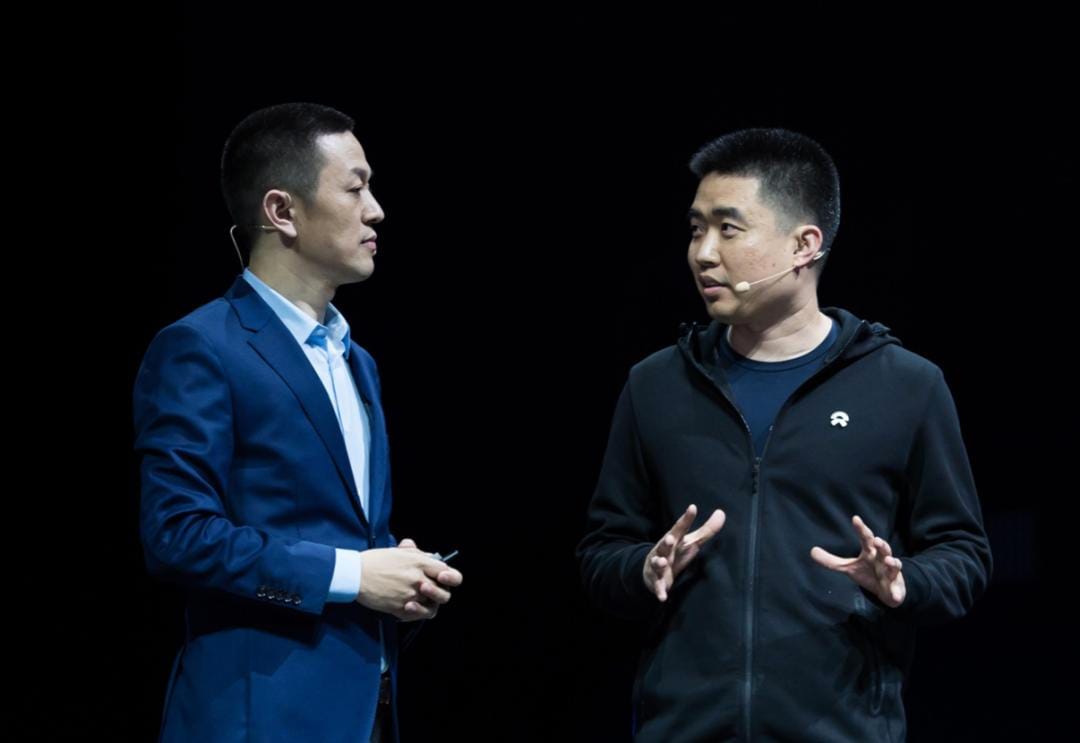
A deleted road-test video has reignited a long-simmering rivalry between China's two leading premium EV makers — exposing not just dueling suspension philosophies, but a stark divergence in financial health that now defines their competitive postures heading into a deteriorating market.
The dispute erupted publicly on June 5, 2026, when NIOVice President Ma Lin took to Weibo to challenge the authenticity of a since-deleted comparative video posted by Li Auto, which purported to show the Li L9 Livis outperforming the NIO ES9 on corrugated road surfaces. Ma demanded that Li Auto clarify the video's source, test environment, and suspension settings, asserting that the ES9's behavior in the footage "did not conform to the product's design parameters." Li Auto's product line head Tang Jing fired back within hours, questioning why NIO CEO Li Bin had declared at the May 27 ES9 launch that the vehicle's 48V integrated full-active suspension was "a generation ahead" of 800V split-architecture systems — a direct reference to Li Auto's own platform.
The public spat drew immediate industry commentary, with analysts noting that neither the 48V integrated nor the 800V split approach holds an inherent technical advantage; the two architectures represent different engineering trade-offs calibrated to distinct product positioning. What the exchange does reveal, however, is that competition between the two brands has intensified to the point where flagship-versus-flagship product comparisons are now being waged directly in the public domain — a dynamic that carries reputational and commercial risk for both parties.
Q1 Earnings Diverge Sharply, Pressuring Li Auto's Strategic Flexibility
The backdrop to this public skirmish is a first-quarter earnings divergence that materially alters the competitive calculus. For the three months ended March 31, 2026, Li Auto reported revenue of Revenue of RMB 22.983 billion (US$3.19 billion), down 11.35% year-on-year. Vehicle sales revenue fell 12.7% year-on-year to RMB 21.5 billion (US$2.99 billion) and dropped 21% sequentially from Q4 2025, with management attributing the decline to a lower average selling price driven by product mix shifts and seasonal delivery weakness around the Lunar New Year.
The more alarming signal for investors is the collapse in vehicle gross margin, which fell to 6.1% — a 13.7-percentage-point year-on-year deterioration. Operating cash flow turned deeply negative at minus RMB 6.1 billion (US$847 million), compared with minus RMB 1.7 billion (US$236 million) a year earlier, a trajectory that constrains Li Auto's capacity to fund the aggressive R&D and product refresh cycles that define competition in China's premium EV segment.
NIO's Q1 2026 results, by contrast, presented a markedly different narrative. Revenue surged 112.16% year-on-year to RMB 25.533 billion (US$3.55 billion), with vehicle sales revenue jumping 129.2% to RMB 22.784 billion (US$3.16 billion). Deliveries reached 83,500 units, up 98.3% year-on-year, though still trailing Li Auto's 95,100 units. Crucially, NIO's vehicle gross margin climbed to 18.8% — a four-year high — while net loss attributable to shareholders narrowed 92.8% to RMB 496 million (US$68.9 million). Li Bin disclosed that NIO's average transaction price in Q1 reached RMB 390,000 (US$54,167), exceeding BMW by RMB 50,000 and standing at 1.5 times Audi's average — a positioning claim that, if sustained, would represent a structural shift in the Chinese luxury automotive hierarchy.
A Decade of Alliance Gives Way to Direct Market Conflict
The current antagonism carries historical irony. NIO was founded in 2014 by Li Bin, formerly of Bitauto. Li Xiang established Li Auto the following year. During the capital-scarce early years of China's EV startup era, the two founders publicly supported each other: Li Xiang attended NIO's RMB 800 million (US$111 million) ES8 launch event in 2017 and personally purchased a vehicle; Li Bin reciprocated at the Li Auto ONE launch in 2018, attending alongside NIO President Qin Lihong. Li Xiang once stated publicly that if only three new-energy startups could survive, he hoped NIO and Xpeng would be among them.
The alliance began fracturing as product lines converged. At NIO's 2021 ET5 launch, Li Bin's remark that "cars don't need so many large screens" was widely read as a dig at Li Auto's multi-screen interior strategy; Li Xiang responded publicly on Weibo. By July 2024, NIO's Ma Lin publicly called on Li Xiang to abandon weekly sales rankings, labeling them "low-level involution." Li Xiang responded with a meme depicting a person covering their ears.
The 2026 Hurun Global Rich List, published in March, placed Li Xiang's personal wealth at RMB 27.5 billion (US$3.82 billion) and Li Bin's at RMB 8.5 billion (US$1.18 billion).
Macro Headwinds Compound Structural Pressures Across the Sector
Both companies are navigating a deteriorating macro environment that amplifies their individual vulnerabilities. Data from the China Passenger Car Association show that total passenger car retail sales in Q1 2026 fell 17.4% year-on-year to 4.226 million units, while new-energy vehicle domestic retail declined 21.1% to 1.908 million units — the steepest quarterly contraction in recent memory, reflecting the withdrawal of government purchase subsidies and softening consumer sentiment. Industry-wide automotive profit margins contracted to 3.2%, falling below the 6% average for downstream industrial enterprises.
Cost pressures are simultaneously rising from the supply side. A January 26, 2026 UBS research note titled "China Auto Sector: Estimating the Cost Impact of Rising Metal and DRAM Prices on EVs" calculated that manufacturing costs for a typical mid-size smart EV would increase by RMB 4,000–7,000 (US$556–972) in the near term, driven by elevated memory chip and battery raw material prices. For Li Auto, whose vehicle gross margin has already compressed to 6.1%, even a modest cost increase could push vehicle-level economics into negative territory absent a pricing response — a difficult proposition in a market where competitors are simultaneously protecting volume.
NIO enters this environment with greater margin buffer and a narrowing loss profile, but its growth trajectory depends on sustaining the premium positioning that Li Bin has publicly staked the brand on. Whether an average transaction price above BMW is durable — or a function of Q1's specific delivery mix — will be a critical variable for investors to monitor in the coming quarters.
Wealth Gap Between Founders Mirrors Corporate Divergence
The 2026 Hurun Global Rich List, published in March, placed Li Xiang's personal wealth at RMB 27.5 billion (US$3.82 billion) and Li Bin's at RMB 8.5 billion (US$1.18 billion) — a ratio of more than three-to-one that reflects Li Auto's historically stronger profitability, even as that advantage has recently reversed at the operating level. If sustained, the shift in corporate fortunes could gradually narrow that wealth gap and reshape the dynamics that have long defined the public relationship between the two founders.
Related Coverage:
Nio Swings to Q1 Profit as Cost Cuts and Premium SUVs Offset EV Price War