
SemiAnalysis: Unitree Is Emerging as a Global Humanoid Robotics Leader
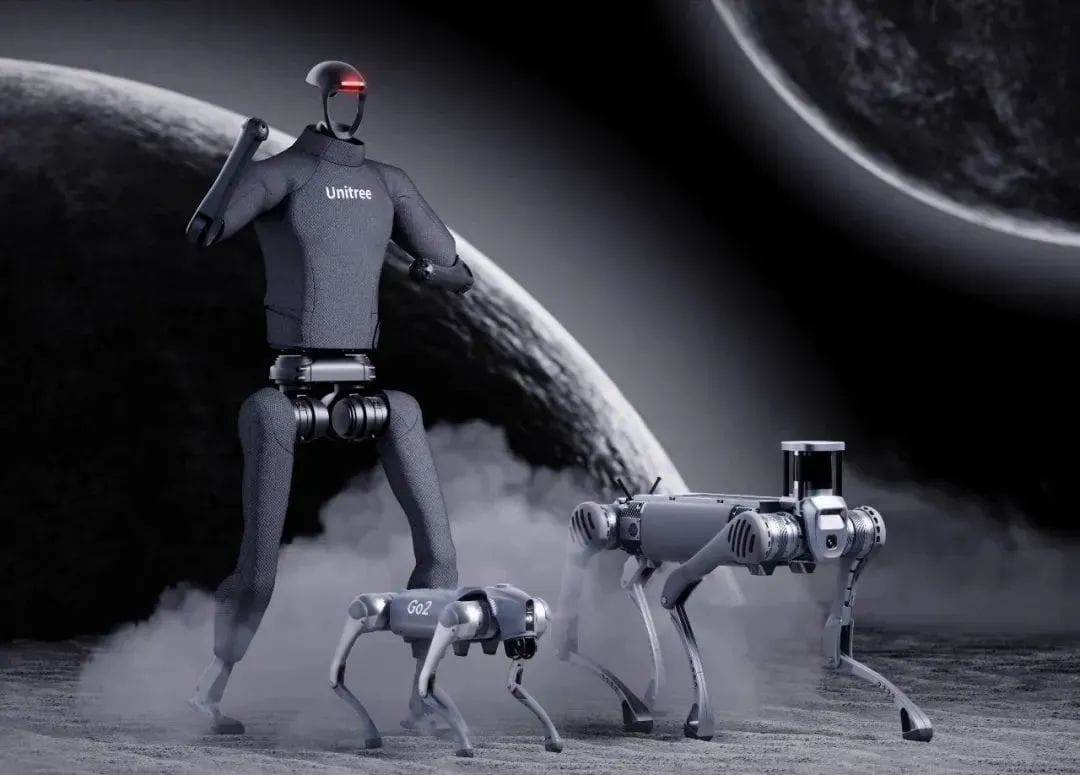
A Chinese robotics company is emerging as a dominant force in the global humanoid robot market, leveraging aggressive pricing, vertical integration, and an accelerating product roadmap that Western competitors have so far struggled to match.
According to a deep-dive research report published by SemiAnalysis on June 9, 2026, Unitree Robotics is tripling revenues year-over-year on product lines carrying approximately 60% gross margins, while simultaneously planning nearly $300 million in AI research and development spending. The report, authored by Reyk Knuhtsen, Niko Ciminelli, Jacob Rintamaki, and others, draws on original bill-of-materials analysis and supply chain interviews to argue that Unitree is crossing a critical threshold from a research-grade platform into economically viable industrial deployment.
The findings paint a striking picture of competitive divergence. While Tesla and other Western humanoid developers continue refining early-stage prototypes, Unitree is reportedly on the verge of shipping its 10,000th humanoid unit. The company has slashed the pre-tax price of its flagship G1 humanoid from over 50,000to50,000to27,300 over the past 12 to 18 months, and SemiAnalysis estimates Unitree still achieves roughly 67% gross margins at that price point. In certain deals, pricing has reportedly fallen below $20,000.
Central to Unitree's cost advantage is its choice of quasi-direct-drive (QDD) actuators — simpler and up to 80% cheaper than the strainwave gearboxes favored by many Western rivals. Early versions of the G1 suffered from chronic overheating, limiting payload capacity and operational duration. However, SemiAnalysis says iterative hardware improvements have meaningfully extended performance: the G1 can now sustain roughly 15 minutes of operation carrying 5 kilograms with arms bent, compared to just 2 to 3 minutes previously. The report estimates approximately 250 G1 units are already deployed in light industrial settings, primarily handling lightweight materials such as e-commerce totes weighing under 5 kilograms.
SemiAnalysis frames Unitree's strategy as a deliberate echo of two other Chinese hardware titans. Like BYD, which built an untouchable cost structure by inhousing battery cells and eventually overtaking Tesla as the world's leading battery-electric vehicle producer, Unitree is verticalizing manufacturing of motors, gearboxes, LiDAR sensors, and depth cameras. Like DJI, which bootstrapped drone dominance through a hobbyist beachhead before unlocking successive commercial markets, Unitree built its humanoid program on the back of academic and research sales before moving toward industrial deployment.
The report also highlights Unitree's pending IPO on the Shanghai Stock Exchange as a potential inflection point, noting that proceeds could accelerate R&D and manufacturing scale. SemiAnalysis estimates Unitree's current bill of materials for the G1 stands at approximately $8,976 — a figure it attributes to deep supply chain verticalization that competitors including UBTech and AGIBot are only beginning to pursue.
Should Unitree successfully penetrate even a fraction of the global warehouse automation market, analysts at SemiAnalysis suggest the company's growth trajectory could accelerate sharply — mirroring the pattern DJI followed when it transitioned from hobbyist product to global drone market leader.
Related Coverage:
Unitree Races to Commercialize After Record-Speed IPO Approval