
Germany Opens EV Subsidy Door to Chinese Brands as Canada Slashes Tariffs
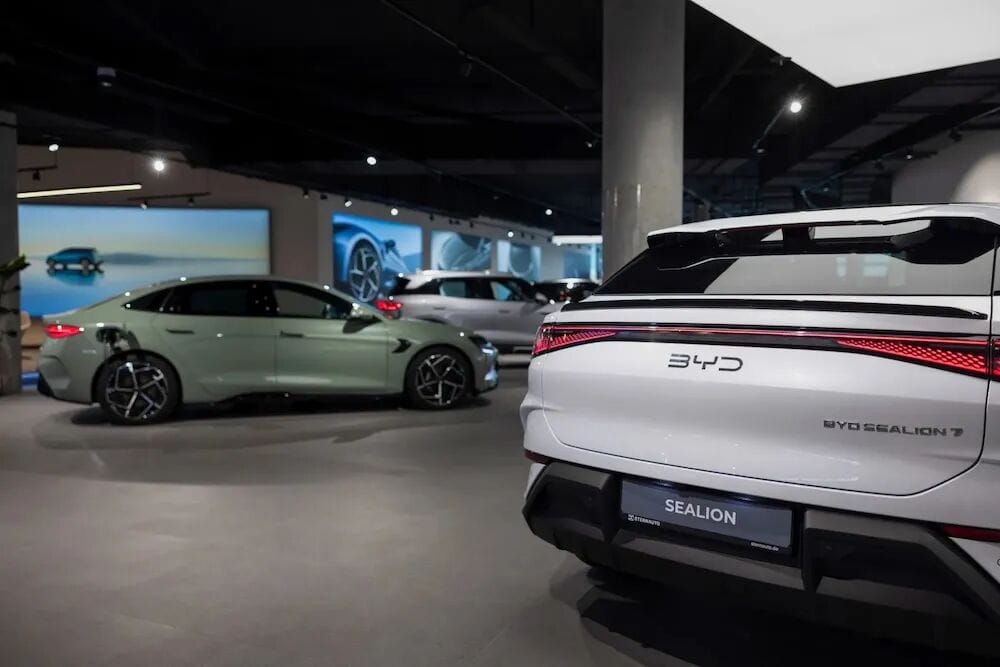
Germany has launched a 3 billion euro ($3.1 billion) electric vehicle subsidy program open to all manufacturers including Chinese brands, while Canada confirmed it will slash additional tariffs on Chinese EVs by over 90%, marking a significant policy shift that could boost Chinese automakers' overseas expansion.
The German government announced subsidies of up to 6,000 euros ($6,200) for families purchasing new electric vehicles, with the program expected to support approximately 800,000 vehicles. Notably, the initiative will be accessible to all automakers without restrictions on origin, providing a potential boost to Chinese brands seeking to establish a stronger foothold in Europe's largest auto market.
Meanwhile, Canadian Prime Minister Mark Carney confirmed during his official visit to China from January 14-17 that Canada will grant an annual quota of 49,000 Chinese EVs subject to a 6.1% most-favored-nation tariff rate, eliminating the previously imposed 100% additional tariff within the quota. The quota will grow proportionally each year, Carney said in a media interview.
These policy adjustments come as Chinese automakers posted strong export performance in 2025, with total vehicle exports reaching 8.32 million units, up 30% year-on-year, according to data from China's General Administration of Customs and the China Passenger Car Association.
Germany Embraces Competition Over Restrictions
Federal Environment Minister Carsten Schneider emphasized Germany's confidence in facing market competition at a press conference announcing the subsidy plan. "I have deep faith in the quality of European and German brands," Schneider said. "I see no evidence from data or vehicles on the road that Chinese automakers will flood Germany—that's precisely why we're actively embracing competition rather than imposing any restrictions."
The incentive program aims to revive EV demand, which declined sharply after Germany's previous subsidy scheme ended in late 2023. The measure represents a pragmatic approach to supporting the domestic auto industry while maintaining open market principles.
Bloomberg noted that despite facing tariffs on EVs sold to the EU, Chinese manufacturers can still profit from sales in European markets due to lower production costs in China.
EU-China Negotiations Continue Amid Tariff Discussions
The Chinese Ministry of Commerce recently released an update on consultations regarding the EU's electric vehicle case. According to the announcement, both sides agreed on the necessity of providing general guidance on price commitments to Chinese exporters, enabling them to address concerns through more practical, targeted, and WTO-compliant approaches.
The European Commission published a guidance document clarifying that it will evaluate price commitment applications from Chinese automakers according to unified standards following principles of non-discrimination, objectivity and impartiality under WTO rules. Qualifying companies could replace anti-subsidy duties with price commitments.
However, European media outlet EURACTIV reported that the European Commission is considering expanding tariff coverage beyond pure electric vehicles to include hybrid vehicles from China, with related discussions currently underway.
Canada's Policy Reversal Targets Affordable EVs
Prime Minister Carney's announcement represents a dramatic shift in Canada's approach to Chinese electric vehicles. The 49,000-unit annual quota corresponds to China's export volume to Canada before the additional tariffs were imposed, with the quota set to increase proportionally each year.
Carney projected that within five years, over half of EVs imported from China will be models priced below 35,000 Canadian dollars ($24,900), providing more affordable options for Canadian consumers.
"China's advantage in the electric vehicle sector is undeniable. China produces some of the world's most affordable and energy-efficient vehicles," Carney stated. "To build a competitive EV industry in Canada, we need to learn from innovative partners, enter their supply chains, increase local demand, and fully unlock the potential of our partnership to reduce costs for Canadians."
Chinese Automakers Accelerate Global Expansion
China's automotive exports demonstrated robust growth in 2025, with total exports reaching $142.4 billion (691 billion yuan), up 21% year-on-year, according to customs data. New energy vehicle exports surged to 2.615 million units, doubling from the previous year.
Among major Chinese automakers, Chery Group led exports with 1.34 million vehicles, representing 48% of its total sales. BYD exported 1.05 million new energy vehicles, up 144% year-on-year, with overseas sales rising from 10% to 23% of total volume.
SAIC exported 950,000 vehicles, while Geely and Great Wall also ranked among the top exporters.Emerging players showed particularly strong momentum. Leapmotor exported 70,000 vehicles, surging 600% year-on-year, while Xpeng exported 50,000 units, up 150%.
In contrast, Tesla's China operations were the only top-10 exporter to see declining overseas sales for two consecutive years, with exports falling 12% to 230,000 units in 2025.
Cui Dongshu, secretary-general of the China Passenger Car Association, noted that smaller automakers achieved breakthroughs through differentiated strategies focusing on commercial and specialized vehicles, though their overall market share remains relatively low as industry concentration intensifies.