
Goldman Sachs Sees China's Hard-Discount Snack Chains as Retail's Next Structural Shift
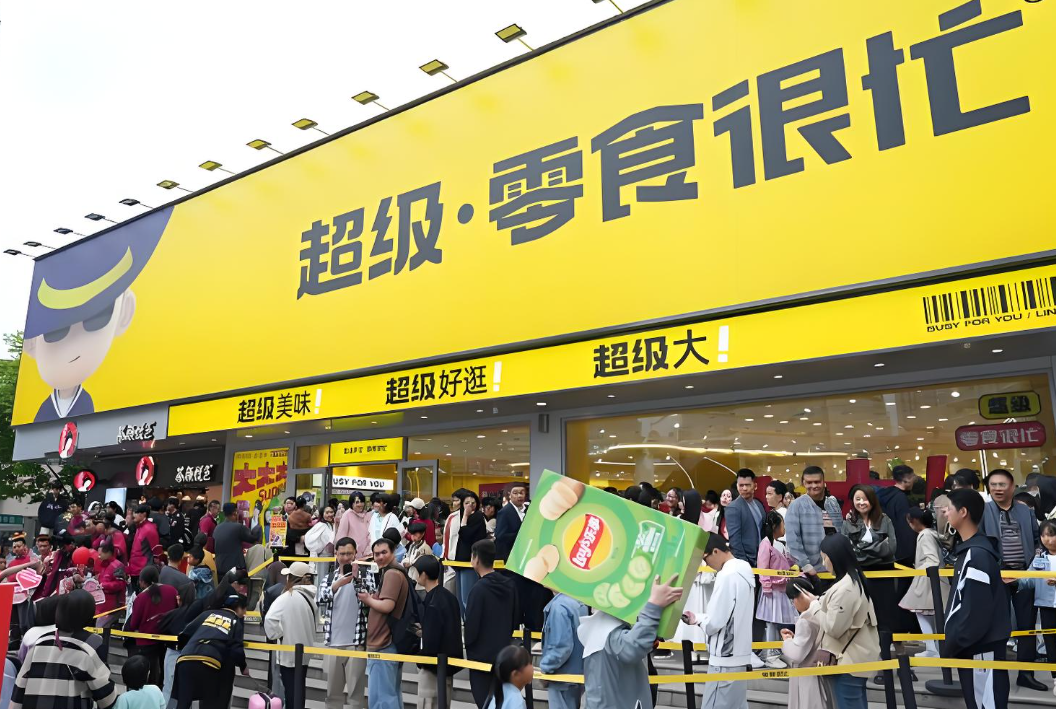
A quiet revolution is reshaping China's vast retail landscape as a new breed of offline stores challenges the long-held price supremacy of e-commerce. Hard-discount retailers, led by rapidly expanding snack chains, are leveraging radical supply chain efficiencies to win over the nation’s increasingly value-conscious consumers.
The model's disruptive potential has captured the attention of Wall Street. Goldman Sachs Group Inc. recently initiated coverage on the sector's two dominant players, Mingming Henmang Group and Wanchen Group, assigning both "Buy" ratings. The bank set price targets that imply an upside of 23% for Mingming-Henmang and 33% for Wanchen, signaling strong confidence in their growth trajectory.
In its inaugural report, Goldman declared that hard-discount retail could represent one of the most significant "structural changes" for China's retail industry over the next decade. The bank forecasts the snack discount market's gross merchandise value (GMV) will grow at a 13% compound annual rate from 2025 to 2028, reaching RMB 319 billion yuan (US$44.3 billion) with approximately 70,000 stores.
This transformation is fueled by a profound shift in consumer behavior and a business model that systematically dismantles traditional retail cost structures. By establishing direct sourcing and prioritizing operational efficiency, these discounters are not just selling cheaper snacks—they are proving that brick-and-mortar stores can once again compete fiercely on price, posing a direct challenge to supermarkets, convenience stores, and even online platforms.
A Duopoly Emerges From Explosive Growth
The snack discount sector has undergone an almost explosive expansion and consolidation over the past two years, rapidly evolving into a duopoly. Mingming Henmang Group, formed through the merger of rivals Lingshi Henmang and Zhao Yiming Lingshi, has become China's largest snack retail chain.
- Mingming Henmang Group: Operates approximately 14,000 stores across 28 provinces with an annual GMV of around RMB 55 billion yuan (US$7.6 billion).
- Wanchen Group : Has expanded its footprint to over 15,000 stores through brands like "Hao Xiang Lai," generating an annual GMV exceeding RMB 40 billion yuan.
Together, these two giants command an estimated 70% of China's snack discount market, according to Goldman Sachs. This level of concentration indicates the industry has moved beyond fragmented regional battles into a new phase of national, scaled competition.
Re-Engineering the Supply Chain to Undercut Prices
The core appeal of snack discounters is simple: low prices. However, this is not a result of temporary promotions but a fundamental redesign of the retail supply chain. While traditional retail involves multiple layers of distributors and wholesalers adding costs at each step, discounters adopt a direct-sourcing model that connects brands directly with the retail channel.
They further drive down costs through:
- Scale Procurement: With tens of thousands of stores, the leading players wield significant bargaining power to secure lower prices from suppliers.
- Centralized Logistics: Nationwide warehousing and distribution networks reduce per-unit logistics expenses.
- High-Turnover Inventory: Stores typically carry a curated selection of 1,800 to 2,000 high-demand products, with rapid replenishment and delisting mechanisms that boost inventory efficiency.
This system allows them to price products 20% to 30% lower than traditional supermarkets and convenience stores, creating a price point that, according to Goldman's analysis, is competitive even against e-commerce channels.
A New Consumer Mantra: 'Value for Money'
The rise of the discount model is deeply intertwined with a broader shift in Chinese consumer psychology. Goldman Sachs notes a clear pivot from "brand-first" to "value-for-money" priorities, particularly as macroeconomic growth moderates and shoppers become more rational.
This trend mirrors the historical rise of hard-discounters like Aldi and Costco in Western markets, which gained significant market share during periods of increased consumer price sensitivity. China's snack discounters appear to be in the early stages of a similar long-term growth cycle, capitalizing on this fundamental change in shopping behavior.
Lower-Tier Cities: Fertile Ground for Expansion
The rapid expansion has been critically supported by the untapped potential of China's lower-tier cities and towns. These "sinking markets" now account for nearly half of the country's total retail sales and are posting higher growth rates than first-tier cities.
The discounters have leaned heavily into a "surround the cities from the countryside" strategy. For example, about 60% of Mingming-Henmang's stores are located in county-level and township markets. This approach helps them avoid the high rents and intense competition of major urban centers while rapidly building regional network density, which in turn creates a flywheel effect by further lowering supply chain costs. Goldman's scenario analysis suggests that, compared to mature markets like Japan and Korea, China's snack discount sector has room to grow from its current ~55,000 stores to a potential 770,000-940,000.
A Threat to Convenience Stores, A New Dynamic for Brands
The discount channel's rise creates a complex dynamic for suppliers. For major brands, it is a trade-off: their gross margins on products sold through discounters are typically compressed by about one-third compared to traditional wholesale. However, they save on costs like distributor rebates, slotting fees, and in-store promotion expenses. The model is especially appealing for second-tier brands and white-label manufacturers, who gain access to massive shipment volumes without the high barrier to entry of traditional channels.
For convenience stores, the relationship is one of direct competition. Snack discounters and convenience stores are highly similar in store size (around 130 square meters), product categories (packaged snacks and beverages), and target customers. A 2023 survey by KPMG found that 89% of convenience store operators reported that snack discounters had already caused a noticeable erosion of their GMV.
Scale Is King in a Thin-Margin Business
Despite its rapid growth, the snack discount sector is a thin-margin business. The industry operates on a classic "high volume, low margin" model, with typical gross margins of 7%-8% and net profit margins around 2%. This means profitability is highly dependent on scale and operational excellence.
According to Goldman Sachs, future competition will hinge on three key factors:
- Store Network Scale: The first to establish a dominant national footprint will gain a decisive advantage in procurement.
- Supply Chain Prowess: Efficiency in direct sourcing, logistics, and inventory turnover will remain critical cost drivers.
- Private-Label Development: Following the path of their international counterparts, developing in-house brands offers the most significant long-term opportunity to expand profit margins, as private-label products typically yield 8-10 percentage points higher gross margins than branded goods. As of now, private-label penetration in China's discount channels remains far below the 20%-30% seen in U.S. supermarkets, presenting a major growth runway.